
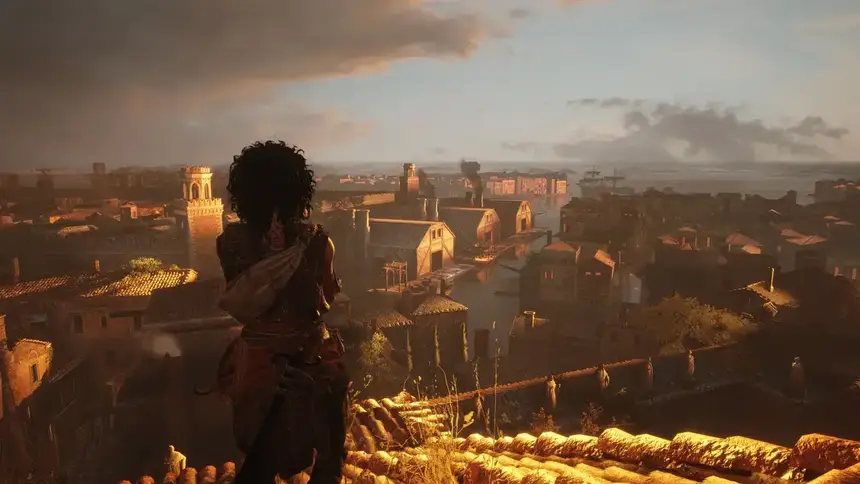
Released in 2019, A Plague Tale: Innocence immediately caught people’s attention with its setting, brutal atmosphere and rather unusual stealth approach. The protagonist Amicia is fragile in her own right, and she must also protect her younger brother Hugo. This is all helped by changes in scene, new opportunities that constantly arise, and the plot itself.
Unfortunately, I missed the second installment, A Plague Tale: Requiem. I initially subscribed to Game Pass, but I don’t want to use it long-term. I don’t want to say that the sequel is bad (it was highly praised by the media and players), but for me personally, the continuation of the story no longer interests me. It is for this reason that the new game that will be discussed in this review, Resonance: A Plague Tale Legacy, immediately piqued my interest. The developers changed the location, the protagonist and even the genre of the game, which of course may upset some people, but for me it was a deciding factor when choosing a game.
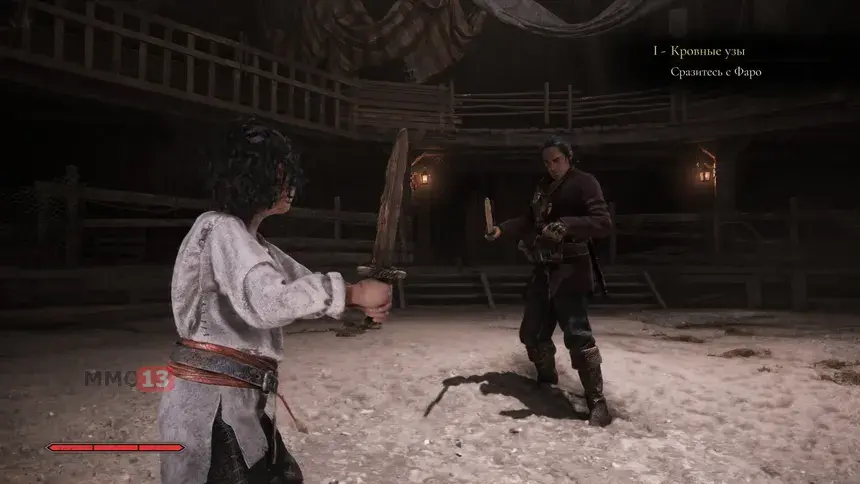
However, if you think of Resonance: A Plague Tale Legacy as a full-fledged action-adventure game, that’s not entirely true. The game combines combat sections and exploration missions with puzzles. However, there isn’t much combat here, you’ll mostly have to do this and solve the next puzzle. Overall, the balance between combat, puzzles, and exploration seems inconsistent. We might pass through a location for a long time and then suddenly a small group of enemies descends on us, or we find ourselves in an arena where we need to fight off two or three waves.
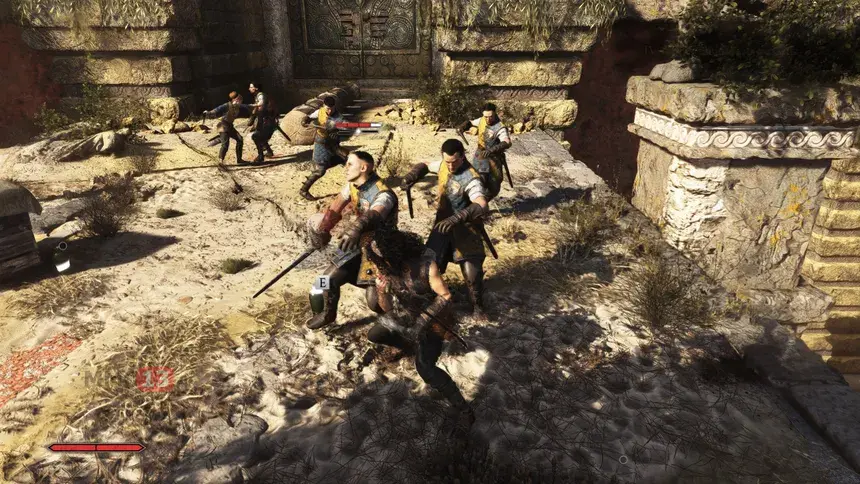
The combat system here is pretty standard for a third-person action game. You can use normal and enhanced attacks, dodge, block attacks, parry, and pull enemies toward you, and enhanced superpowers appear. Blocks reflect all damage and have no stamina, but due to “yellow” and “red” attacks you won’t be able to put yourself in an impenetrable defense. The first can penetrate blocks but can be blocked, while the second must be dodged. By the way, the “yellow” attack proved to be the most unpleasant, since the glow appeared early and it was difficult to choose the moment of reflection correctly. I even gave up trying to learn the timing because it was easier and safer to hit the duck button.
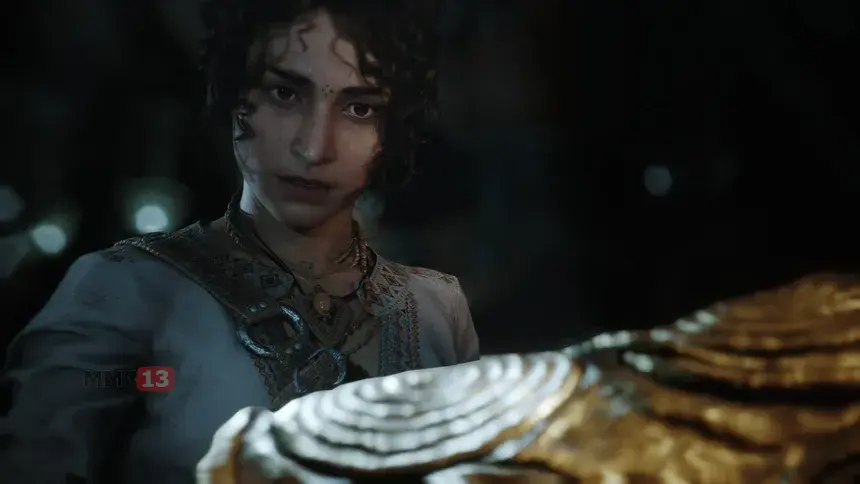
The protagonist Sophia has no health indicators in the usual sense. Instead, she’s simply able to withstand a certain number of attacks, depending on the difficulty. For example, at average you might miss three hits, and at high you might miss two. Defeating an enemy restores one square on the scale. I started out on medium difficulty, but found the game to be too easy, so I switched to high difficulty in the third chapter. This makes the battle even more intense as every mistake can be fatal.
Since combat isn’t the main focus here, upgrades feel meager. We’ve only included six less useful passive perks, each of which includes two additional improvements. To level up, you need Resonance Points, which can be picked up at specific locations or given after defeating all enemies. For just one improvement, you need to collect ten points. There are also amulets hidden around the map that provide small passive bonuses. The “vacuum cleaning” development approach works well in open world games, but here it just ruins the experience. Exploration here isn’t all that interesting and doesn’t take a lot of time, so I just picked up things I came across along the way or discovered while I was trying to find the solution to the next puzzle. Nonetheless, the locations are beautiful and varied, sometimes even within the same chapter.
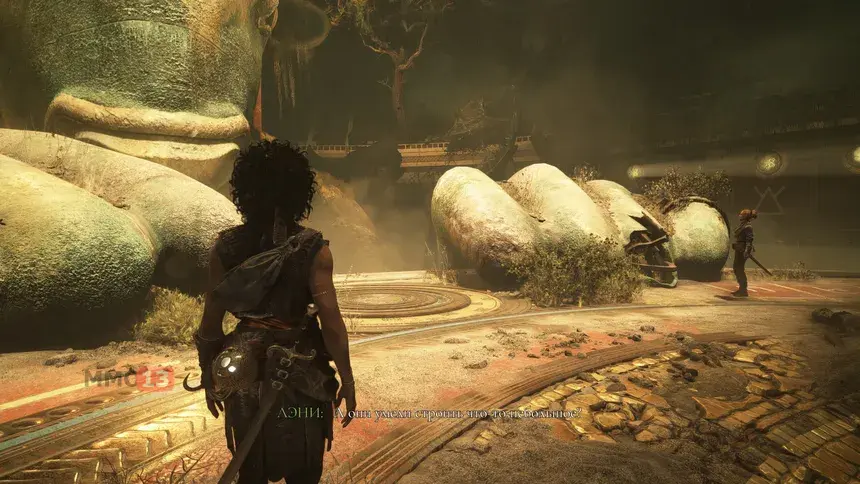
The riddle itself is very interesting. They’re perfectly balanced and don’t force you to spend hours running around trying to figure out what you need, but they’re not always obvious at first glance. If you still have problems, there are hints available, even if they aren’t obvious. A curious detail is that many of the mysteries are tied to Sofia’s diary, in which the heroine writes down her visions. Moreover, they can be seen in advance, which is a preview of our upcoming adventures. This doesn’t seem like a spoiler, but it just piques interest.
Usually the plot is introduced at the beginning, but I left it until the end because I have mixed feelings about it. On the one hand, we have a strong start that is truly engaging and sets up a dark story. However, while the developers did not give up on trying to immerse us in the lore through dialogue, the plot later faded into the background.
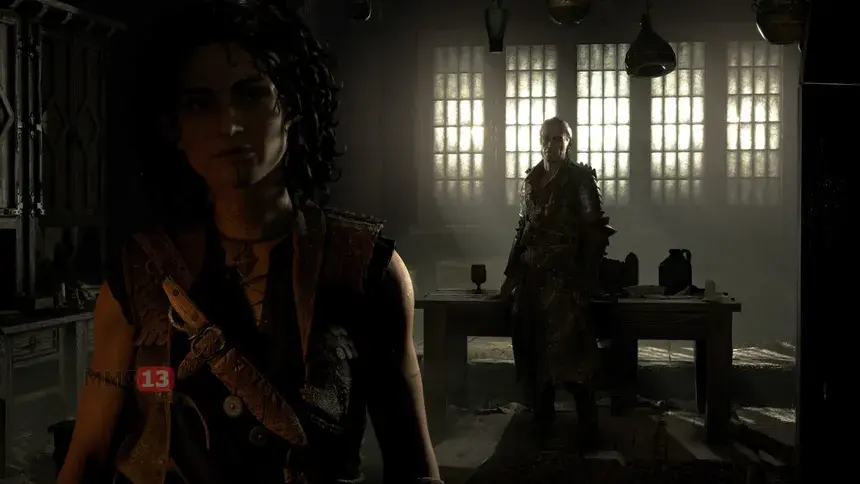
Sofia is a fairly developed character, with her own backstory and path to growth. We see that she’s not just a strong character, but someone who grew up in brutal conditions, and that her father’s team, constantly going on dangerous adventures, are a real family to her. She had always wanted to go with them and had been training for it since she was a child. It’s unlikely that she’ll be known as a truly memorable and interesting person, but at least you actually believe her.
But the same can’t be said for her companion Rani, who was added just so the game wouldn’t take place in absolute silence. She appears in the story after a brief cutscene voiced by Sofia, in which the heroine briefly states that she met her friend. She’s boring, uninteresting and has little impact on the plot. While playing the game, I was never able to penetrate her character and begin to sympathize with her.
Finally, it’s worth saying a few words about the soundtrack, because it works really well. The music sounds grand in scale and fits perfectly with what’s happening on screen, and some of the pieces are likely to be remembered long after they’re completed. Incidentally, Olivier Derivière, who worked on the previous installments, is once again involved in the soundtrack. In the new game, he used a large number of classical and ethnic instruments, giving the music an unusual sound and conveying the atmosphere of the game well.
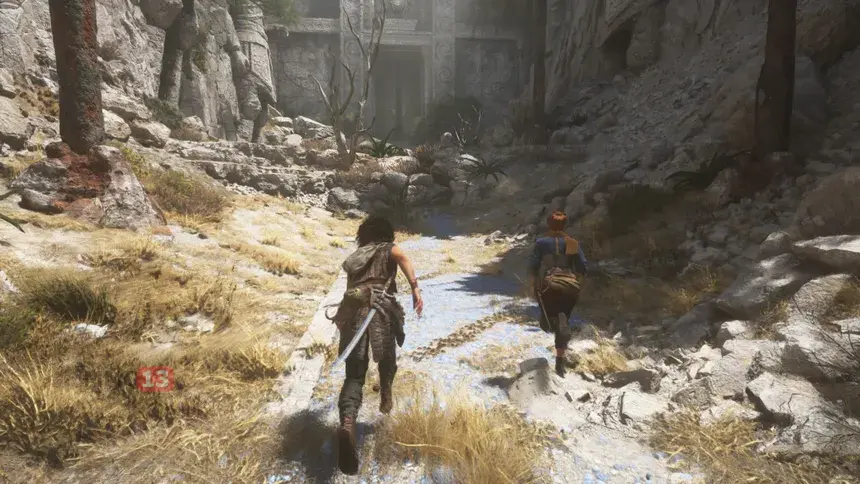
Resonance: A Plague Tale Legacy left me with mixed feelings. The graphics of the game are beautiful, the combat is not boring, and the puzzles are fun to solve. At the same time, the series’ new formula seems fresh enough that the project won’t be seen as a simple repeat of previous installments. However, every now and then you encounter unpleasant moments that ruin the overall impression.