

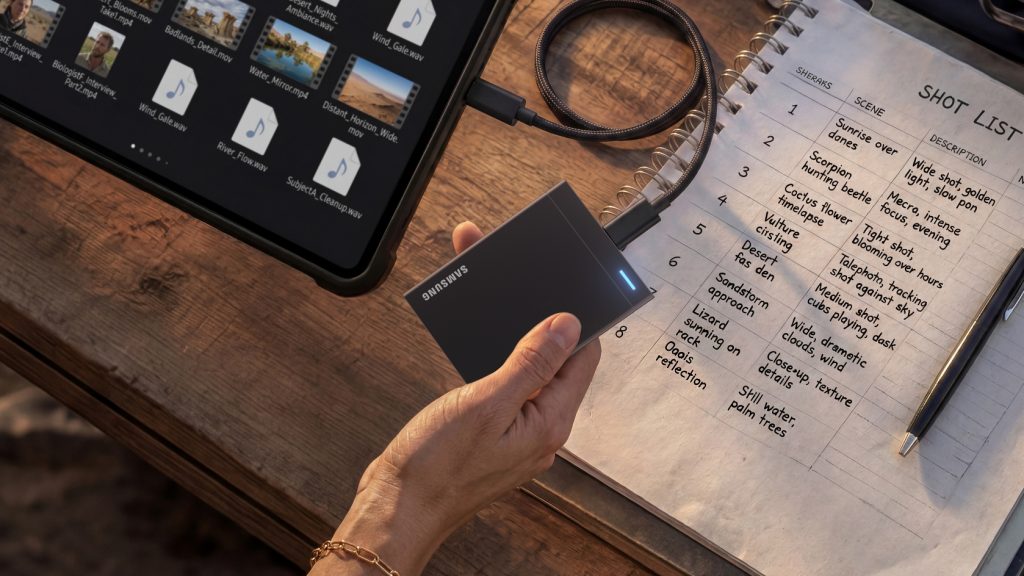
It’s already clear that the memory market is going through a crisis, but Samsung’s new portable solid-state drives provide a new example of the crisis. On the occasion of Gamescom 2026, The company released the P9 and P7, Two external drives with USB4 interface, capacity up to 8TB. Performance has grown significantly, but the price list has also taken a leap that’s hard to ignore.
The most interesting case is the P9, which Samsung sees as the ideal successor to the T9. In fact, the new model has read speeds of 4,000 MB/s and write speeds of 3,800 MB/s, compared to the previous T9’s 2,000 MB/s. However, the increase in price far outweighs the increase in performance.
Samsung P9 costs 188% more than T9
Specifically, 1TB P9 is priced at €384.90compared to the €169.99 the T9 will ask for when it launches in 2023. The difference is 214.91 euros, which is approximately 126%. For the 2 TB model, the comparison is even more severe: €769.90 compared to €279.99, an increase of €489.91, or about 175%. At 4 TB, the price rises from 519.99 euros to 1,499.90 euros, so a premium of 979.91 euros, equivalent to about 188%. There is no 8 TB version of the T9, and the price of the P9 is a whopping €2,969.90.
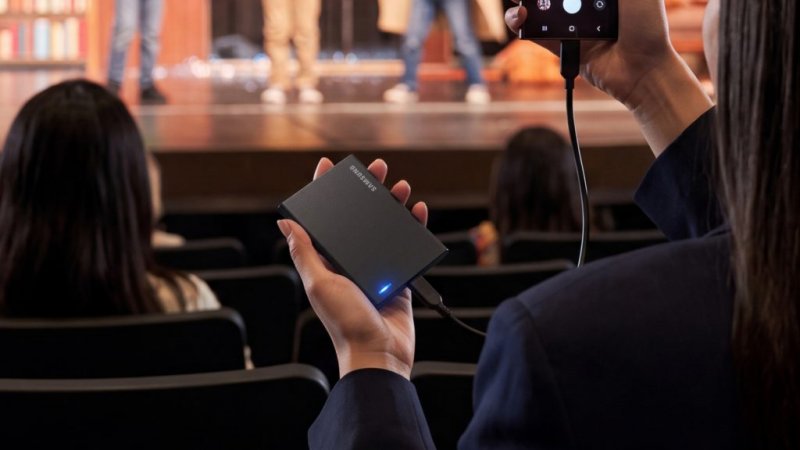
The P7 is also significantly more expensive than previous Samsung portable SSDs. New models start at €324.90 for 1 TB Price for 2 TB is €649.90. A comparison with the T7 Shield, while not a direct successor, still highlights the differences: when it debuts in 2022, 1 TB will cost €169.99 and 2 TB will cost €319.99. The 4 TB version will be available later for 429.90 euros.
Samsung at Gamescom 2026: There’s also a new range of Odyssey monitors with 6K and 3D resolutions

Fortunately, this difference isn’t just down to memory. P9 uses USB4, which is twice as fast as T9and launches with 8TB capacity and sustained performance designed for 12K video recording. Instead, the P7 focuses on compatibility and daily use, while retaining the USB4 interface. Therefore, direct comparisons of price lists must be interpreted taking into account technological developments.
But market factors cannot be ignored. By 2026, artificial intelligence and data center demands will drive manufacturers to allocate more and more NAND capacity to enterprise products, reducing capacity for the consumer market. TrendForce expects NAND prices to rise further by 10-15% in the third quarter, That follows more significant growth in previous quarters.
As a result, the new Samsung range is hitting the market at specific times, and the P9 and P7 price lists show how the so-called “RAMgeddon” issue affects products for end users.