

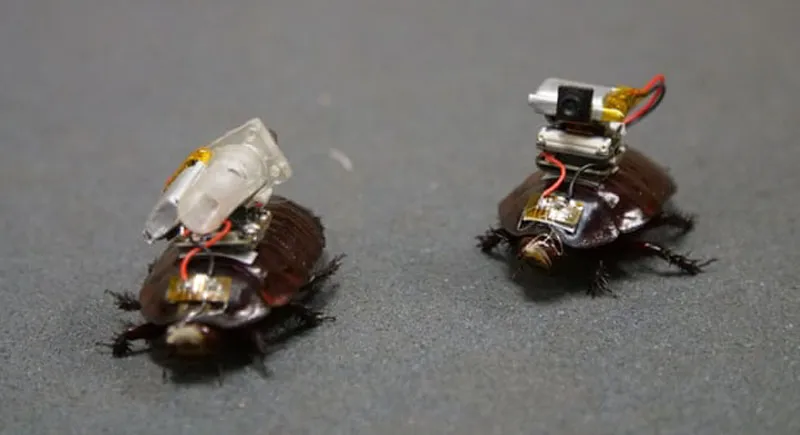
Australian advanced In the specialization and reconnaissance of the robot cockroach, the orderly was added, which is logical – it is not enough to find the victim under the rubble, he may need immediate help, for which the person still needs to be rescued, which is a waste of time. So to the already known camera-equipped cockroaches, the Australians added an insect with a remote-controlled syringe. The cockroach needs to be close to the body and with its claws firmly on the ground, and the syringe will do the rest.
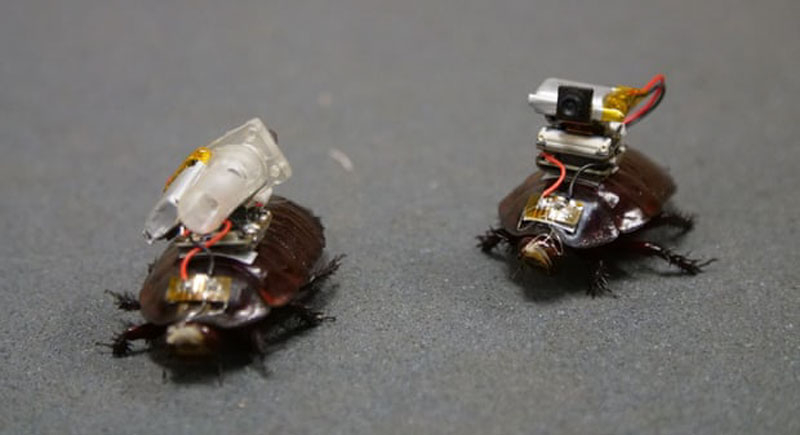
Image source: University of Queensland
The project is being implemented by experts from the University of Queensland and biomedical engineers from the University of New South Wales. Researchers engineer giant burrowing cockroach rhino So-called “paraborgs” are living platforms equipped with tiny electronics, cameras and remote-controlled injection systems.
Unlike ordinary search robots, robotic cockroaches take advantage of the insects’ innate abilities: cockroaches are able to move over complex terrain, squeeze through narrow crevices, and remain operational despite frequent mechanical failures. A lightweight electronic module is attached to the insect’s back, and implanted electrodes allow the operator to control movement by affecting its nervous system. Cameras transmit images to rescue workers, and special microsyringes can inject drugs into victims in areas inaccessible to humans, such as under the rubble of buildings after an earthquake.
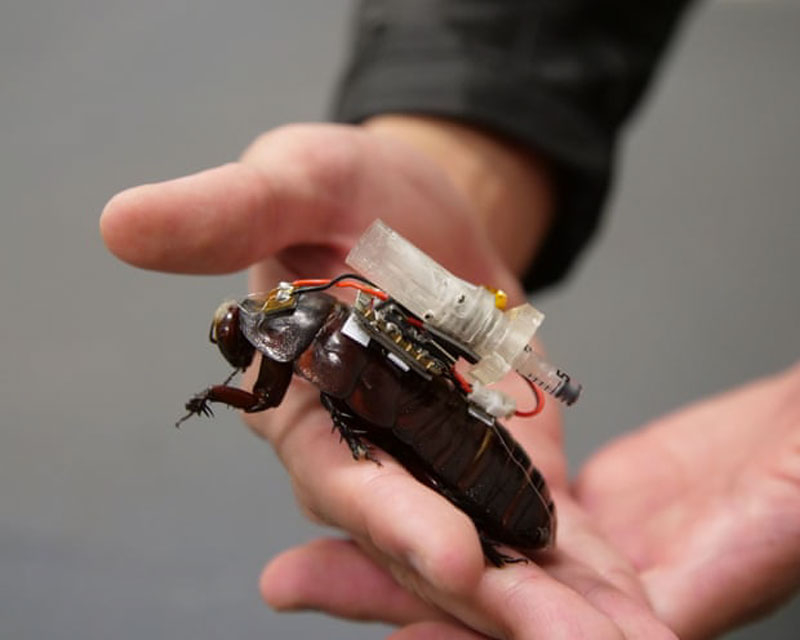
During the test, the researchers not only tested the cockroaches’ ability to find targets, but also the accuracy of medical care. When the target positioning distance reached 15 centimeters, the platform successfully injected in 95% of cases, and successfully completed the full cycle of “search-navigation-positioning-administration” in about 72% of experiments. The main technical problem remains the precise positioning of the insect: not only does the cockroach have to reach the victim, but it also has to position itself and secure itself in the right way for the injection.
Scientists envision future search and rescue robot insect swarms as a group of specialized biological robots, with different insects performing different tasks: some can carry cameras and environmental sensors, while others can carry medical modules. At the same time, the researchers stressed that such devices would not replace rescuers, but would expand their capabilities, allowing them to receive messages and provide assistance in places where humans or large robots cannot reach. According to the developers, the first real applications of this “detachment” may appear within 5 to 10 years after field testing is completed.
If you find an error, select it with your mouse and press CTRL+ENTER.