
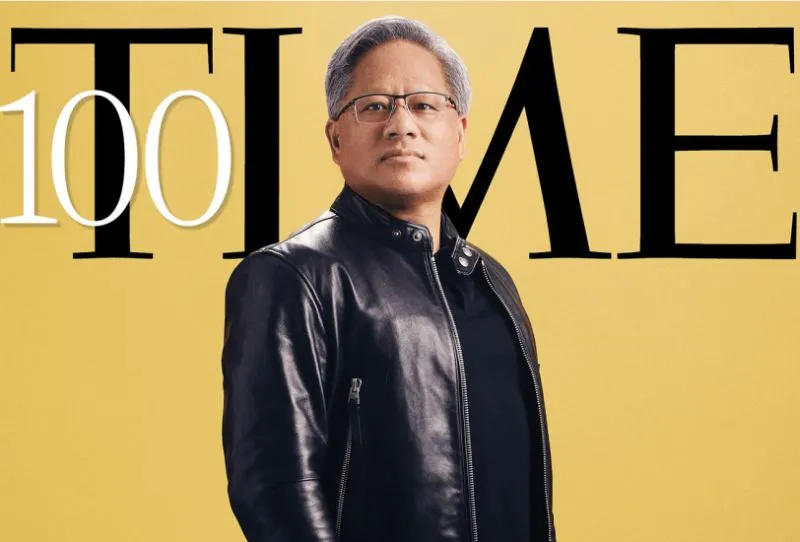
Business publications like to compile rankings, and Time magazine has included Nvidia CEO and founder Jensen Huang on its list of the 100 most influential people in artificial intelligence for the past three years. exist New version list Time100 AI didn’t find a place for him, but actor Ben Affleck and socialite Paris Hilton were included on the list.
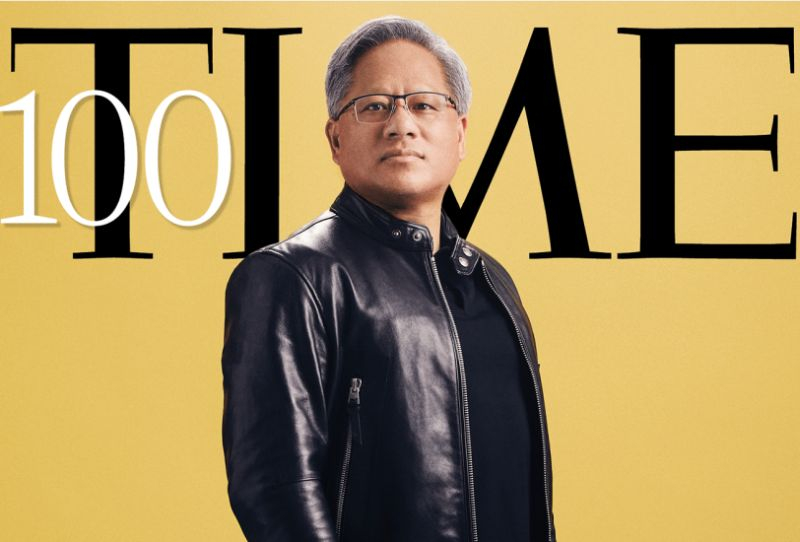
Image source: NVIDIA
It’s difficult to understand what led to the head of the company, considered a major beneficiary of the artificial intelligence boom, being left off the list. Additionally, NVIDIA continues to demonstrate impressive financial performance, and its accelerators remain the foundation for a significant portion of the world’s artificial intelligence infrastructure. However, Huang is not the only industry heavyweight Time magazine has retained this year. The list also does not include Alphabet chief Sundar Pichai, Microsoft CEO Satya Nadella, Meta chief✴ Mark Zuckerberg, Google DeepMind CEO Demis Hassabis and AMD CEO Lisa Su.
This composition is explained in part by the approach of Time magazine’s editorial team. Time100 AI aims to do more than just rank the CEOs of the largest companies or the most powerful players in the artificial intelligence industry. When compiling the list, editors sought to select the individuals who best reflected the major trends of the past 12 months and who they believed would have the greatest impact on future technology development and the rules for its use. As a result, politicians, public figures and creative industry representatives find themselves alongside AI developers and tech company heads.
The AI industry itself has not deprived the list compilers of their attention. These include OpenAI CEO Sam Altman, Greg Brockman and Mark Chen, Anthropic founders Dario and Daniela Amodei, Elon Musk, Bytebeat CEO Liang Rubo, Oracle founder Larry Ellison, etc. The semiconductor industry is also represented: Time100 AI includes IBM and Broadcom senior executives Arvind Krishna and Hock Tan, Micron CEO Sanjay Mehrotra, and China Semiconductor Manufacturing International Corporation senior executive Liang Mengsong. Indeed, representatives of Time magazine apparently did not find a suitable likeness for the latter, so his name in the publication was accompanied by an impersonal silhouette.
Even if Huang himself wasn’t present, the compilers of the list actually acknowledged Nvidia’s influence. For example, Time100 AI included Josh Payne, founder and CEO of AI infrastructure operator Nscale, in a profile provided exclusively to him, and Time separately discussed the company’s close collaboration with Nvidia. The accelerator maker is helping Nscale fund its infrastructure expansion in exchange for the ability to get the hardware up and running faster and grow its customer base.
Ben Affleck falls into the “innovator” category. As an actor and director, he is actively involved in the conversation about how Hollywood should participate in generating artificial intelligence. Afu advocates the use of new technologies in film production, but also believes in the need to create a content licensing mechanism that allows its authors to receive compensation from artificial intelligence developers. He has previously stated that “Film will be one of the last fields to be replaced by artificial intelligenceAfu believes that technology is likely to liberate people in the creative industry from some daily tasks and lower the barriers to entry for small studios and independent writers to enter the film industry.
The list also includes actor Joseph Gordon-Levitt, who became one of the founders of the Artificial Intelligence Creators Alliance, an association of representatives of creative professions advocating to protect their interests as generative artificial intelligence spreads. Ben Affleck also supports the initiative.
Time magazine lists Paris Hilton as one of the people shaping public attitudes toward artificial intelligence. The list introduces her as an anti-deepfakes activist. Hilton supports legislation banning the creation and dissemination of images using artificial intelligence-generated appearances without a person’s consent.
Therefore, the absence of Huang and the emergence of Hollywood stars is not a change in the balance of power in the artificial intelligence industry, but how widespread the concept of artificial intelligence influence has become. It now includes not only the development of models, the production of accelerators and the construction of data centers, but also legislation, copyright protection and the development of rules for the use of artificial intelligence in society and the creative industries.
If you find an error, select it with your mouse and press CTRL+ENTER.