


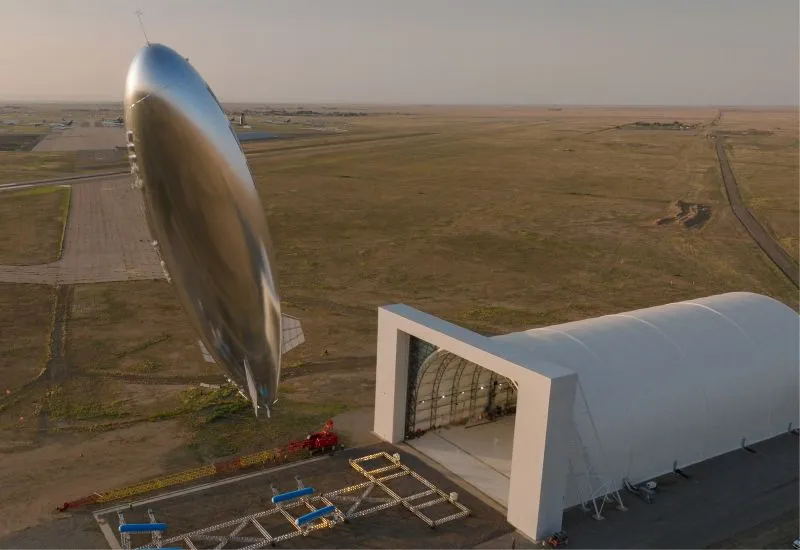
The idea of using aircraft to provide communications to remote areas of the Earth is not new, but practical testing of various scenarios for its implementation continues to this day. Recently, the American company Sceye, with the support of Japan’s SoftBank, successfully launched its stratospheric airship equipped with communication equipment from New Mexico to Japan. In 13 days, the device flew more than 15,000 kilometers over the Pacific Ocean.
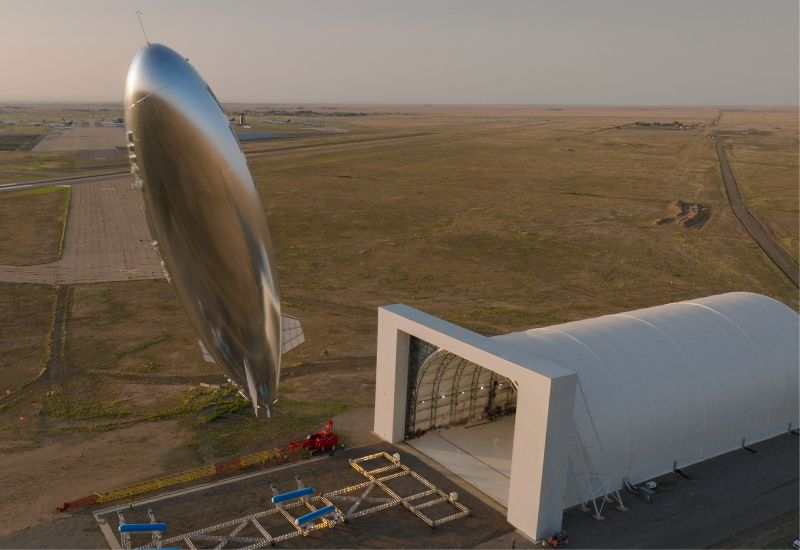
Image source: PR Newswire
As mentioned in Press releaseAfter arriving in Japanese airspace, the airship demonstrated its ability to deliver mobile broadband over SoftBank’s network to ordinary, unmodified devices. During the test period, it was possible to transmit text messages, make voice and emergency calls, use the Internet and broadcast video. In addition, edge computing directly on the airship and communication with drones were tested.
The Sceye airship is a lighter-than-air aircraft capable of operating in the stratosphere for extended periods of time like a flying base station. During this test, the altitude was about 16.5 kilometers. According to Sceye’s calculations, if fully deployed, such equipment would be able to cover an area that would require approximately 500 terrestrial base stations to serve.
In 2025, SoftBank invested in Sceye and received exclusive rights to use its airships to provide telecommunications services in Japan. Operators see them as complementary to terrestrial networks and satellite communications. In particular, such infrastructure can be quickly deployed in disaster areas where terrestrial networks have been damaged or destroyed.
After arriving in Japan, the airship operated in the country’s controlled airspace for more than seven days. In the Cape Muroto area, it demonstrated the ability to stay over a given territory for a long time despite stratospheric winds: the radius of deviation from the target position was reduced to 5 kilometers. Sceye and SoftBank claim that the communication quality is comparable to terrestrial networks and reduces radio interference to terrestrial base stations.
Both companies have separately tested the possibility of moving parts of their computing infrastructure directly into the stratosphere. They placed a mobile network core and a network server on the airship to handle requests directly from smartphones connected in the air. The average time for a complete request processing cycle is 68 milliseconds, which is more than 40% shorter than when processed through the network cloud. Sceye said the experiment was the world’s first successful test in which mobile network cores and data processing servers were placed directly on board a stratospheric aircraft.
The current flight is the first test of such a communications system in Japanese airspace and is SoftBank’s next step in commercializing the technology. Last year, the operator announced its intention to launch pre-commercial telecom services based on the Stratosphere platform in the country in 2026.
This is Skye’s second long-distance transoceanic flight. Previously, a similar airship sailed more than 10,000 kilometers from New Mexico to the coast of Brazil and stayed over a specific area for several days to test its long-term operation capabilities. As of the release of the experimental results so far, the airship is still in the air and has returned to the United States across the Pacific.
If you find an error, select it with your mouse and press CTRL+ENTER.