


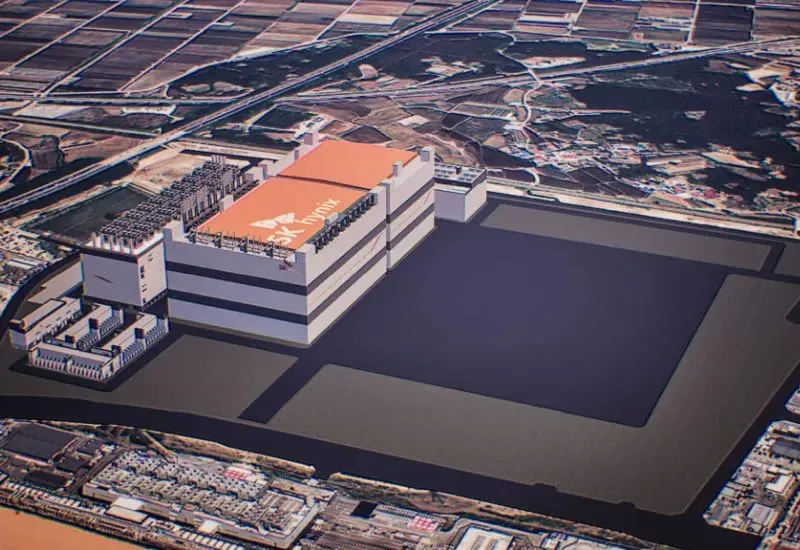
South Korea’s lead over China in memory chip production is likely to further expand due to capacity expansion by Samsung Electronics and SK Hynix. according to BurundiAccording to the Bank of Korea report, new companies will significantly increase production in 2028, while the actual output of Chinese manufacturers is still lower than the declared production capacity.
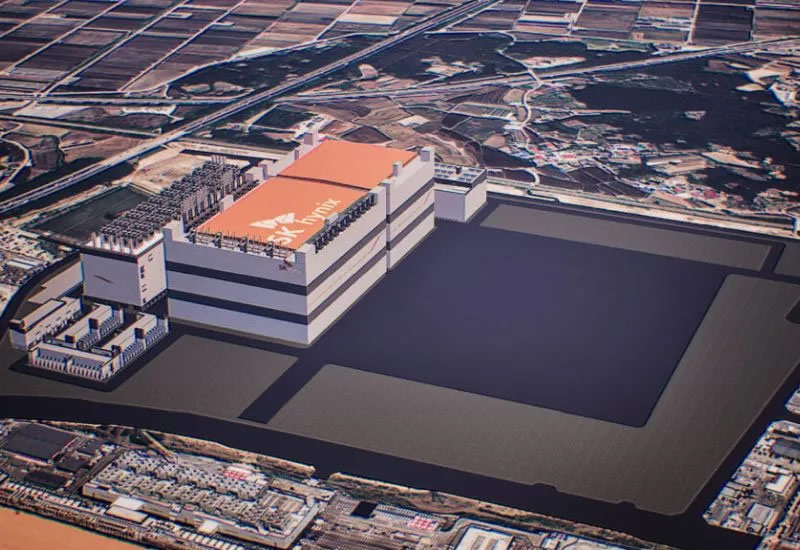
Image source: SK hynix
The new Samsung Electronics and SK Hynix wafer fabs will increase South Korea’s production capacity by approximately 600,000 wafers per month. During the same period, China’s largest memory manufacturer Changxin Memory expects to increase its production capacity from the current 300,000 wafers per month to 600,000 wafers. However, due to the lower yield of available wafers, China’s actual shipments will still be significantly lower than South Korea’s shipments despite similar published capacity figures.
For China, the task is particularly important given that memory shortages have led to record price increases. Provide funds to expand production, CXMT Yangtze River Storage turned to the domestic stock market. In July, Changxin Storage completed one of the largest IPOs in Chinese history, raising nearly US$10 billion. Yangtze River Storage It plans to issue an additional $4.6 billion worth of stock before the end of this year.
At the same time, the Bank of Korea pointed out that the production capacity announced by Changxin Storage does not reflect actual production. Due to wafer yield issues and technical limitations, the company produces about 8% of global supply at about 15% of its nominal capacity. Therefore, the gap between South Korea and China in actual memory production may be wider than pure capacity data indicates. Meanwhile, Changxin Storage is building Shanghai Fab 1 as part of China’s drive to build its own semiconductor industry, covering raw material and equipment manufacturing, packaging and chip design.
In the field of state-of-the-art memory, South Korea is expected to maintain its technological advantage in the coming years. The U.S. export restrictions and sanctions list continue to restrict Chinese manufacturers’ access to advanced equipment and tools, forcing Changxin Storage to focus on the domestic market. However, South Korea’s central bank warned that South Korea’s long-term global market share could come under increasing pressure as China’s semiconductor industry becomes more independent and its domestic supply chain strengthens.
If you find an error, select it with your mouse and press CTRL+ENTER.