

The latest report from Jon Peddie Research (JPR) shows that discrete GPU sales for consumer PCs increased both quarter-on-quarter and year-over-year in the second quarter of 2026, despite parts shortages leading to significant price increases.
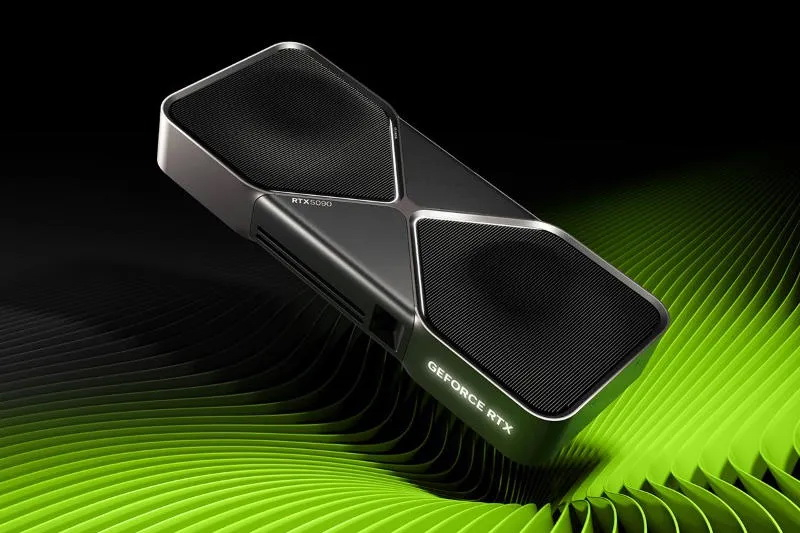
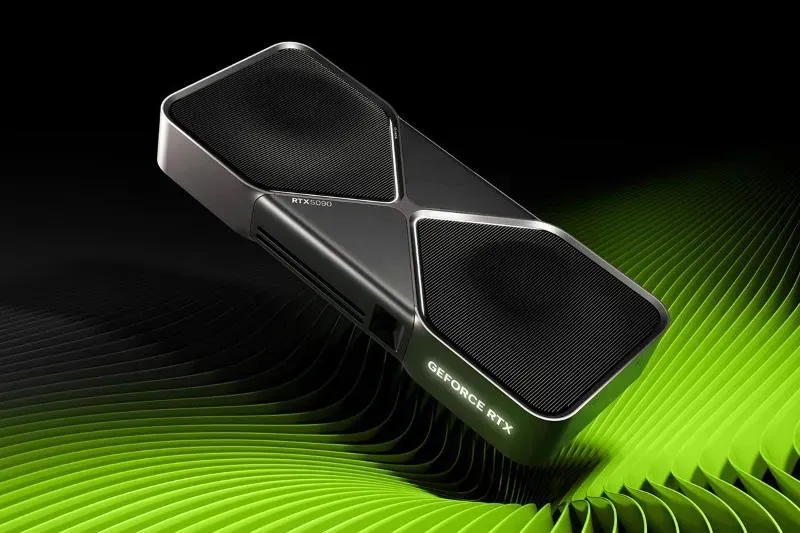
Image source: NVIDIA
Although PC CPU shipments declined year-on-year in the second quarter of 2026, consumer-grade independent GPU sales increased by 12.2% from the previous quarter and 14.1% from the same period last year, marking the best performance in recent memory.
In the second quarter of 2026, PC GPU shipments (including integrated and independent GPUs for desktops and notebooks) totaled 75.5 million units, an increase of 10.4% from the previous quarter and an increase of 1.1% from the same period last year. Growth was primarily driven by the notebook computer market. According to JPR data, desktop GPU shipments fell 4% from the previous quarter, while notebook GPU shipments grew 16.8%.
At the same time, the personal computer central processing unit market fell by 1.1% compared with the same period last year. From a quarterly perspective, the situation is exactly the opposite: CPU shipments grew by about 10%, with growth mainly coming from the mobile field, while desktop processor shipments declined significantly.
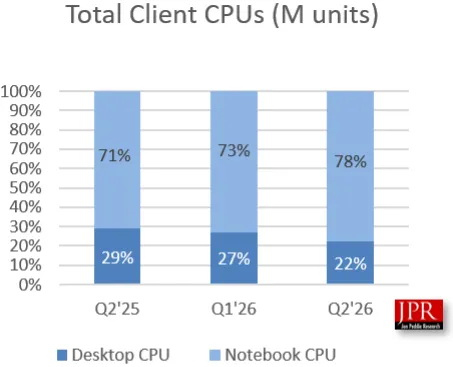
Image source: Jon Peddie Research
JPR did not release absolute figures for independent GPU shipments in the second quarter. Tom’s Hardware estimates that AMD, Intel and Nvidia have sold about 20 million discrete GPUs combined. The calculation is based on sales data, market share and Nvidia dynamics.
The results show that demand for PCs with discrete graphics cards remains resilient despite rising component prices and slowing desktop demand. However, JPR’s shipment data makes it difficult to determine whether the growth was driven by increased sales of graphics cards among gamers, increased demand for gaming laptops, or other factors.
«The second quarter is typically lower than the previous quarter. Sales of discrete graphics processors grew 12.2% in the quarter despite a combination of supply-side factors, man-made demand shocks and local market conditions resulting in sharply higher component prices due to the global memory crisis.“Jon Peddie, president of Jon Peddie Research, commented.
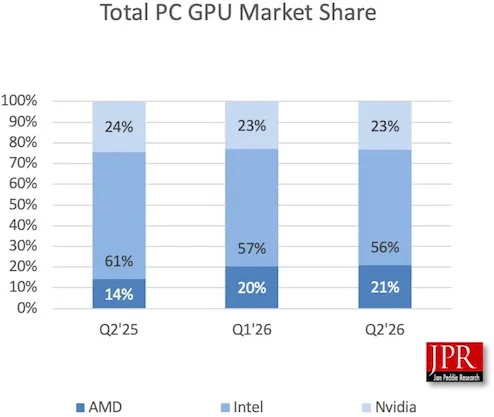
Image source: Jon Peddie Research
Jon Peddie Research has not released a full report on the standalone desktop graphics card market. It is expected to be released later this month and will include stock data for AMD, Intel and Nvidia. What is certain, however, is that Nvidia still maintains its lead.
In terms of the entire consumer PC GPU market, including integrated graphics cards, Intel ranks first with a 56% market share. Nvidia ranked second with 23%, and AMD ranked third with 21%. A year ago, AMD’s market share was 14%, which means that the company’s market share increased by 7 percentage points this year. This growth comes against the backdrop of increased supply of AMD consumer processors.
If you find an error, select it with your mouse and press CTRL+ENTER.