
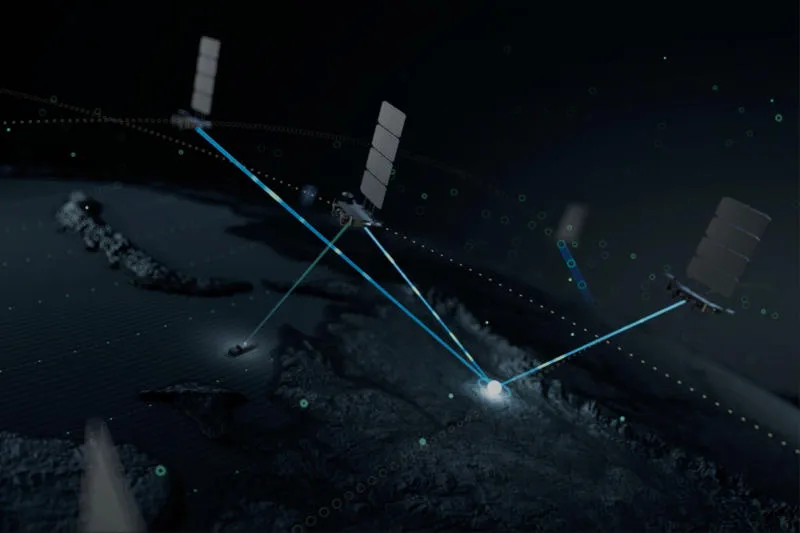
In response to foreign media reports, the head of ICS Holding said that the deployment of Russia’s low-orbit satellite Internet system Rassvet, created by Bureau 1440, is proceeding as usual. The system is often referred to as the domestic “Starlink” analogue. He said that technical risks that occurred during the implementation of the project were foreseen in advance and were still within control and would not hinder the company’s completion of the project as planned.
Image source: 1440.space
Previous edition business insider It was pointed out that the 16 satellites launched by the 1440 Bureau in July have not yet reached an altitude of approximately 804 kilometers, which was the target altitude previously designated by the Bureau. According to public data from the U.S. Space Force, these devices are located at an altitude of approximately 305 to 402 kilometers. In such an orbit, atmospheric drag is stronger and without further ascent, the satellite’s lifespan is shortened. At the same time, orbital data showed that many craft performed altitude-increasing maneuvers.
Business Insider also calculated that of the 32 Rassvet spacecraft launched so far, only 12 are in what the publication considers to be long-term orbits. However, ICS Holding, which owns Bureau 1440, does not see the situation as problematic.
“There are a number of technical risks when designing this group-based service. These risks are assessed, initially incorporated, and managed.<..>We are now absolutely within all acceptable development limits for our group.<..>We talked about the fact that we were going through certain phases. We are not just in our phase. In fact, we are leading the way in a way. “ – Regulation erythrocyte Alexey Shelobkov, general manager of IKS Holding (1440 innings).
According to the company, actual testing of Rassvet is even slightly ahead of schedule. It was initially planned to begin internal testing of the communications in August, with testing with consumers beginning in September. However, the first such tests began in August: Rassveta terminals were installed on Russian Railways trains and major potential customers had the opportunity to try out the system. Full testing should begin soon.
“We are proceeding exactly as planned. All the technical details we see are absolutely controllable and predictable.” ,” Serobkov emphasized.
If you find an error, select it with your mouse and press CTRL+ENTER.