

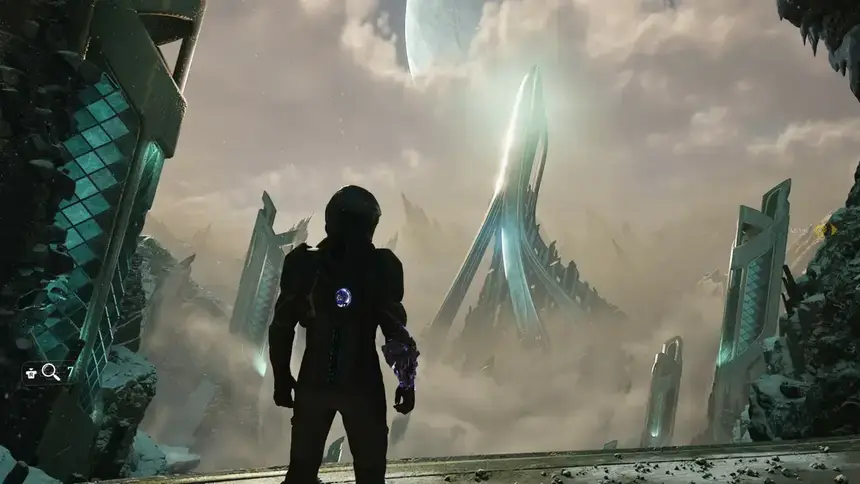
Archetype Entertainment, a studio comprised of former Mass Effect, Dragon Age, and Star Wars: Knights of the Old Republic developers, is developing sci-fi action RPG EXODUS. The game takes place on the planet Lyden, where human colonies are threatened by the decline and “rot” of their life support systems. The player plays Jun Aslan and must conduct space exploration and obtain the technology of ancient celestial civilization in order to save his homeland.
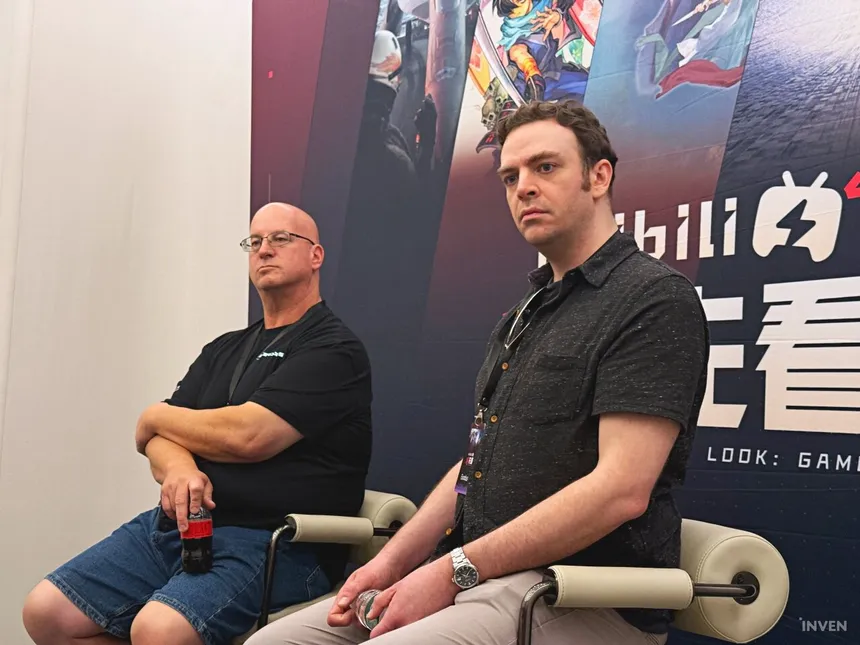
After the Korean portal showed off the trial version at the Bilibili First Look event Because of the text Interview with Narrative Director Drew Karpyshyn and Creative Director Jesse Skye. We’ve dug into the material and prepared a summary with key details about the timing mechanics, dynasty system, peer and combat systems.
- EXODUS is developed by Archetype Entertainment, a studio comprised of game industry veterans who have previously developed iconic games such as Dragon Age, Star Wars: Knights of the Old Republic and Mass Effect. The developers had an ambitious goal to combine world-class storytelling with strong emotional responses, broad player freedom and modern gameplay mechanics in a large-scale sci-fi setting.
- The game takes place on the planet Lyden, where humans arrived in an ark two hundred years ago and discovered a world transformed by a race of ancient gods. However, the technology that supports life on Earth has been infected by the so-called “Rot” and is now in a stage of gradual destruction. Players take on the role of Jun Aslan, the heir to the legendary traveler Orion Aslan, who must search for celestial technology to save his home and loved ones. The exact duration of the game has not yet been announced, but the author guarantees that it will last dozens of hours, including the main missions and additional content provided by the special role-playing center.
- The key feature that distinguishes EXODUS from other role-playing games is the time dilation system, because the game’s universe strictly adheres to the theory of relativity and there is no faster-than-light travel. This means that a few days spent by a traveler in another star system turns into years or even decades spent on his home planet. Decisions made by the player before setting off, such as the distribution of powerful ruined artifacts discovered, will fundamentally change the character’s society, technological advancement, and relationships, which will only become apparent upon returning from the expedition.
- The developers stress that time dilation is not just a gameplay gimmick, but a fundamental pillar of the narrative around which the entire game’s story revolves. Precisely because of this phenomenon, only specially trained people are sent on large-scale expeditions, because participating in a mission actually means voluntarily giving up one’s ordinary life and family in order to complete a mission with huge consequences.
- The situation on Ryden’s homeworld is complicated not only by technological failures but also by a fierce civil war that forces players to become actively involved in politics and alliances. The protagonist’s father, Orion, once went on an expedition and never returned, while Jun’s half-brother Gideon returned alone, seized power, and became a cruel tyrant. This is why Jun is now forced to live among the resistance. To succeed in this situation, the player needs to create a powerful dynasty that can continue to implement his plans and protect the legacy during the long years of the protagonist’s absence on Earth.
- Building a dynasty requires forming alliances with various factions in Raiden and other worlds, and these political decisions directly affect the game’s later stages and final outcome. The scale of threats in the game also grows: if the main enemy at the beginning is a sadistic stepbrother, as the plot develops, players will face more global and existential dangers.
- The game uses a so-called “open linear” mission structure, where players are given clear plot goals, but are also given enough space to freely explore locations. In these standard missions, players gather resources, recruit companions, and carefully prepare for large-scale expeditions, which can only be undertaken after sufficient preparation, usually at the end of a story chapter. The player will observe the consequences of his actions and the effects of ruthless time primarily in his main hub city, where buildings may radically change, old characters or quests disappear, and new ones appear.
- Due to the expansion of time, different civilizations are strongly isolated from each other, and even ordinary communication takes many years, so every world visited has its own absolutely independent and self-sufficient history. However, players don’t typically return to distant planets they’ve already explored to see how they’ve changed, because traveling there again would require additional decades.
- Relationships with companions play a huge role in the overall story, directly affecting the development of the plot, the dialogue available, and who will remain with the protagonist at the end of the adventure. The game offers a variety of options for starting a relationship, but if the player makes the wrong decision during the communication process with the person of their choice, it is likely to end in failure.
- Among the characters are the so-called Awakeneds – animals brought from the ark on Earth who gained human intelligence in the process of evolution but retained some of their animal instincts, as well as the mysterious changelings and companions from the Celestial Clan. A prime example of an Awakener is an octopus named Salter who operates a mechanical suit and fights with a sniper rifle, but you can’t romance him because humans don’t have enough limbs for his aesthetic. Although awakened mammals (there will be no insects in the game) have equal legal rights and live in special areas of the city, they often face social prejudice and infrastructure specifically adapted to human needs.
- The combat system provides players with great tactical flexibility and no strict class restrictions, allowing players to start with a basic set of skills and then freely experiment with different weapons, abilities and ancient technologies. An important element of the plan is Jun’s unique ability to scan enemies before combat begins, allowing him to think ahead to tactics and gain a significant advantage on the battlefield by exploiting enemy weaknesses.
- Companions play a vital role in combat, providing players with the opportunity to launch powerful combos that the developers liken to alley-oops in basketball, where a teammate passes the ball and the player completes the shot in spectacular fashion. At the same time, the absence of a companion in the active squad will never prevent access to locations or important rewards, but will naturally affect the narrative part, depriving the player of the unique reactions and dialogue of the character left at the base.
- Players can choose the gender of Jun Aslan when creating a character, but this is more of an element of visual customization and will not fundamentally change the overall process of the large-scale plot.
- EXODUS implements a unique moral worldview philosophical system, which is divided into the path of the Paladin (following the traditional virtues of mankind) and the path of immortality (adopting the characteristics and thinking of heavenly beings). Players don’t have to choose just one radical path: you can invest development points in both directions, which not only affects plot choices but also opens up opportunities for unique combat skills deep in the upgrade tree.
- The game’s cultural diversity, represented by characters like Suliman the Celestial raised by the Crow Council, is the result of a complex mixture of different Earth cultures aboard the Ark, rather than a direct replication of modern religions in real life.
- One of the most important characters in the story, SS Orlev, is played by the famous actor Matthew McConaughey. Matthew McConaughey was invited because of his connection to the city of Austin, where the studio is located, and his experience with the concept of time dilation in the movie “Interstellar”, and then worked with the actors to finalize the image of the hero.
- From a global perspective, the developers see EXODUS as the beginning of a major series with an expanding universe, and while the current game will have a clear ending, players’ landmark decisions have the potential to impact possible future sequels.
EXODUS is scheduled to release on PC, PlayStation 5, and Xbox Series X|S on April 7, 2027.