



German private aerospace company Isar Aerospace declare Successfully launched a lightweight spectrum launch vehicle, becoming the first commercial aerospace company in Europe to successfully put a satellite into orbit. In addition, this is the first time a rocket developed by a private company has entered orbit after being launched from the European continent. The rocket was launched from the Andoa space launch site in northern Norway at 23:12 Moscow time on September 5.

Image source: Isar Aerospace
“We made history. On our second flight, we became the first commercial space company in Europe to put a satellite into orbit. The Onward and Upward mission successfully launched and put its payload into orbit.” – The company is in Social Network X.
According to reports, Isar Aerospace’s qualification flight broke many records in the European commercial space program: the launch vehicle successfully completed the MaxQ stage, completed the MECO maneuver and stage separation. The rocket crossed the Karman Line at an altitude of 100 kilometers and shed its nose fairing before reaching orbital speed. After completing the circular directional maneuver, the five CubeSats were separated. As part of Dcubed’s Let It Go experiment, a payload was also installed on the rocket’s upper stage.
The mission’s launch payload was selected through DLR’s microlauncher competition, part of the German Aerospace Center (DLR), which provides educational institutions and start-up companies with low-cost access to space. The competition is funded by ESA Boost!
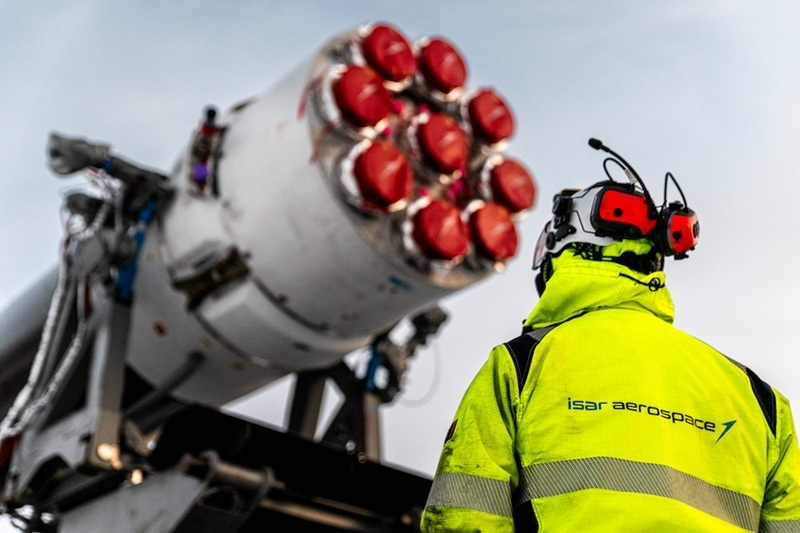
This is the second launch of the Spectrum rocket, which is capable of placing about 1,000 kilograms of payload into low Earth orbit. The first launch attempt of a German rocket failed.
Isar Aerospace said it is currently expanding its network of available launch sites around the world. In particular, the construction of Europe’s largest comprehensive launch vehicle production base is nearing completion. In addition to its current launch site on the Norwegian island of Andøya, Isar Space is building a launch facility in Nova Scotia, Canada, covering medium- and high-inclination orbits critical for Earth observation and communications.
The company said its production facility near Munich will be able to produce more than 30 such missiles per year.
If you find an error, select it with your mouse and press CTRL+ENTER.