
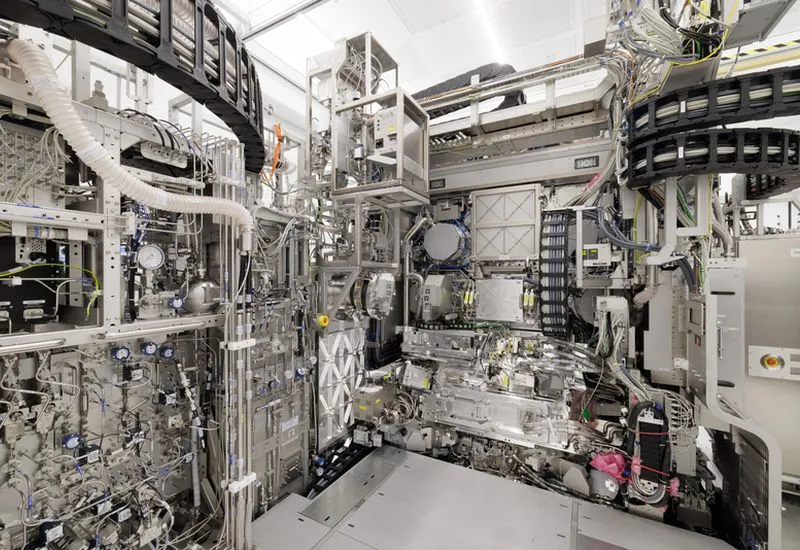
In 2019, Huawei Technologies Co., Ltd. was the first to be hit by U.S. sanctions in the technology field. Therefore, it is generally believed that Huawei has become the locomotive of China’s import substitution over the years. Current efforts by Huawei and its related Chinese companies are focused on making lithography equipment that will allow them to produce more advanced wafers in China.
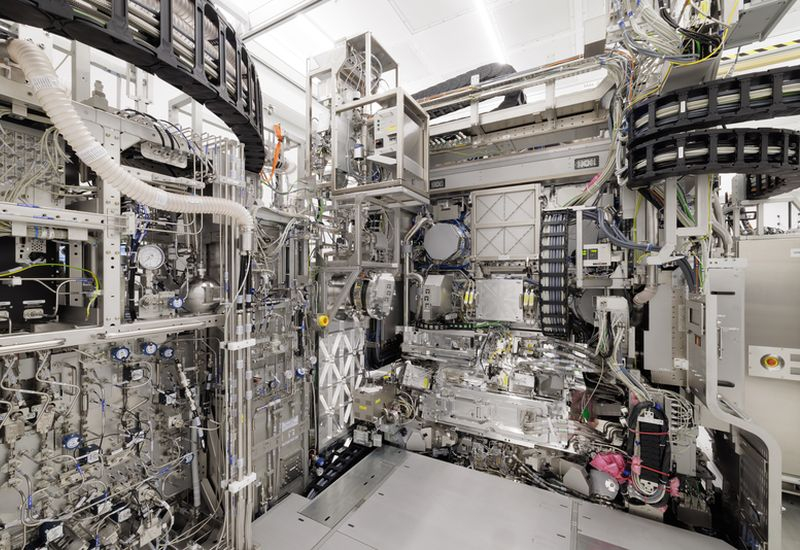
Image source: ASML
Deep ultraviolet (DUV) equipment is not state-of-the-art by the standards of the Western semiconductor industry, but some Dutch-made ASML scanner series are already subject to export restrictions, prompting Chinese manufacturers to consider import substitution in this area.
version financial times The example of the Chinese company Yuliangsheng was given, headquartered in Shanghai and created with the participation of the start-up SiCarrier, which, according to the Financial Times, has close technical and business ties with Huawei. However, Huawei denies any relationship with SiCarrier. The Shanghai company has successfully developed a DUV-level lithography system with the support of partners, and samples of the system have been tested not only by Huawei but also by contract chip manufacturer SMIC. Since the prototype is far from perfect, it is used to make semiconductor components that are simpler than future mass production.
One of the obstacles to the successful manufacture of DUV scanners in China is the lack of local optical systems and laser radiation sources that meet quality requirements. Huawei is working hard to provide support to Chinese developers in these areas. As Bernstein analysts explained, in this case, Huawei acted as a “project manager” coordinating efforts at the national level. By the end of this year, Yuliangsheng is expected to release 12 DUV lithography scanners.
As previously reported, China’s Semiconductor Manufacturing International Corp. has begun testing the supplier’s lithography systems suitable for manufacturing 28nm wafers in an attempt to adapt them to use multiple photomasks to manufacture more advanced 7nm wafers. The DUV prototypes, manufactured by Yuliangsheng and backed by major Chinese company SMEE, vary in composition, with some relying on imported components and others trying to use Chinese alternatives. Zeiss has said it only sells its lithography optics to ASML, but industry sources say such components are available on the aftermarket in China and are used in China’s Yuliang Sheng DUV prototypes.
Huawei’s investment arm Habo and another company-backed fund Shenzhen Yuanzhi Spark are investing in Chinese company Fujian Zhiqi Optoelectronics, which is developing high-precision optical components to replace Zeiss solutions. The manufacturer, which was spun off from Castech in 2022, is backed by the Chinese Academy of Sciences and is a supplier to ASML and Huawei.
In the production of laser radiation sources for lithography systems, the world market is dominated by Japanese Gigaphoton and European Cymer (part of ASML Holdings). Experts say the main issue for Chinese developers is creating laser radiation sources that can operate reliably at high power. In this area, Huawei is investing in Beijing-based RSL Laser Opto-Electronics, which is considered a source supplier of Chinese-made DUV systems. According to public information, RSLaser has provided light sources for previous generations of DUV equipment produced by SMEE.
Although Chinese chipmakers are buying prototypes of Chinese-designed DUV systems for experimentation, for mass production they still rely on ASML equipment, which they purchased in advance even before restrictions were put in place. Changxin Storage and Yangtze Memory, which also specialize in the production of memory chips, have a three-year supply period for such equipment. Bernstein experts said that U.S. sanctions will only accelerate China’s development of substituting foreign chip production equipment. Western players in the lithography equipment market are once again convinced that Chinese equivalents are at least 15 years behind foreign models.
If you find an error, select it with your mouse and press CTRL+ENTER.