


Representatives of South Korea’s SK Hynix recently hinted that they wouldn’t mind getting closer to the Japanese memory maker and organizing a launch in Japan. Kioxia, whose capital investor is SK Hynix, could emerge as the most likely partner, but the head of the first company ruled out such a settlement. He also said he believed it was important to limit the price increase of NAND memory in the server field.
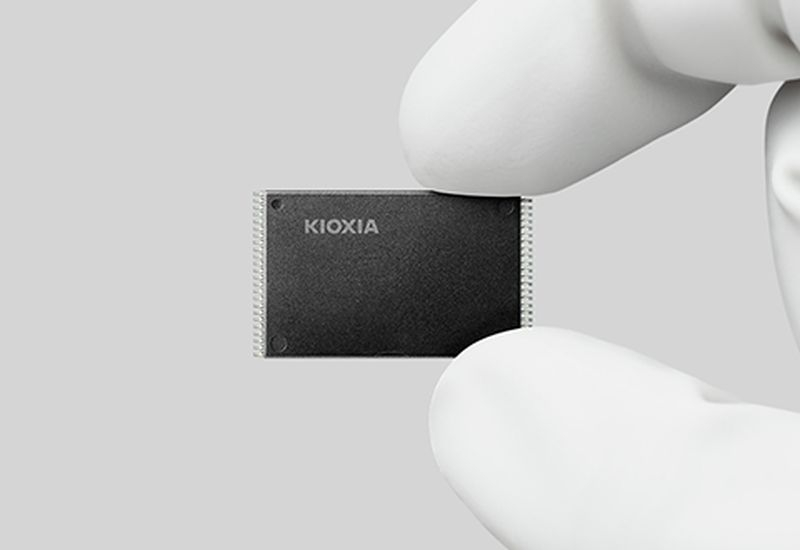
Image source: Kioxia
during an interview Bloomberg Kioxia Chief Executive Hiroo Ota said deepening the relationship with SK Hynix would require additional approval from antitrust authorities and would disrupt the joint venture with Sandisk. “We can’t just say, ‘Just three companies.’ We don’t understand why he said that.” — The person in charge of Kioxia commented on the remarks of SK Group Chairman Chey Tae-won. As he stressed, there are no negotiations between Japanese and Korean memory manufacturers on the organization of joint production.
At the same time, it cannot be said that SK Hynix and Kioxia have nothing in common. First, the former owns convertible bonds of the latter, which can be converted into approximately 14.19% of the latter’s shares under certain conditions. Sandisk has a joint venture with Kioxia in Japan and is currently working with SK hynix to develop HBF memory. Meanwhile, Kioxia itself is working with SK Hynix to develop STT-MRAM type magnetic memory and is also receiving DRAM from the latest chips installed in SSD solid state drives. Kioxia is working with Taiwan’s Nanya Technology to use metal oxides to replace traditional silicon, trying to create alternatives to traditional DRAM. For now, everything is limited to the development of new technologies, but companies will consider new forms of collaboration if they can create viable commercial products.
Hiroo Ota led Kioxia in April this year and has drawn attention from his subordinates to the rapid rise in NAND prices. He directed them to, if possible, curb the growth in the price of memory used in servers because he believed the high cost of such components would sooner or later scare away buyers. Kioxia did not rule out further increases in NAND prices, but stressed that the focus now is on maintaining them at current levels. NAND prices rose 70% in the second quarter from the previous quarter, and Ota believes this is unlikely to happen again in the near future. “Even hyperscalers have limited budgets,” — Kioxia leaders assess the ability of customers in the server space to withstand further increases in memory prices.
As much as half of the memory supplied by Kioxia already has long-term agreements with customers. Some of these companies are even preparing to sign contracts beyond 2030. Bloomberg predicts that in the long run, Kioxia’s data center and enterprise solutions business will account for more than 60% of its revenue and become more dependent on artificial intelligence infrastructure. The head of the company said that it is not prepared to simply increase market share at all costs, but is trying to provide customers with the technology they mainly need. Last month, it started shipping 332-layer 3D NAND on tenth-generation chips.
If you find an error, select it with your mouse and press CTRL+ENTER.