



starry sky It is often compared to Bethesda’s previous major RPGs – Skyrim and Fallout 4. Compared to them, the space RPG failed to become such a huge phenomenon, but in terms of the scale of the tasks assigned to its developers, it surpassed almost all of the studio’s previous projects. Starfield’s lead systems designer Kurt Kuhlmann said the game’s sheer size ended up being one of its main problems.
In an upcoming episode of the FRVR podcast, Kuhlman details the challenges she faced Bethesda During the production of “Starry Sky”. According to him, the team as a whole has achieved impressive results, but the resources are still insufficient to fully realize Todd Howard’s original vision.
One reason is the entirely new scale of production. Starfield became Bethesda’s first truly large-scale multi-studio project, with a team size of over 500 people. At first glance, this was supposed to speed up development, but it actually led to the opposite effect: many processes became more complex and began to require constant coordination between different experts and departments.
Kuhlman cited the example of creating a dungeon. exist Fallout 4 These elements can be worked on relatively quickly: the designer creates the basis of the location and then transfers it to other experts for further development. In Starfield, this approach has actually failed.
The lighting problem is particularly serious. Designing a place goes through a complex series of stages in which different people can be involved. Afterwards, the results need to be compiled into the final version. Therefore, even relatively minor changes to a completed room may require repeating almost the entire chain.
As a result, an adjustment that previously took relatively little time became a lengthy process, with work constantly being transferred from one expert to another. Something similar happens not only when creating a location.

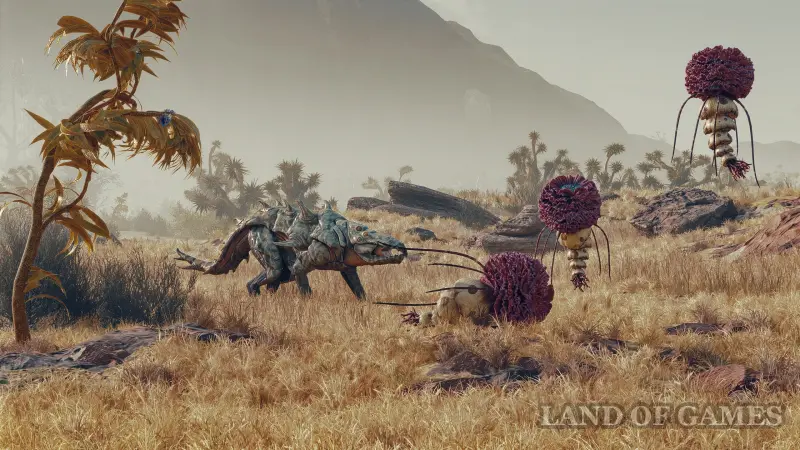
Similar problems arise in creature design. Bethesda originally hoped to add more diverse fauna to the game, but each full-fledged model proved much more difficult to produce than expected. According to Kuhlman, creating and animating the creatures sometimes took two to three times longer than expected.
Simultaneous work in several studios also created additional difficulties. Developers can agree on design elements, which must then be transferred to employees on another team for implementation. The COVID-19 pandemic has made its own adjustments. The fully remote format at least kept working conditions the same for everyone, while the subsequent hybrid model began to separate employees into different groups, making it more difficult to interact with each other.
However, Starfield’s problem was not just an overly complex production organization. Kuhlman believes that even Bethesda’s large team is not enough to handle a game of this scale.
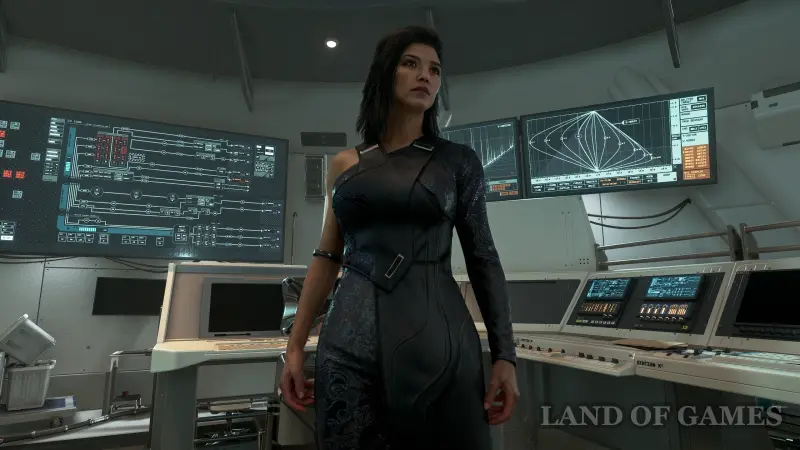
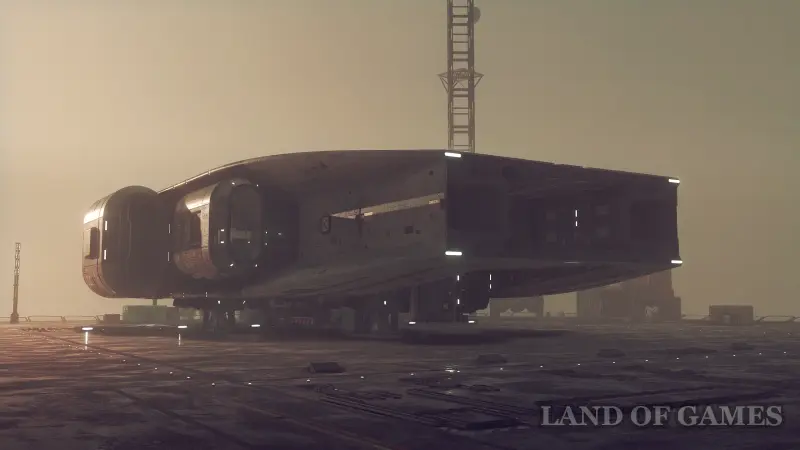
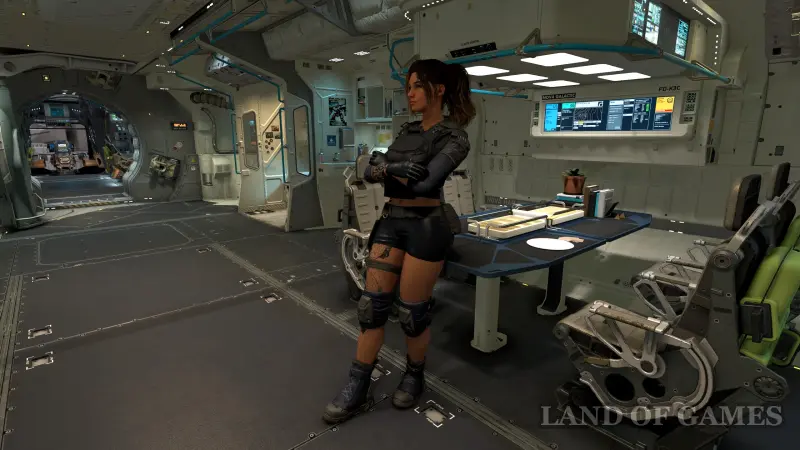
In fact, Starfield was also trying to implement many new ideas for the studio. This isn’t just a traditional Bethesda RPG set in space. The developers have created a huge sci-fi universe, procedurally generated planets, spaceships and their structures, outpost systems, space travel, many additional mechanics, and a “New Game+” system related to alternative universes.
In previous studio projects, things were much simpler. When moving from one game to another, Bethesda can leverage existing technology, systems, and accumulated production experience. even while creating Fallout 3 back forget An important part of basic decision making is well known to the team. In Starfield, almost everything has to be done again.
This is what causes the chain reaction. The new system must be running before developers can start creating full-fledged content for it. If any technology or mechanism is delayed, the corresponding team loses valuable time. The later the instrument is ready, the less time there is to fill the game directly.
“The problem with Starfield is that there’s a huge amount of innovation compared to previous games””Kulman explained.
At the same time, developers feel that Bethesda is actually trying to solve too big a problem with the power available. Even more than 500 employees wouldn’t be enough to create the amount of content needed to create the concept, he said.
This is especially evident in the case of procedurally generated planets. The idea itself still sounds good to Kuhlman, but such a system would only work if supported by a large amount of high-quality manual content. Otherwise, players will quickly start to notice repetitive elements and understand how predictable the spawn actually is.
This is why “Starfield” gives many players an unsatisfying feeling. That’s not to say there’s absolutely nothing to the game. On the contrary, its quantity is huge. The problem is the relationship between the content and the scale of the universe itself. Bethesda has created such a vast playground that even the vast array of quests, locations, and activities sometimes disappear against its backdrop.
Kuhlmann said Starfield ended up being the closest the project came to the original idea Bethesda created under these conditions.
Todd Howard wanted to make a full-fledged large-scale space RPG, not just “The horizon in space”. Players must travel between planets, explore a vast universe, and do things that were impossible in the studio’s previous games. As a result, Bethesda actually implemented the concept – but at an extremely high cost.
Kullman himself admits that, looking back on the development process today, he thinks the mission was too ambitious.
“It was a very ambitious idea and, looking back, I don’t think we should have tried it. We simply couldn’t do it.”the developer said.
However, he doesn’t think Starfield is a failure. Instead, he believes that Bethesda’s ability to release such a project is an impressive achievement in itself. The studio simultaneously created entirely new systems, mastered spaceship and vehicle development, constructed a procedurally generated universe, and attempted to maintain the familiar depth of its role-playing games.
Bethesda is now focused on The Elder Scrolls 6this should prove to be a more focused game. After this, the studio plans to work on fallout 5so Bethesda’s next big space project, if it does arrive, may still be a few years away.
That’s why Starfield will likely remain the studio’s only experiment with the format. However, if Bethesda decides to return to this universe, developers have learned one important thing: to realize such an ambitious idea, it will not be enough to rely on a large team – it will require even greater production resources and time.