

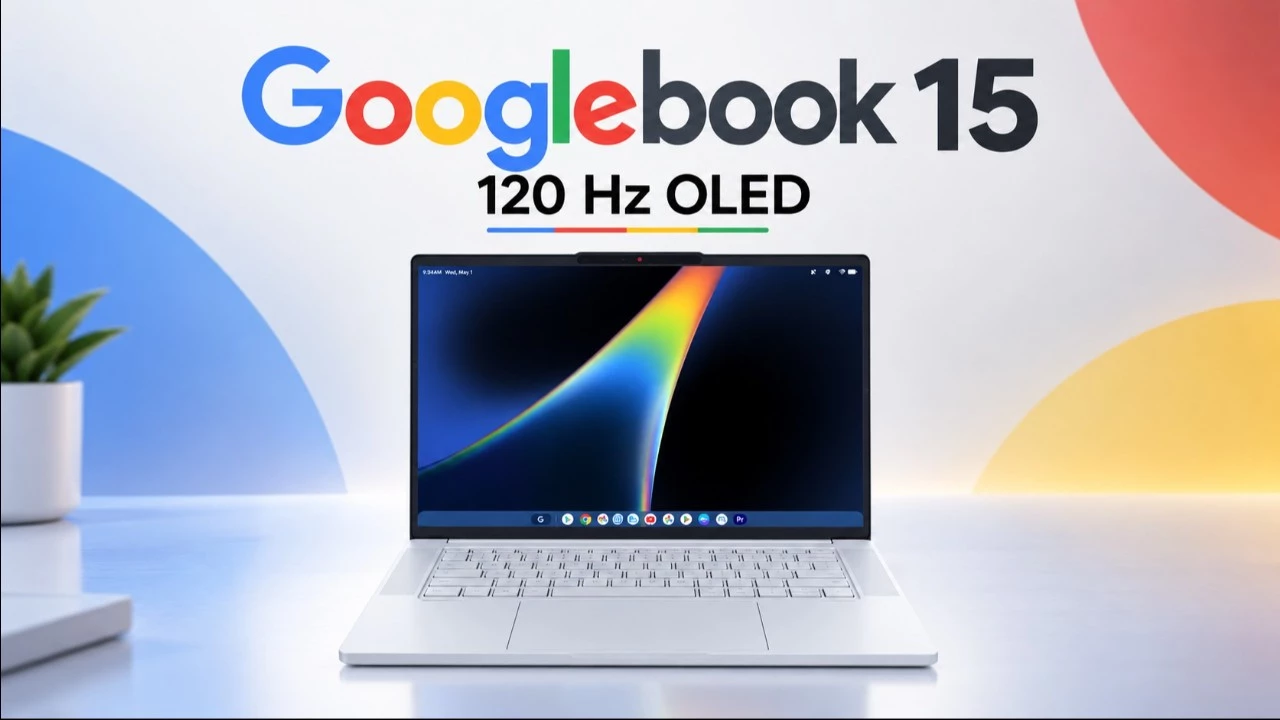

Lenovo seems to have decided to take ChromeOS laptops beyond the usual budget range. The company is preparing the Googlebook 15 – a high-performance model with a large OLED screen, a modern Intel processor and a set of exclusive Google features.
According to leaked Lenovo documents, the device is designated as GB 15IPH12 and will feature an Intel Core Ultra 5 325 processor with integrated graphics on four Xe cores. Buyers will get 16 or 32 GB of LPDDR5X RAM and 256 or 512 GB of storage. The IPH platform is associated with the Intel Panther Lake-H series.
The main feature of Googlebook 15 will be a 15.3-inch OLED touch display with a resolution of 2880×1800, an update rate of 120Hz, a brightness of up to 500 nits, and full DCI-P3 coverage. The laptop weighs just 1.29 kg and is powered by a 70Wh battery that Lenovo claims can last up to 11 hours of operation. This set of ports includes two Thunderbolt 4, USB-A, HDMI 2.0 and a 3.5mm audio jack, and wireless connections include Wi-Fi 7 and Bluetooth 5.4.
Other features include Gemini integration, syncing with Android smartphones, fingerprint scanner and Google facial recognition. The keyboard will have a separate key with the G logo, and a multi-color LED glowbar will be placed near the hinge to display charging and battery status. Price and release date have not yet been revealed.
Other publications on this topic

Lexar brought an unusual portable SSD Muse to IFA 2026 in Berlin, which the company says is the world’s thinnest. Designed primarily for mobile content creators, the drive’s case takes up virtually no space in your bag or next to your smartphone.
Today 12:47
1

HP has quietly unveiled its new OmniDesk mini PC, which the company is positioning as a compact alternative to desktop systems like the Mac mini. The device measures only 13x13x4.8 cm and is aimed at users who value small size and low power consumption.
Today 12:45
0

Local artificial intelligence models are already starting to tackle tasks that until recently required rigorous programming skills. This enthusiast proved this in practice, creating a full-fledged FPS about zombies in about five hours – without an internet connection or the use of cloud tokens.
Today 12:43
0