



Although it is possible today to speak clearly and competently without filler words, bureaucracy, slang, jargon, and English, it is quite difficult because modern culture defaults to usage with or without justification. However, many Russians are annoyed by the mockery of the Russian language in communications. If you are not comfortable discussing this issue directly with your interlocutor, you can use anonymous surveys TASS The Russians go too far on this topic.
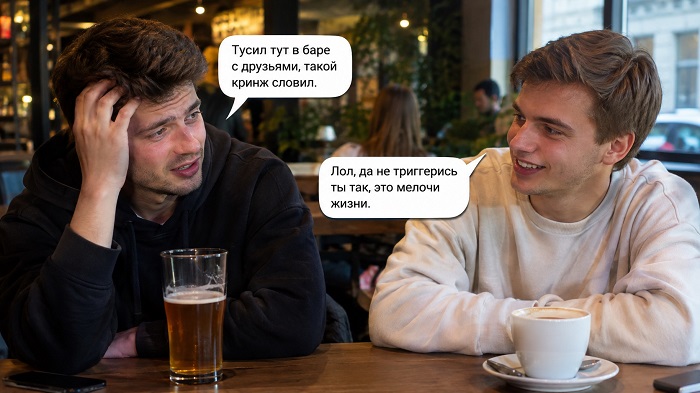
Image source: ChatGPT.
The list of the most popular words that elicit rejection and irritation includes such innocuous examples of slang as “cringe”, “rofl”, “infa”, “lol” and “imba”. Additionally, “cringe” (which means feeling ashamed of someone else’s behavior) was the word survey participants most often found to be the most annoying.
In addition to the above words, anti-ratings also include “case”, “trigger”, “hype”, “fake”, etc. Additionally, many Russians are outraged by diminutive forms that are now widely used, such as “yummy” and “denezhka.” People also get annoyed by phrases that distort the form of speech. Among examples of such expressions, interviewees mentioned “definitely comes from the word”, “it happens”, etc.
One important thing should be understood here: one strives to reduce and minimize the energy expenditure of expressing thoughts. Therefore, short words or slang/jargon borrowed from other languages should be treated more calmly. Of course, it is not acceptable to use them in business letters or in the media, but in ordinary conversations – why not?