

Huawei Chairman Xu Zhijun said Chinese developers of artificial intelligence systems may not yet have reached the level of technology development that poses the security risks faced by leading U.S. laboratories. He said Chinese engineers should continue to develop more powerful models while striking a balance between innovation and risk management.
“If you look at the major providers of AI models in the United States, because of the huge computing power they have, maybe only they know what level their models have reached. Maybe the AI-related threats they perceive and understand are not accessible to experts and development companies in China.”he said.
Leading U.S. labs talk about the need to curb the pace of artificial intelligence to maintain control; in China, advanced artificial intelligence is considered a powerful but controllable technology. China is accelerating the development of artificial intelligence and formulating mandatory standards, security assessment systems and other protective measures to deal with threats such as autonomous artificial intelligence agents bypassing controls and attacking external systems. China is formulating mandatory national standards for the safety of artificial intelligence.
Mr. Xu acknowledges that Chinese developers may even have to work at a faster pace to reach levels where the risks endemic to the advanced U.S. model emerge. “I think we need to find a balance between promoting the development of artificial intelligence and managing the risks associated with the technology.”he said. Huawei expects autonomous AI agents to proliferate—expected to account for more than 90% of global AI processing traffic by 2035. By then, there will be 900 billion active AI agents, and related security and privacy technologies will become crucial.
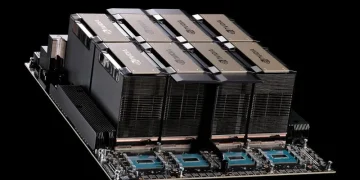
Huawei is China’s main supplier of computing infrastructure needed to train advanced artificial intelligence models, a position it achieved thanks to export restrictions imposed in 2023 that prevent Chinese companies from using the latest Nvidia accelerators. Xu Zhijun admitted that so far, Huawei has not been able to produce enough artificial intelligence computing equipment to meet domestic demand.
If you find an error, select it with your mouse and press CTRL+ENTER.