
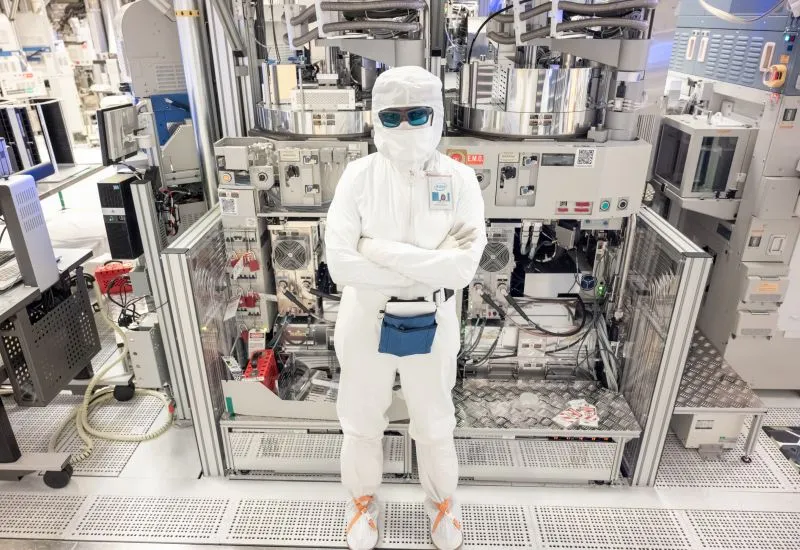
The renaissance of the U.S. semiconductor industry means obtaining a sufficient number of skilled labor, and obtaining this resource cannot be achieved overnight. It is estimated that there will be 157,000 open positions in the local semiconductor industry by the end of the century, and filling these positions will not be easy.
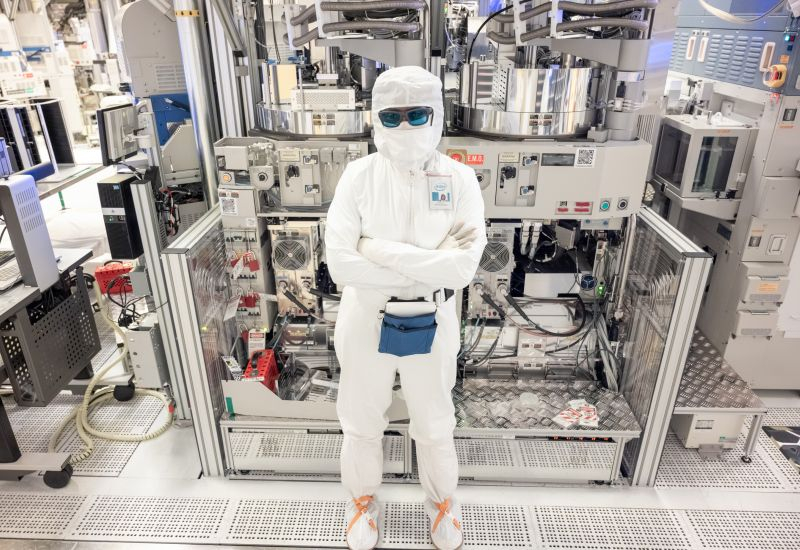
Image source: Intel
This resource draws on forecasts in this area from McKinsey and the SEMI Foundation CNBC. Jon Taylor, executive vice president of Samsung Electronics Texas, said awareness of the issue worries him: “We just don’t see enough technical talent in the market.”. At the same time, McKinsey statistics show that only 3% of college graduates who receive engineering education in the United States find jobs in the semiconductor industry every year. At the same time, 73% of chip manufacturers noted that they face a severe shortage of engineering personnel.
In terms of business expansion, the recovery of the U.S. semiconductor industry is underway with the active participation of Asian companies such as TSMC and Samsung Electronics, but the employees in their U.S. factories must be mainly local residents. TSMC faces bigger staffing problems than initially expected as it builds its first factory in Arizona. It turns out that Taiwan’s corporate culture of regular overtime and strict discipline simply doesn’t resonate with American workers. In order to put its first factory in Arizona into production as scheduled, TSMC must send American experts to Taiwan for training and Taiwanese experts to the United States to build the factory in accordance with corporate standards.
Samsung plans to spend about US$35 billion to build a new Texas factory in Tyler, which will create about 3,500 new jobs in two local factories for chip foundry. For the company, filling the site became a race against time as deadlines for the project grew shorter. In contrast, US company Micron Technology has a memory production plant in Taiwan and is therefore trying to find employees for them in Asia. Particularly in South Korea, home to the two largest memory makers, Micron regularly recruits young talent at local universities.
American universities are also trying to keep up with the times and therefore offer training courses in the semiconductor industry. In Arizona, we are actively training personnel for local companies Intel and TSMC, and in Indiana, we will train personnel for the local SK Hynix factory of South Korea under construction for testing and packaging memory chips. Following the economic boom, Asian experts achieved more favorable salary conditions for themselves. In some cases, their annual bonuses can exceed $400,000, while most lower-level U.S. professionals can only expect a base salary of $127,000 to $187,000 per year, and to earn $238,000 they would need to move into a more senior position.

Representatives of SK Hynix and Samsung admitted to CNBC that they were forced to send Korean employees on long-distance business trips to help them set up production in new U.S. factories in time. Local employees at these factories travel to South Korea for several months of training and internships. TSMC established its first enterprise in Arizona back in 2021. Lithography scanner supplier ASML recently opened a training center in the United States to more quickly train employees at U.S. factories that use the brand’s wafer manufacturing equipment.
Asian manufacturers with operations in the U.S. will be forced to rely on local talent for the long term as recent changes in U.S. immigration laws make moving employees from Asia an easy and expensive proposition. Interested employers are prepared to partner with U.S. educational institutions in this area. In Indiana, students are trained on equipment very similar to what will be installed by American company SK Hynix.
In Arizona, a former Motorola factory was converted into a training laboratory for semiconductor industry training. Equipment supplier Applied Materials has earmarked $200 million for the effort. TSMC is also actively cooperating with local universities to prioritize the review of resumes of graduates from targeted education programs. About 6,000 positions will need to be filled at the company’s first three factories in the state, and last year alone, TSMC representatives visited dozens of U.S. universities to attract prospective applicants.
Intel is also helping train workers at factories in Arizona and Ohio, although construction of local manufacturing plants in the latter has been slower than initially expected. Samsung is working with educational institutions in Texas and Illinois. In the first state, the company spent $1 million to equip a training lab that serves more than 100 students a day. Federal funding since 2022 overall has expanded the number of academic programs at more than 80 academic institutions in the United States. Training the nation’s semiconductor industry is critical to its survival, and many in the country recognize this.
If you find an error, select it with your mouse and press CTRL+ENTER.