
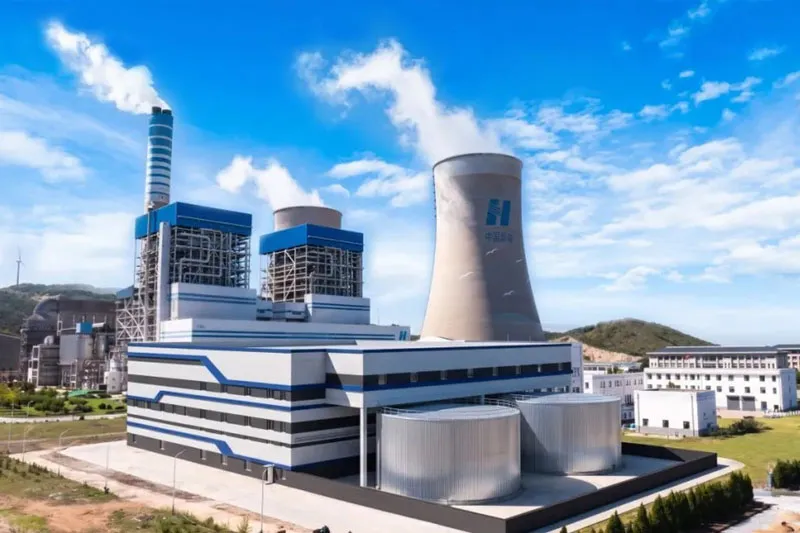
China leads the way in advanced energy production technologies but still struggles with energy distribution. Meanwhile, the option of utility energy storage systems using lithium batteries has barely been considered. By yesterday’s standards, priority was given to projects that were mind-boggling: gravity, compression, and thermal storage. especially, roll out A new project is using molten salt and supercritical carbon dioxide to create an energy storage facility.
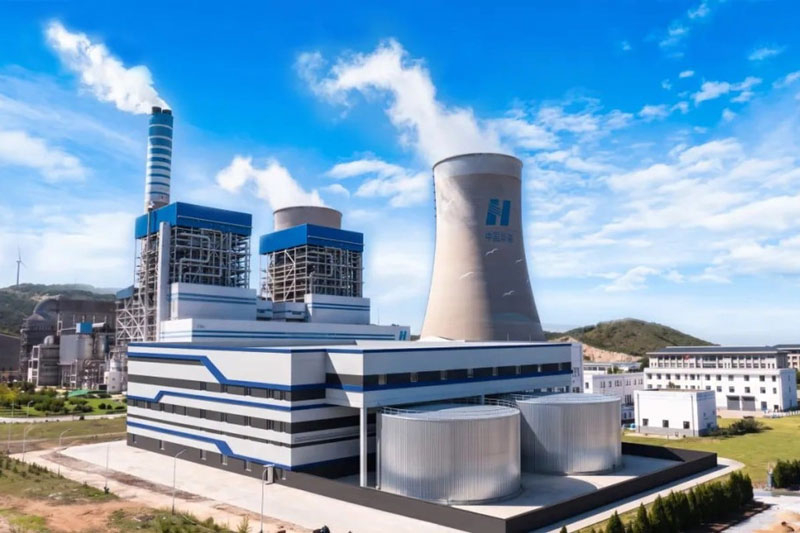
Image source: China Huaneng
Traditionally, a generator’s turbine is driven by the energy contained in water vapor. Replace water with carbon dioxide2 In the supercritical state, when gases actually start to behave like liquids, more work can be done in more compact devices. Such alternatives are being considered for generating electricity on nuclear-powered spacecraft, for example. Space is small there, so downsizing is strongly encouraged.
As for the new project, it will be the Ruitan complex at the site of the China Huaneng Bajiao Power Plant in Yantai City, Shandong Province. Construction work began on September 16, 2026, and it is expected to be put into use next year. The project must demonstrate a way to increase grid flexibility by converting excess electricity into heat, which can then be used during periods of peak demand.
Note that the Rytan energy buffer will be created at a coal-fired power plant, although it is also possible to heat the vessel with molten salt due to peak production at solar and wind power plants. But it also helps coal – molten salts and carbon dioxide2 In their supercritical state, they can respond to spikes in demand four times faster than coal and steam, which is important for the balance of the energy system. In fact, this and similar schemes are being launched at this stage not to support renewable energy but to stabilize electricity production and demand.
In the first stage, a plant based on the supercritical carbon dioxide cycle2 The project capacity is 50 MW, relying on a 100 MW molten salt thermal storage system, with an energy reserve of 400 MWh. When electricity usage is low, excess electricity from existing coal-fired generating units will be used to heat molten salt, retaining heat for longer periods of time. During peak loads, the stored energy will be transferred to the sCO circuit2where heated supercritical carbon dioxide will drive a turbine to generate electricity.
Such systems can operate using industrial waste heat, and China’s first such unit has been built and is now operating. This is the Chaotan 1 project located in Guizhou Province in southwest China. Separately, a molten salt buffer zone is being built in Tibet to support an alpine solar power plant. Testing these technologies in relatively small-scale practice will pave the way for their large-scale deployment across the country.
If you find an error, select it with your mouse and press CTRL+ENTER.