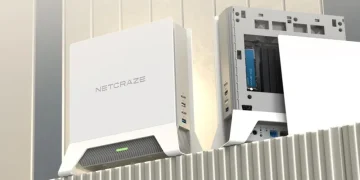


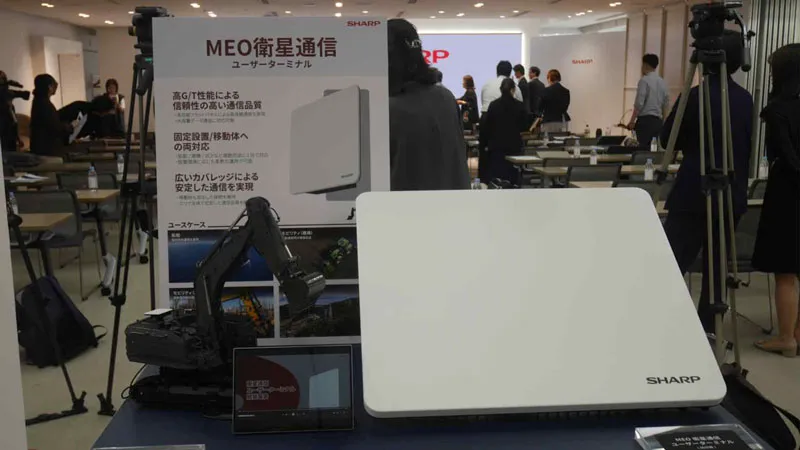
According to Japanese reports, Sharp create A new generation of universal satellite antennas that can be connected to various satellite communication networks and become an alternative to modern closed systems including Starlink. The company plans to create a compact terminal that does not rely on a single operator so that users can access different satellite constellations with one device. Deliveries are expected to begin in 2030.
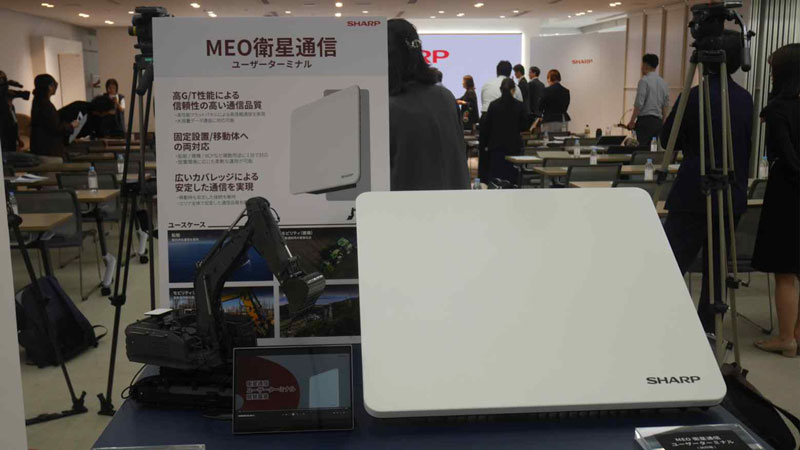
Image source: Kyoko Hariya/asia.nikkei.com
The development is based on planar phased array antenna technology, which uses a number of controlled electronic components rather than mechanically rotating satellite dishes. By changing the phase of signals from each element, the antenna can form a directional beam of radio waves and quickly track satellites in low-Earth orbit. A similar approach is already used in Starlink terminals, but Sharp is betting on compatibility with multiple satellite networks.
Sharp engineers plan to leverage the company’s experience in making compact radio frequency components for mobile electronics and smartphones. The main goals are to reduce device size, increase data transmission efficiency and reduce electromagnetic interference levels. General-purpose terminals can be used in maritime transportation, construction equipment, unmanned systems, remote industrial sites and other areas that require stable communications outside of terrestrial network areas.
Sharp is being developed to transform satellite communications into a more open infrastructure, with a number of competing constellations in different orbits. Today, most terminals only work with equipment from a specific operator, but universal antennas allow you to automatically select available networks based on signal quality, cost and operating conditions. If Sharp successfully implements the project, satellite terminals may become more like modern smartphones, able to work on different carriers’ networks without changing the equipment.
If you find an error, select it with your mouse and press CTRL+ENTER.