


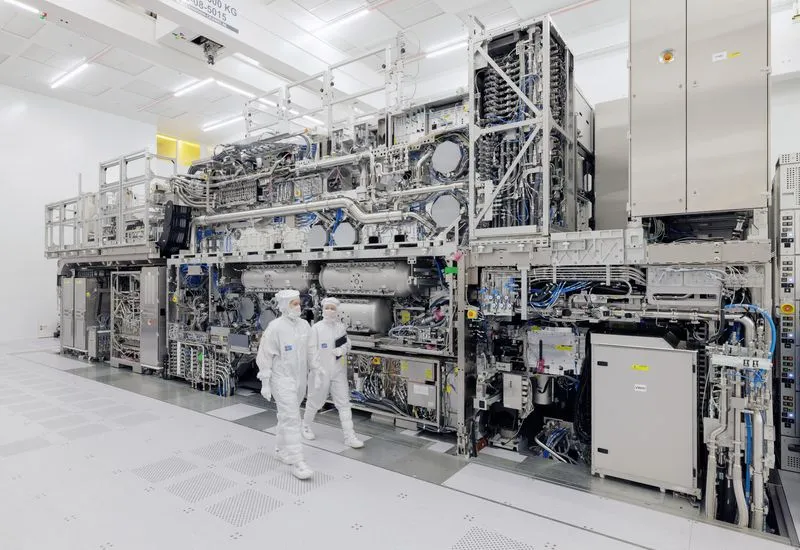
Even taking export restrictions into account, the Chinese market has long been one of the most important markets for Dutch lithography scanner supplier ASML, so the company has been reluctant to listen to calls from U.S. politicians to tighten those restrictions. An ASML representative recently admitted that China and India were actually luring the company to localize production equipment on their territories, but the company does not sell any products in Europe.
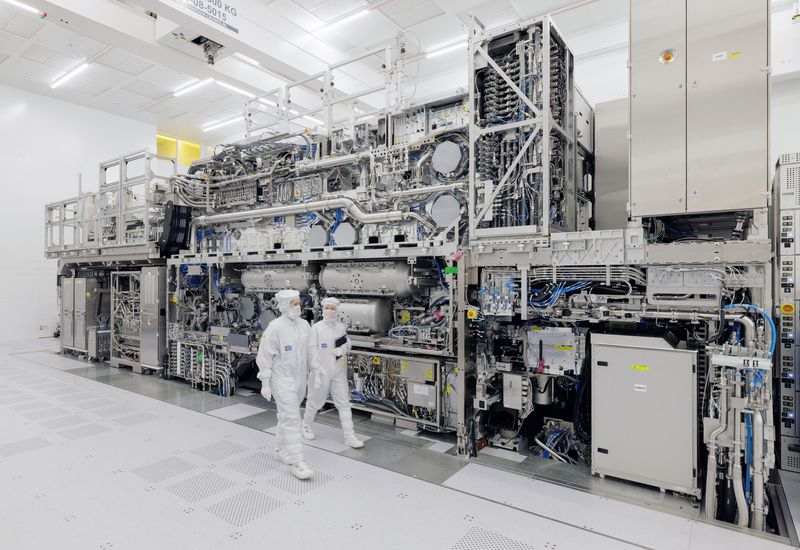
Image source: ASML
As noted, ASML Executive Vice President Frank Heemskerk made the corresponding endorsement at an event in the Dutch capital Bloomberg: “We don’t sell anything at all in Europe because they don’t invest here and they don’t build wafer factories here.”. At the same time, global demand for ASML equipment exceeded expectations, so the company was forced not only to expand production in the Netherlands but also to look beyond its borders. As representatives of the company’s management acknowledged, local governments are indeed attracting ASML to China and India for local production of specialized equipment. “I went to China and India last week. The reddest red carpet was rolled out in front of me and they said – invest here too, build factories here,” – Heimskecker explains. In addition, about a quarter of the company’s R&D work is conducted in the United States, and U.S. authorities are interested in whether it can increase its share to half.
Last year, Europe, together with Africa and the Middle East, accounted for only 1% of ASML’s revenue. In the second quarter of this year, the European market did not bring much to the company. The largest sales market last quarter was South Korea (43%), Taiwan ranked second (30%), mainland China ranked third (14%), and the United States only accounted for 9%, which could only surpass Japan’s 4%. ASML’s quarterly R&D expenditures are approximately 1.2 billion euros, of which 300 million euros are in the United States. ASML currently only produces lithography systems in the Netherlands, although it has training centers for large customers in the United States, South Korea, China, Japan and Taiwan. Heemskerk said Europe could play a more active role in the development of semiconductor production because existing plans mean that by 2030, about 20% of advanced wafers should be produced on its territory. At the same time, the region is mostly imported, with local production largely developed by foreign companies such as Intel, GlobalFoundries and TSMC.
If you find an error, select it with your mouse and press CTRL+ENTER.