

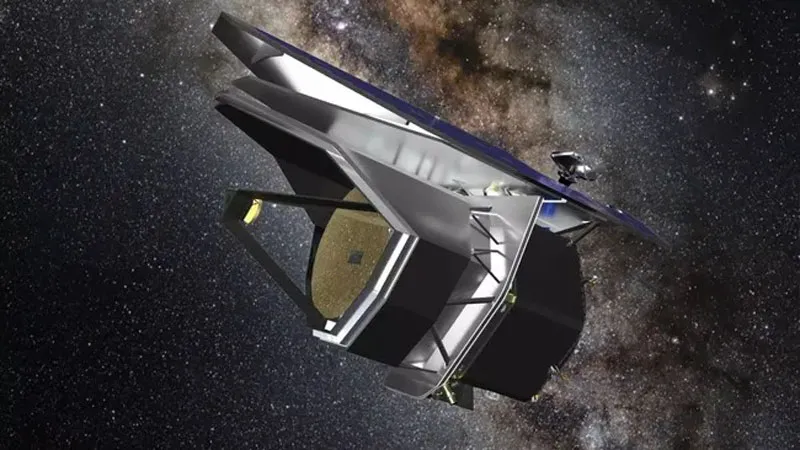
NASA did The final selection for the next space telescope design, which will be the first of a new class of detectors Explorer missions. It will be the PRIMA (PRObe Mission for Far-Infrared Astrophysics) space telescope, designed to observe the universe in the far-infrared range. The intermediate mission will accelerate the construction of new instruments that will reach orbit faster than the Webb-class project, albeit at the cost of some capability.
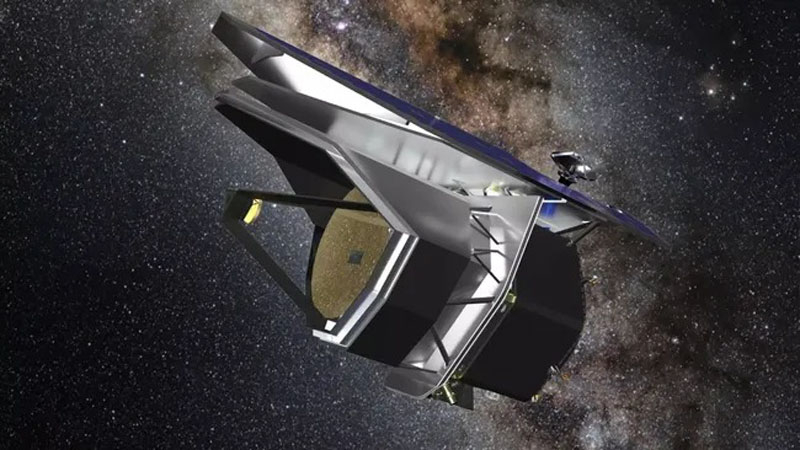
Concept illustration of the PRIMA telescope. Image source: NASA
Changing the PRIMA task status from “A” to “B” means the beginning of a detailed study of the project, both from a financial perspective and from the perspective of its production technology maturity. In addition, experts will start designing the overall structure and individual components of the tool. PRIMA will be able to move immediately into the implementation phase, known as Phase “C”, following separate verification of technical, programmatic and financial parameters. The cost of the project itself is capped at $1.2 billion, not including start-up costs and some other expenses. The launch is planned for 2033, and the main science program is expected to last five years.
The main instrument of the PRIMA space observatory will be a telescope with a mirror about 1.8 m in diameter, operating in the far-infrared range. This is a particularly interesting region of the spectrum because a large portion of the radiation associated with cold gas, dust, and water lies in the far-infrared range. PRIMA aims to bridge the observational gap between space-based infrared telescopes such as James Webb and radio astronomy observatories. As a result, astronomers will be able to study processes that are indistinguishable in the infrared and optical ranges at shorter wavelengths.
One of the instrument’s main tasks is to study the formation of planetary systems. Far-infrared radiation will allow us to study the cold components of protoplanetary disks—gas, dust, and ices, including water. This is important for understanding how planets form around young stars and how water gets into forming planetary systems. NASA also hopes to use PRIMA to study the evolution of galaxies and supermassive black holes, as well as the accumulation of dust and heavy elements in the universe.
The new mission category “Probe Explorer” follows the recommendations of the Astro2020 Decadal Review. Its mission is to provide scientific capabilities that are too large for smaller missions, but without the budget and time-consuming nature of a flagship observatory. In 2024, NASA considered two competing missions for the first mission of this class – the X-ray Observatory and the Far-Infrared Observatory – and has now chosen PRIMA. The telescope should therefore become the next major component of NASA’s infrared observing program after the Webb telescope and complement it in a completely different part of the spectrum.
If you find an error, select it with your mouse and press CTRL+ENTER.