
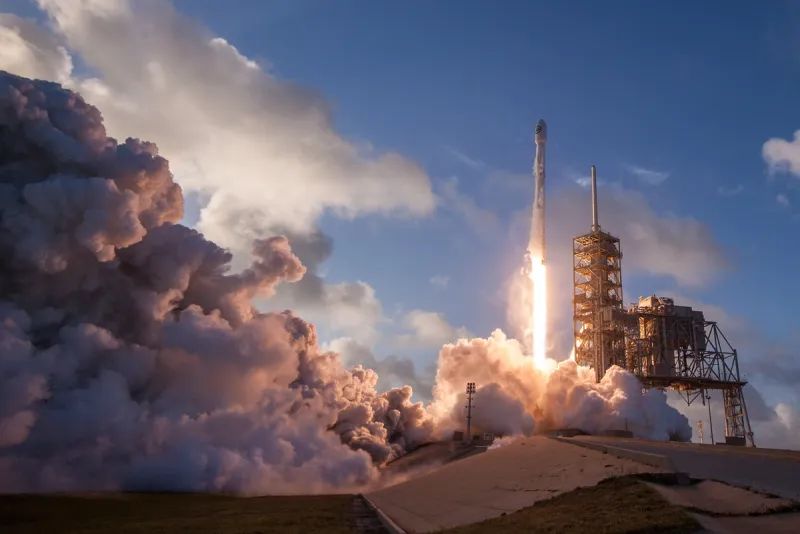
Space startup TakeMe2Space announced plans to launch the country’s first computing satellite on a SpaceX rocket, scheduled to launch on October 1. The Indian company plans to process data in orbit rather than transmit computing information to Earth. Report Reuters.
The MOI-1A spacecraft weighs 50 kilograms and uses NVIDIA Orin NX accelerators for edge computing. He will fly into space as part of the SpaceX Transporter-18 mission.
TakeMe2Space announced today that 23 customers, including geographic information systems (GIS) companies and educational institutions, will participate in the mission it is sponsoring.
Commercial clients include agriculture, mining, supply chain management and insurance companies. According to TakeMe2Space representatives, American Little Place Labs is also among its customers.
Customers will be able to use the power of computational satellites for their artificial intelligence models – it will process the information and transmit the results to Earth, rather than providing a complete data set to Earth for subsequent processing. The company claims that the cost savings of this load outweigh the costs associated with computation, which is quite expensive in orbit.
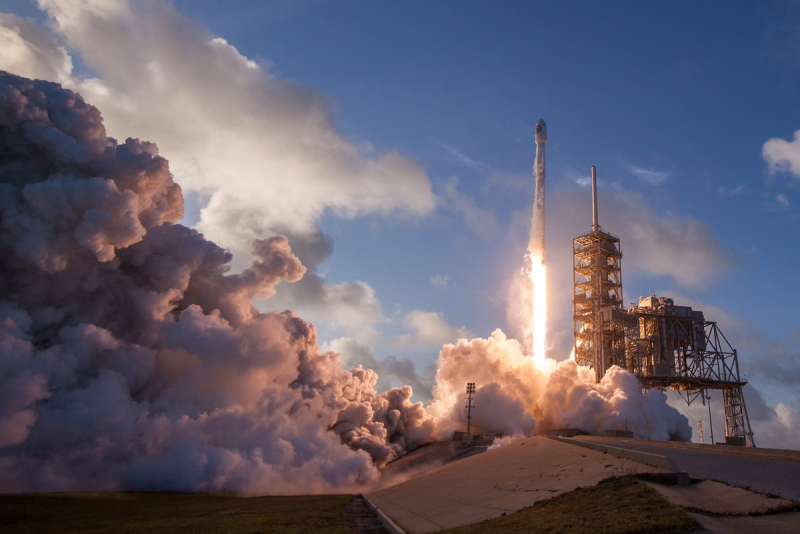
Image source: SpaceXAI
The spacecraft is not an ordinary data center, but a rather small edge computing satellite. Therefore, its power consumption is only 150 W. In contrast, companies such as SpaceX and Starcloud plan to use higher-performance NVIDIA chips in ground data centers. Additionally, SpaceX and NVIDIA developing Options Vera Rubin NVL72 For space.
In the long term, TakeMe2Space plans to build larger satellites that will enable it to form a network to serve multiple customers.
In 2024, the startup’s demonstration mission evaluates the ability to upload applications to satellites, perform artificial intelligence inference in orbit, and download the results to Earth. However, the MOI-1 satellite launched later died ignominiously due to a failure of the third stage of the launch vehicle.
In the future, TakeMe2Space also plans to provide cold storage for critical data in space. The service, designed for the financial services and defense sectors, requires finding secure backup storage locations in addition to the cloud provider’s site, which has proven to be extremely vulnerable.
The company said most of the satellite’s subsystems were designed and manufactured in India, with wafers, solar cells and motors sourced abroad. The company plans to launch a larger satellite platform in 2027 with the goal of increasing computing power and reducing costs.
As part of the Transporter-18 mission, another object will also enter space – a promising orbit Micro COD Google Based on TPU module. The company developed it as part of a project suncatcher.
source: