

Representatives from various industries told this newspaper wall street journalas they began to notice that they were using artificial intelligence language in everyday speech—either the strict formulations used in queries, or the monikers that large language models generously used in their answers.
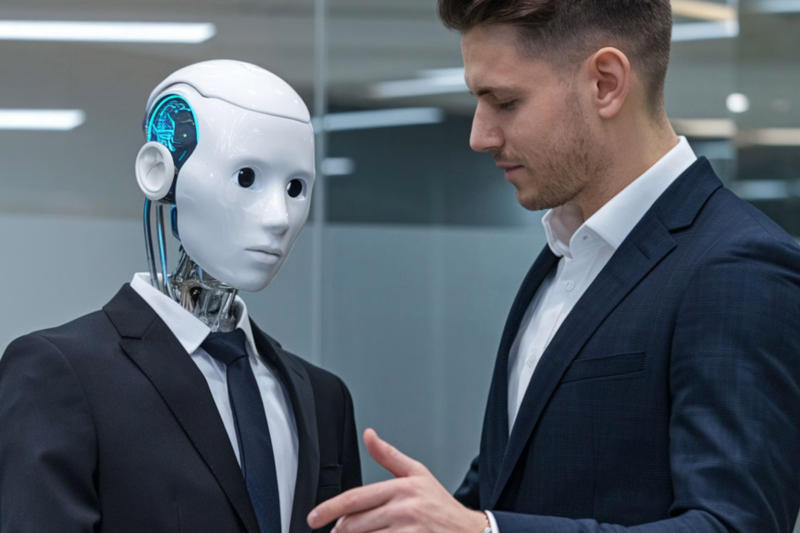
Image source: Brey/unsplash.com
Sara Wimmercranz, a founding partner at a Stockholm venture capital firm, found herself starting work meetings with “contrast framing,” a chatbot’s favorite presentation technique. “This is not a morning meeting. This is a reset.”she said. By her own admission, Ms. Wimmerkranz has absorbed so much AI-generated content that it now slips off her tongue. Conversations in the office became more and more like conversations with OpenAI ChatGPT or Anthropic Claude: Swedish culture is incompatible with enthusiastic compliments, but people surprisingly started calling each other “smart” and “very smart”, and so did the obsequious chatbot.
Will Barnett, a human resources manager at a Bay Area startup, thinks he still talks like a human, but he’s already feeling the impact of artificial intelligence when communicating via email and corporate messaging tools—a certain formality and objectivity has seeped into his texts that he didn’t have before. Sometimes, he found himself thinking that the work text he wrote could also be entrusted to artificial intelligence to compile it-the result would be the same; it seemed that artificial intelligence made a person like him, not the other way around. So Mr. Barnett began working to edit his posts so they didn’t sound like AI-generated content.

Photo credit: Helena Lopes / unsplash.com
Allie K. Miller, an artificial intelligence consultant, said that in recent meetings with startup founders, the conversation turned to “The language of cavemen”——This is an extremely direct and concise writing style that makes requests to artificial intelligence. Participants acknowledged that this style of communication permeates their daily lives and that sometimes people find that points are lacking in their lives. Ms. Miller has learned to appreciate text written before the age of ChatGPT in late 2022, as well as words that the chatbot doesn’t often produce, such as the word “discord.” ” As a result, a person begins to speak more specifically and faster. This helps the AI agent record the progress of the meeting to provide a better summary.
Daniel Wolkowitz, an employee at a San Francisco artificial intelligence startup, said he found it increasingly difficult to distinguish between messages written by humans and those written by artificial intelligence in messengers or emails, and he unknowingly started writing in the spirit of neural networks. “I feel like my brain is shrinking”he admitted. Deepan Mehta, a San Francisco resident who heads an AI startup, has created something like a punishment piggy bank in his office: Every time a company employee verbally uses an expressive trait of AI, he gets a mark on the board—the loser gets to treat his coworker over the weekend.
The nonprofit’s director, David Bohigan of Washington, said artificial intelligence borrows the vocabulary of professional managers and lawyers with classic business training. He’s been saying this himself for years, and it’s only now that people are starting to understand him better. Angela Nibbs has worked in public relations for two decades, trying to discourage corporate executives from using corporate news and jargon. With the advent of artificial intelligence, her task will only become more difficult. When she asked company executives why they started a business, they listed the “three pillars” of strategy and talked about market prospects and competitive advantages—which all sounded perfect, but didn’t sound interesting at all.
If you find an error, select it with your mouse and press CTRL+ENTER.