
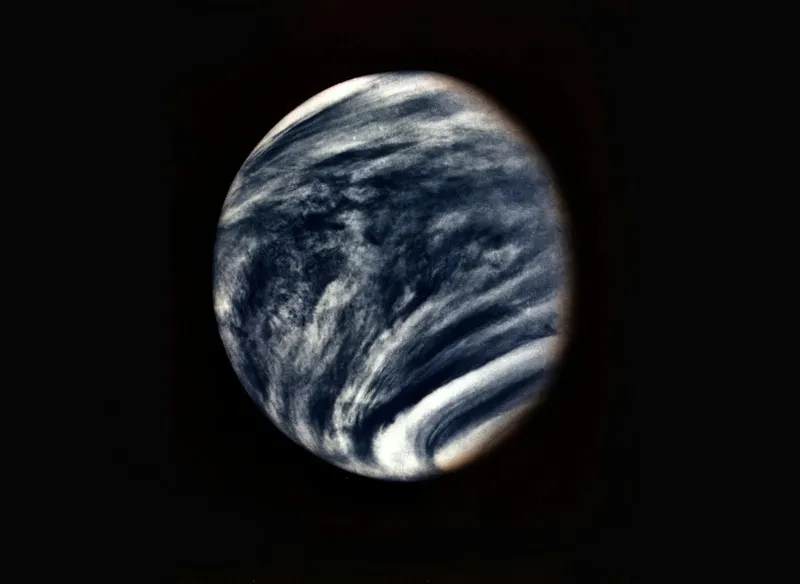
Scientists have finally solved the mystery of Venus’ atmospheric haze, which was discovered by the Venus and Pioneer probes in the 1970s but whose origins remain a mystery. It’s just dust – literally!
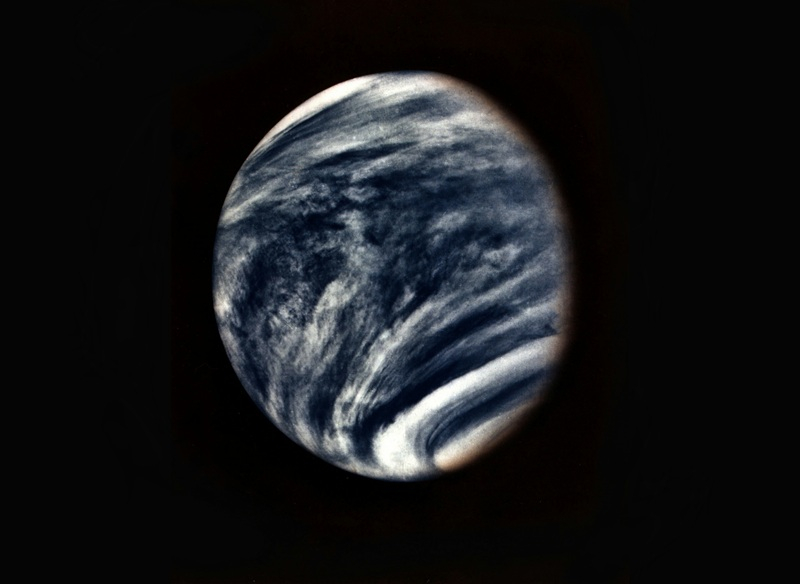
Image source: NASA/unsplash.com
It turns out that as meteorites burned in Venus’ atmosphere, they left behind cosmic dust particles that interacted with sulfuric acid to create the haze. This was discovered by planetary scientist Hiroki Karyu and his research team at Tohoku University in Sendai, Japan, using microphysical models. This type of model involves microphysics—the microscopic processes that create clouds and precipitation on Earth and other celestial bodies.
“The continued influx of cosmic dust is sufficient to maintain the lower layer of this haze and the particle size distribution observed through the input probe,” – said the planetary scientist in a study published in the journal Nature Astronomy. — These fog particles from space act as effective condensation nuclei, promoting cloud formation in underlying cloud environments, even far from their original source. “
It was previously thought that the haze was caused by volcanic ash. Venus is the most volcanically active planet in the solar system. Signs of volcanic activity here were first discovered by the Magellan spacecraft in the early 1990s. However, as the researchers found, volcanic ash is not the source of haze particles, like dust on the Earth’s surface.
According to Carew, even if Venus had more volcanoes or surface dust streams, its particles would not form haze by interacting with sulfur in the atmosphere.
It turns out that meteorite particles increase cloud formation on Venus because they create more opportunities for condensation. However, more particles does not mean more cloud droplets. Instead, several particles stick together and form larger clumps, and then the sulfuric acid condenses around them. These clouds of condensation continue to thicken until they plunge into the hot lower atmosphere, where sulfuric acid evaporates at temperatures up to 100°C.
Through research, scientists have uncovered another mystery. Something in Venus’ atmosphere is absorbing ultraviolet light, but until now it wasn’t clear exactly what was causing this.
Scientists hypothesized that the absorber might be an iron compound, especially since the Venus and Vega probes found iron in the atmosphere, and the mass spectrometer on the large Pioneer Venus probe found the compound ferrous sulfate, but it’s impossible to fully explain everything. However, researchers have now discovered that ferrous sulfate matches the properties of smog.
It turns out that condensation is not possible for haze particles located at a certain altitude (40 to 50 kilometers above the earth’s surface), since the high energy of the particles creates a barrier that does not allow sulfuric acid droplets to adhere to their surface. The strong barrier particles are carried by convection currents of rising hotter air to the cloud tops, where they cool enough to turn into sulfuric acid particles. While previous observations suggested this, Carew’s team found stronger evidence.
Further research by scientists could help better understand how cosmic dust contributes to the formation of clouds and haze on planets such as Jupiter, Saturn and Neptune.
If you find an error, select it with your mouse and press CTRL+ENTER.