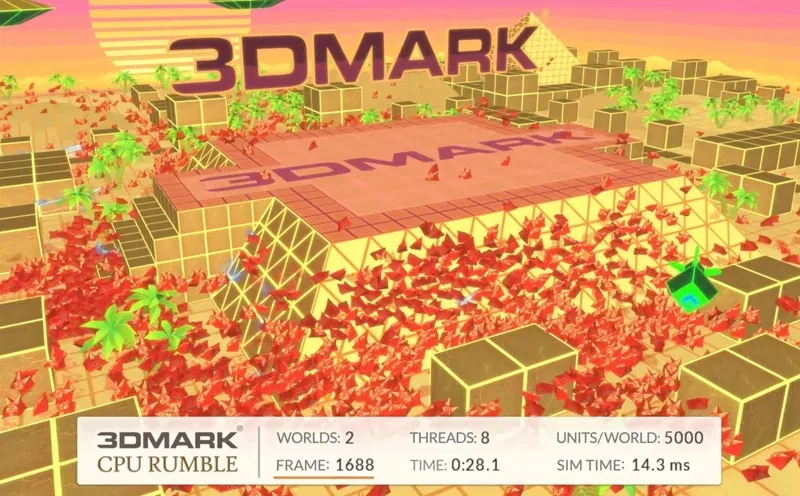
UL Solutions has introduced the 3DMark CPU Rumble benchmark to evaluate the performance of mobile processors in gaming tasks. The new module is already available as a free update for the 3DMark application on Android and iOS.
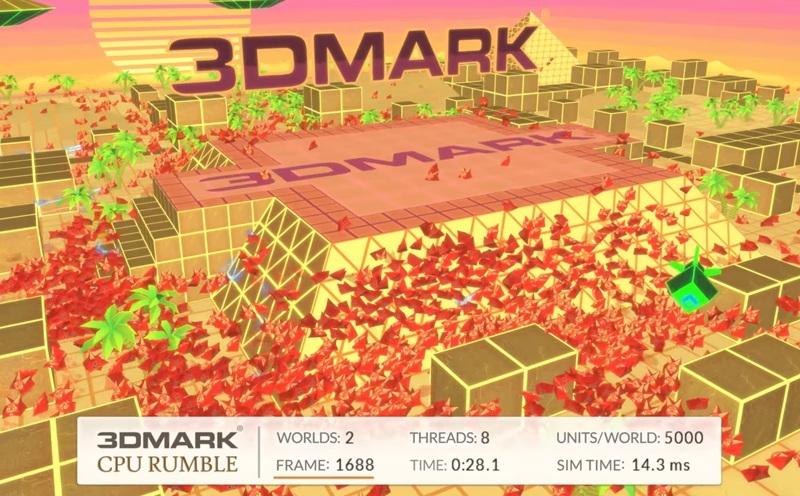
Image Source: UL Solutions
Unlike the 3DMark CPU Profile released in 2021, which measured raw processing power across different thread counts, CPU Rumble simulates the real-world load on the device in modern mobile games. According to UL Solutions, most of these projects use two to eight processor threads: one main one is responsible for key tasks, and the rest handle audio, character behavior and resource loading.
Visually, the test is designed in the spirit of old retro arcades with a minimum of graphic effects so that the performance of the video core has a minimal impact on the final result. Inside the benchmark, the creators used libraries that are widely used in game development: Jolt for calculating physics, Recast Navigation for finding paths, EnkiTS for multithreading and Miniaudio for audio processing.
All events in CPU Rumble occur according to a strictly specified algorithm: physics calculations, character behavior and sound processing are repeated with absolute accuracy from launch to launch. This approach allows you to avoid errors that usually plague built-in benchmarks in the games themselves.
In addition to the main test run, a 20-minute stress test was added to the application to check the stability of the chip under long-term load and identify throttling. Unlike 3DMark graphics stress tests with a fixed number of cycles, here the processor is required to complete as many iterations as possible in the allotted time.
The benchmark can already be downloaded in stores Google Play And App Store. CPU Rumble was the first of two new processor tests from UL Solutions, but the developers have not yet shared plans to release a PC version or details about the second benchmark.
If you notice an error, select it with the mouse and press CTRL+ENTER.