Chinese artificial intelligence projects worth more than $3.2 billion depend on Nvidia accelerators, the supply of which is limited by the US authorities. Tightening export controls and the resignation of Nvidia CEO Jensen Huang could lead to delays in the construction of data centers and a review of their technical infrastructure.
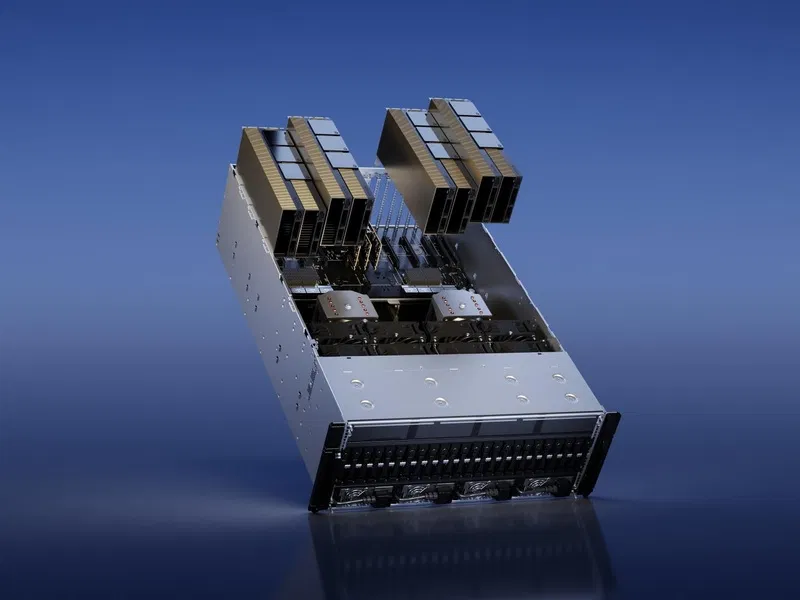
Image source: Nvidia
Reuters studied over 150 Chinese documents, including procurement notices, investment plans, construction contracts and corporate reporting. They revealed projects and agreements worth over 23 billion yuan ($3.2 billion), involving the use of Nvidia H100, H200 and H800 accelerators.
This amount does not mean that Chinese customers spent $3.2 billion directly on Nvidia processors. It includes the costs of building construction, energy supply and other infrastructure, as well as the cost of equipment. Some of the facilities are already operating or under construction, others are still at the planning and contracting stage.
Among the participants in such projects were not only large technology companies, but also regional data centers, universities and enterprises with government participation. For example, in the Gansu province in northwestern China, one of the facilities was supposed to receive several thousand Nvidia accelerators by the end of the year. However, journalists were unable to establish whether the equipment was received by the customer.
The US began limiting the supply of advanced Nvidia accelerators to China in 2022, and then extended the restrictions to models specifically designed for the Chinese market. In January 2026, US authorities began reviewing H200 export applications on a case-by-case basis for eligible buyers. With further tightening of the rules, some Chinese projects may face delivery delays or the need to switch to domestic processors.
At the same time, Chinese organizations continue to gain access to American accelerators. In particular, Northwestern Polytechnic University, which is on the US export blacklist, was able to purchase two Nvidia H200 accelerators through a local supplier. The university also entered into agreements to lease computing power based on Nvidia products.
Nvidia itself previously stated that American restrictions effectively deprived it of the opportunity to operate in the Chinese market for data center equipment. However, IDC estimates that Nvidia accounted for 34% of AI accelerator shipments in China in the first half of 2026. These indicators describe different aspects of the market and do not allow us to determine how export-restricted processors got to Chinese customers.
Additional uncertainty was created by the resignation of Jensen Huang as Nvidia CEO on November 12. He advocated easing export restrictions, while American lawmakers demand greater control over the supply of advanced chips. The resignation comes amid an investigation into Huang’s alleged ties to businesswoman Alice Huang, whom US authorities suspect of having contacts with Chinese intelligence. At the same time, there is no public evidence of violation of export laws by Huang himself. The Chinese projects identified by Reuters are also not related to this investigation.
If you notice an error, select it with the mouse and press CTRL+ENTER.