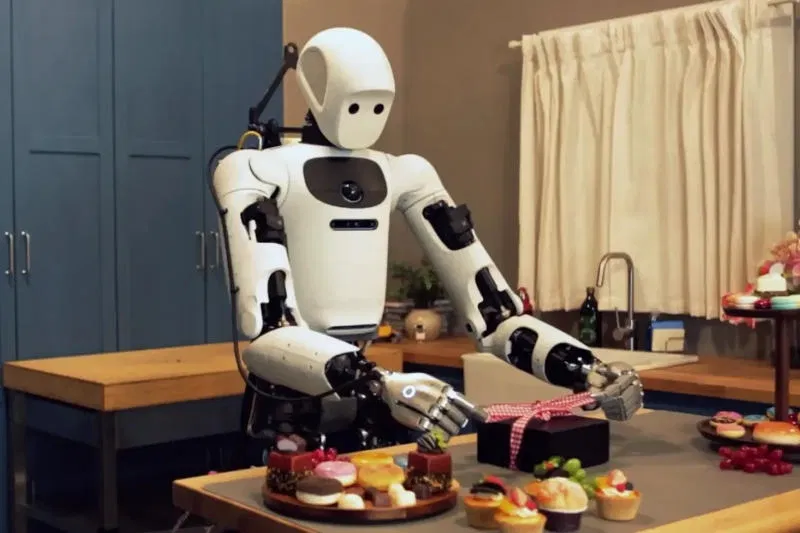
Google has officially announced Gemini Robotics 2.5 artificial intelligence model. It belongs to the VLA class (“vision-language-action”), helping robots quickly master a wide range of skills and do it faster. Robots are becoming more dexterous, reliable and safe – they are able to work not only in laboratories, but also in the real, unpredictable world, helping humans in performing a variety of tasks.
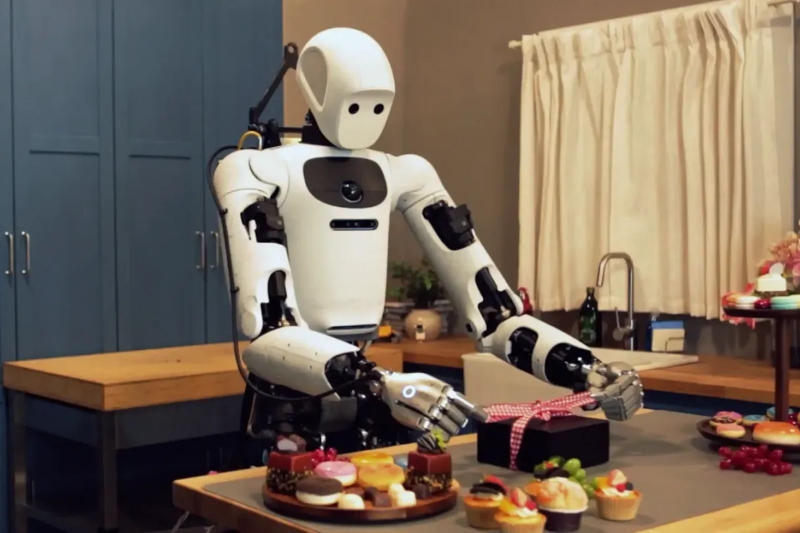
Image source: deepmind.google
Gemini Robotics 2.5 represents a significant step forward in three key areas. The dexterity aspect indicates that robots have become able to perform more tasks while demonstrating greater efficiency and dexterity—from using everyday tools to manipulating fragile or flexible objects.
In practical tests on Mercedes-Benz production lines, Apptronik Apollo 2 robots running the Gemini Robotics 2.5 model showed progress in terms of reliability – they performed tasks for picking and packing auto parts with a success rate of 96%. In the future, it will be possible to delegate monotonous work to robots, and technicians will be able to deal with more complex production tasks. Google has also improved its physical security controls and developed a new testing standard aimed at identifying vulnerabilities associated with attempts to jailbreak (hacking) robotic systems.
Google has significantly expanded the model’s capabilities, increasing the number, efficiency, and complexity of tasks performed. Her work was assessed on 200 different tasks, including serving food with tongs, tying a bow on a gift box or dispensing liquid with a pipette. These tasks combine a range of skills from confident use of tools and complex manipulation of deformable objects to careful handling of fragile objects. Compared to previous models, the increase in the success rate of operations for the new one was 30–100%, depending on the type of task; the speed of work increased by 20–30%.
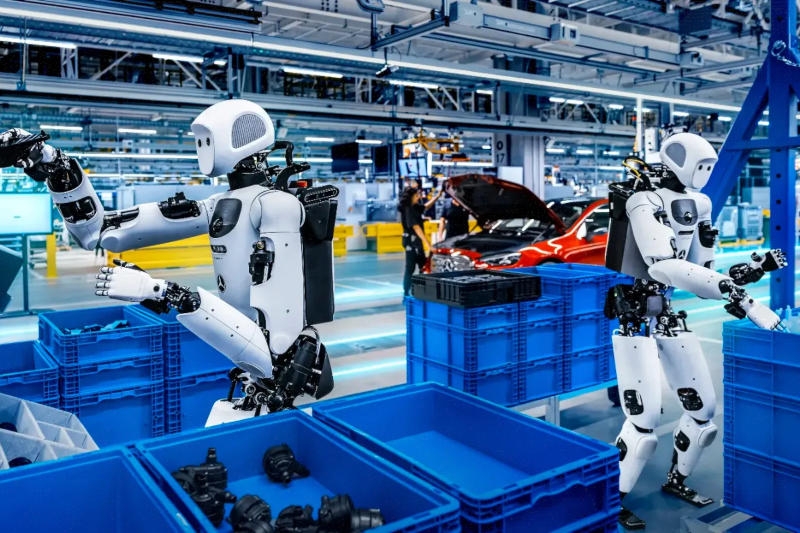
The main criterion for the effectiveness of an AI model for robots is its ability to work in real production conditions. Apptronik Apollo 2 at Mercedes-Benz enterprises demonstrated the ability to think, build multi-step logical chains and act in accordance with changing situations. As part of the pilot project, robots autonomously completed parts assembly – a repetitive and physically demanding task that involved sorting individual components from common containers and transferring them into special trays exactly in the sequence required to assemble a specific car on the assembly line. The success rate was 96%.
To avoid physical hazards, Gemini Robotics 2.5 uses real-time logic control to help the robot navigate safely in challenging environments. This feature, according to Google, helped improve the safety of tasks near obstacles by 33%, and near people by 43%. The company also continues to work to improve the safety of long-term missions using autonomous agents. The Gemini 4 Argon model showed the best results in tests for agent-based robotic systems: it effectively refuses unsafe actions, successfully resolves situations of uncertainty and functions correctly in close proximity to a person.
To test resistance to jailbreak attempts, the company released an open benchmark ASIMOV-Jailbreak, which includes hundreds of requests disguised in various scenarios. Gemini 4 Argon showed resistance to such attempts at 99.5% – the result of the previous base model Gemini Robotics ER 2 was 82%. Gemini 4 Argon helped train Gemini Robotics 2.5 by acting as a simulation engine.
If you notice an error, select it with the mouse and press CTRL+ENTER.