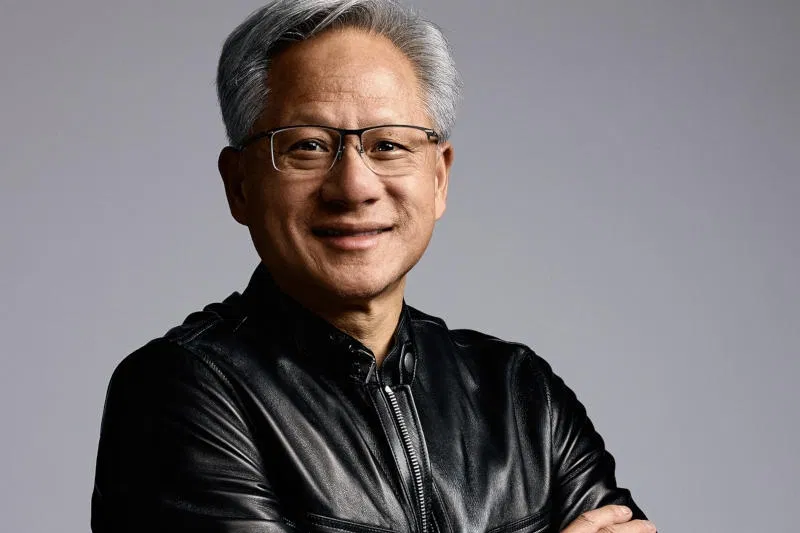
Jensen Huang was ousted from his post as head of Nvidia amid reports of his extramarital affairs, including with a woman suspected of working for Chinese intelligence. But the main complaint of the board of directors against the head of the company turned out to be the latter’s insincerity.
Image source: nvidia.com
When Huang admitted to having an extramarital affair on November 8, Nvidia’s board of directors at the time could not determine whether Alice Huang was a Chinese intelligence agent. After this, the company announced the start of an independent investigation – the reason was the message that the general director could become “the target of an intelligence operation of a foreign state.” In the following days, information appeared about his other novels, including with one of his subordinates; “it was found that [Хуанг] lied, and for a whole year, from October 2025 until recent events,” noted a source close to the Nvidia board of directors.
The board began asking questions about Alice Huang to the head of the company back in October 2025, when the New York Times wrote about Nvidia’s unusually close business ties with the Singaporean data center operator Megaspeed, where Huang worked. Jensen then assured the council that he had no inappropriate relationship with her. When the truth was revealed, the board of directors was indignant. They consider national security issues important and “requiring constant attention,” but they cited lies as the main reason for Huang’s resignation.
In recent days, board members, including its chairman Harvey Jones, have sought to suppress talk of a possible return of the former CEO to the company – his behavior ran counter to its policies and corporate governance standards. Objectively, for the board of directors, the possibility that Alice Huang acted in Beijing’s interests poses a more serious problem than simply inappropriate leadership behavior. If she was indeed linked to Chinese intelligence agencies, then the scandal goes beyond Huang’s insincerity – it could mark a crisis in security and corporate governance.
The incident gave rise to hardliners against China to demand stricter control over the actions of American companies in China – a number of investigations were initiated against Nvidia in order to establish what exactly Huang knew about the supply of the company’s chips to China. Nvidia General Counsel Tim Teter has been summoned to Washington to testify as authorities try to determine whether the company violated export control rules. Several lawsuits have been filed against Nvidia; Silicon Valley investors began to publicly express concerns about shortcomings in corporate governance and the lack of proper board oversight of management.
The decision to resign Huang was not easy, Harvey Jones admitted, “however, the record of his personal conduct and lack of candor, which was inconsistent with the company’s code of conduct, standards and values, made this decision necessary.”
Huang was supported by both Nvidia employees and US President Donald Trump. According to some reports, there are supporters of his return on the board of directors. Some rank-and-file Nvidia employees were unhappy with how quickly the decision to leave Huang was made – some believe he was the victim of a planned campaign aimed at removing him. Nvidia’s acting CEO Colette Kress, however, is confident that the company’s employees are more concerned about the fall in its shares than the departure of the CEO – and the management has already tried to solve the problem with the fall in shares by increasing salaries. At the same time, neither the results of the internal investigation nor the details of discussions concerning Huang are communicated to Nvidia employees.
If you notice an error, select it with the mouse and press CTRL+ENTER.