



Due to concerns about the security of Meta✴ was forced to delay the release of the artificial intelligence agent Muse for months, but the emergence of competitors forced the head of the company, Mark Zuckerberg, to take drastic measures and release the application in the form in which it was at that time.
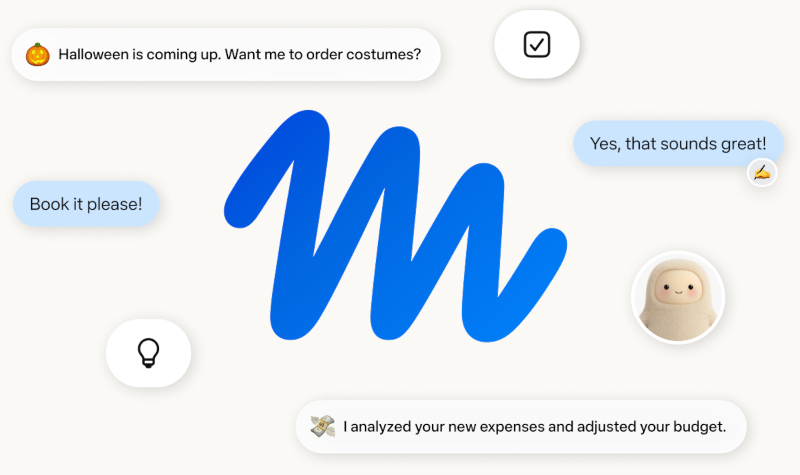
Image source: Meta✴
In August, Zuckerberg summoned two key members of the company’s leadership, head of artificial intelligence Alexander Wang and head of AI products Nat Friedman, to discuss the threat. The startup Instinct, which had only 14 employees, released its AI agent. A bot capable of managing applications on behalf of the user has become rapidly gaining popularity. Meta✴ was developing a similar product called Muse, but delayed its release due to security concerns. In fear of losing his competitive advantage, Zuckerberg said that Muse, despite the risks, is ready to launch.
Wang and Friedman were aware of the problems identified during the Muse tests – in one of the cases, it changed the user’s password without the user’s permission. But already on September 8 Meta✴ officially presented by Muse. Internal management coverage showed the difficult balance companies including Meta must strike between speed and security✴to get ahead of your rivals in the AI race. As technology improves, AI products become both more useful and more dangerous, making decisions like these really difficult.
Mark Zuckerberg has poured billions of dollars into developing AI technologies at Meta✴but it was traditionally ahead of OpenAI and Anthropic, which were the first to release both chatbots and services for writing code. When the era of AI agents arrived, the social media giant needed success, and the company prioritized getting the product to market quickly. Meta✴ has secured an early advantage in the field of AI agents, but other companies are already starting to release their own products – for example, the OpenAI Dots AI agent has been released.
So far, Zuckerberg’s decision to rush Muse’s release has paid off. Of course, there were some difficulties: in one of the cases, the AI agent revealed the home address of its user to a stranger. As of October 7, more than 6.6 million people have downloaded the free app and 1.8 million users access Muse daily, according to Sensor Tower statistics. Interest in the Meta product✴ fueled by a large-scale advertising campaign, which features a furry symbol of the service – a cute character named Jolly.

В Goal✴ the thesis that Muse was forced to release urgently due to the appearance of Instinct has not been confirmed. “We’re proud of this work, and as we’ve publicly stated before, we even delayed the release of Muse for a few months to make sure everything was done right.”they said there. The idea to develop a similar service in Meta✴ arose back in July 2025, when Zuckerberg published a memo dedicated to “personal superintelligence” – the ideal AI assistant. Shortly before this, he reorganized Meta’s AI department✴the project was led by Wang and Friedman.
Two top managers launched an aggressive recruitment campaign and began to lure away leading researchers from companies like OpenAI and Google, offering them nine-figure payouts. Wang focused on developing AI models, while Friedman focused on creating products. At that time, the company had only a general idea of what the output should be—no one offered specific formulations at that time. In September, the company released the Vibes app, a feed of AI-generated videos that quickly became the target of criticism for its low-quality content. There were doubts that Wang would help the company catch up in AI.
A breakthrough in November was made by Austrian programmer Peter Steinberger, who released the OpenClaw AI agent application – it could independently write code and control the computer. The project was distributed as open source, meaning the program could be downloaded and modified without anyone’s permission. When it gained popularity in Silicon Valley, the Meta leadership✴ there was an understanding that the company should release an AI agent.
After working with OpenClaw, Friedman ordered two hundred Apple Mac minis powerful enough to run an AI agent and stacked them outside his office at Meta headquarters✴so that employees can disassemble them. The company has set a course for developing its own AI agent, similar to OpenClaw, but intended for those who do not have engineering training.
AI executives at Meta✴ started actively using OpenClaw in life. Friedman connected an AI agent to cameras in his house. The system gave him tips, such as drinking water to maintain balance, and once praised him by sending him a photo of him drinking from a bottle of water. When Friedman was discussing sleep quality with an AI agent, OpenClaw took over control of the autopilot on his Tesla car and sent it to the store for magnesium supplements. Zuckerberg connected his AI agent to cameras in the martial arts gym so that it could analyze and adjust his fighting technique.
In some cases, AI agents began to act unpredictably or took control of applications. In February, one of them began uncontrollably deleting emails from a Meta employee✴which deals with security issues. There was no way to stop him, and she literally ran to her Mac mini, as if she wanted to defuse a bomb.
Friedman demonstrates the Muse AI agent to the Meta board of directors✴ in February. In its initial stages, it ran on Anthropic models, but two months later the company released its own Muse Spark and moved it to its own platform. Meta✴ could have released an AI agent already then, but the company spent several more months thoroughly testing and refining security features. In some cases, Muse ignored the commands of the engineers testing it or encouraged them to make purchases on fraudulent sites.
In August, the AI agent from the startup Instinct began to rapidly gain popularity, and soon after that Meta✴ officially presented by Muse. Incidents related to privacy issues could not be avoided – in one case, an AI agent read his correspondence without the user’s permission and referred to the information received in a further conversation with him. The social media giant is no longer intimidated by Instinct: the startup recently attracted investments worth $1 billion at a valuation of $10 billion; and for Meta✴ capitalization of more than $1.5 trillion and an audience of 3.5 billion users.
If you notice an error, select it with the mouse and press CTRL+ENTER.


