



AMD’s integrated graphics have matched the GeForce RTX 5060: the first gaming tests of a mini-PC with a Ryzen AI Max+ Pro 495 processor showed that the new Gorgon Halo chip is capable of delivering more than 100 frames per second in modern games at 1080p resolution. In some projects, the increase relative to its predecessor Ryzen AI Max+ Pro 395 reaches 41%.
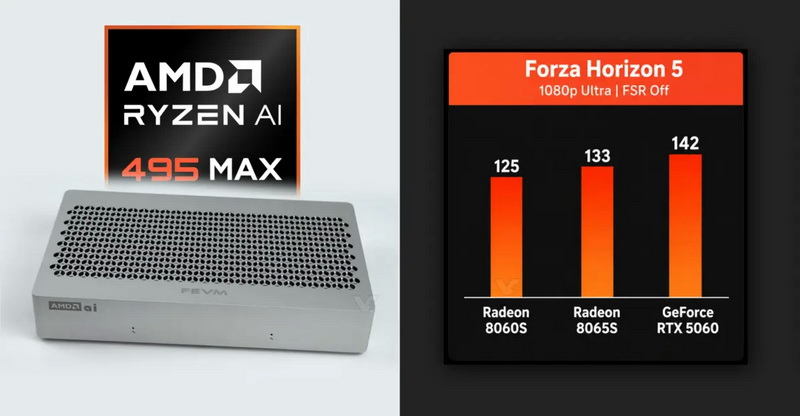
Image Source: VideoCardz
Ryzen AI Max+ Pro 495 is equipped with 16 Zen 5 processor cores and 40 Compute Units (CU) based on the RDNA 3.5 graphics architecture. The processor clock speed in automatic overclocking mode reaches 5.2 GHz, and the Radeon 8065S graphics core is overclocked to 3.0 GHz. For comparison, the Radeon 8060S graphics included in the Ryzen AI Max+ Pro 395 with the same number of computing units operates at up to 2.9 GHz.
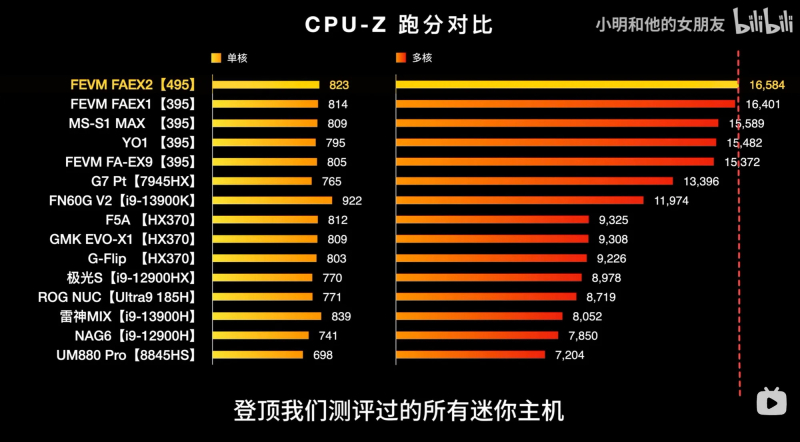
The new Gorgon Halo also has support for faster memory, now using the LPDDR5X-8533 standard, providing 273 GB/s bandwidth. The first Ryzen AI Max+ Pro 495 reviews tested systems with a maximum of 192 GB of unified memory, although power consumption limits varied.
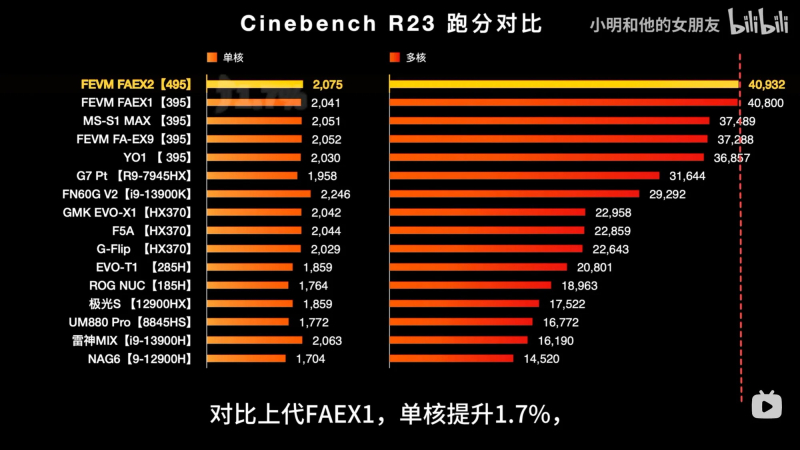
A Chinese reviewer tested the FEVM FAEX2 1L mini PC, which in tests was able to maintain power consumption at 160 W for 18 minutes. In Forza Horizon 5, at 1080p resolution and Ultra graphics settings (without using FSR), the Radeon 8065S video core provided a frame rate of 133 frames per second (FPS). The Radeon 8060S graphics showed 125 fps, and the system with a discrete GeForce RTX 5060 graphics card showed 142 FPS.
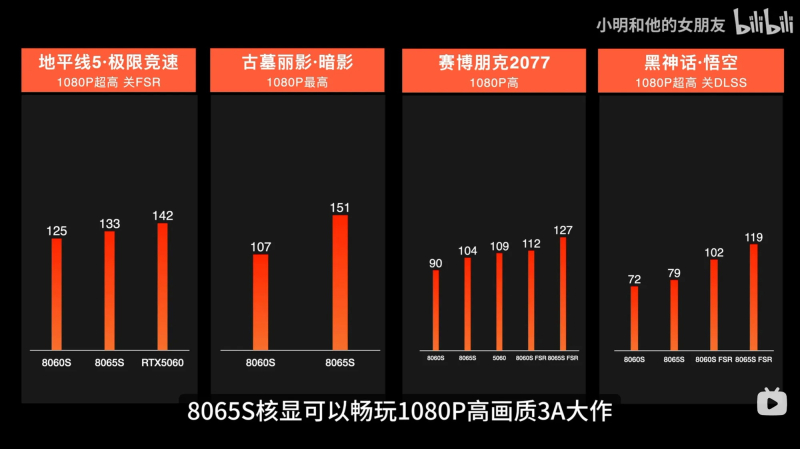
In Cyberpunk 2077, at 1080p resolution and high graphics settings, the Radeon 8065S delivered 104 fps, while the Radeon 8060S delivered 90 fps and the RTX 5060 delivered 109 fps. In Shadow of the Tomb Raider, the difference turned out to be more significant: 151 fps for the new chip versus 107 fps for its predecessor. In Black Myth: Wukong, at 1080p resolution and maximum settings, the frame rate increased from 72 to 79 fps.
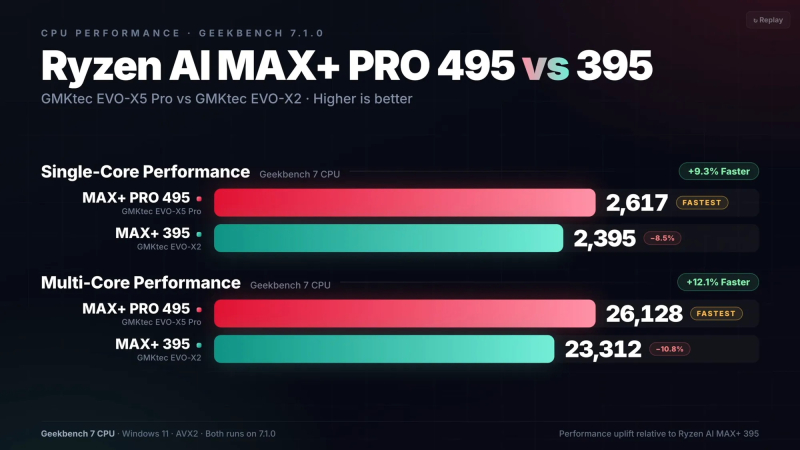
Image source: YouTube / ETA Prime
Blogger ETA PRIME tested mini PC GMKtec EVO-X5 Pro with a fixed power consumption limit of 120 W. Cyberpunk 2077 at 1440p and ultra settings using FSR 4.1 image scaling averaged around 69 fps, while Red Dead Redemption 2 averaged around 87 fps at a combination of ultra and high settings (without FSR). Forza Horizon 6 was also demonstrated running in 1440p resolution on ultra settings without image scaling. To achieve an average frame rate of about 95 fps in Crimson Desert (1440p resolution, ultra settings), it was necessary to use FSR Multi Frame Generation technology to generate multiple frames.
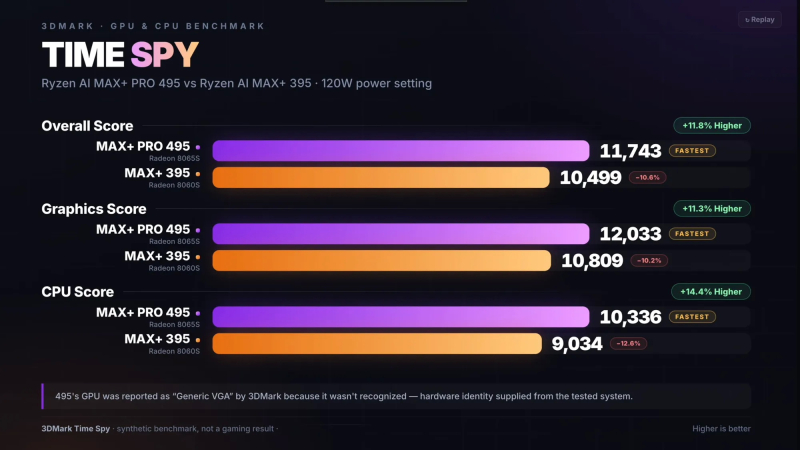
Image source: YouTube / ETA Prime
Synthetic benchmarks also show improvements, although results vary by system. The FEVM FAEX2 mini PC scored 12,139 points in the 3DMark Time Spy test, outperforming its predecessor FEVM FAEX1 with Ryzen AI Max+ 395 processor by about 3.4%. ETA PRIME recorded a score of 11,743 points for the EVO-X5 Pro versus 10,499 points for the EVO-X2 – an increase of 11.8% at the same power limit 120 W. Graphics performance increased by 11.3%, and CPU scores in Geekbench 7 increased by 9.3% in single-core and 12.1% in multi-core modes.
Thus, we can conclude that the Radeon 8065S does provide better gaming performance. This could be due to the new mini PCs’ improved cooling system, faster LPDDR5X memory, or simply better drivers. It’s worth considering that many reviewers don’t retest older hardware with the latest drivers, so these comparisons aren’t always entirely fair. In addition, with a price of about $7,000, such mini-PCs are primarily intended for running AI models locally, and not for gaming.
If you notice an error, select it with the mouse and press CTRL+ENTER.


