



Microsoft introduced the Maia 300 chip, which is designed to reduce dependence on Nvidia GPUs and become “the main system for performing AI calculations” in the company’s products and services. According to Microsoft, Maia 300 improves the efficiency and performance of inference, better able to cope with the latest models capable of logical reasoning, as well as AI agent tasks. The implementation of the Maia 300 chip will begin in 2027.
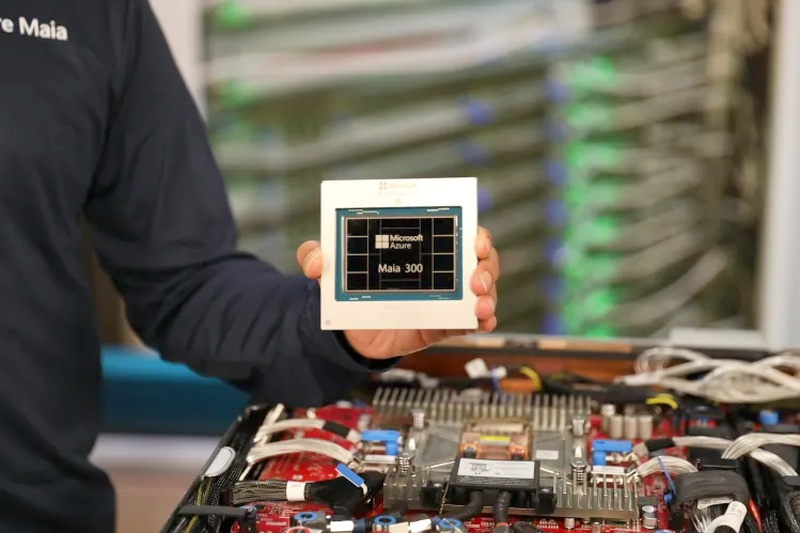
Image source: Microsoft
When developing the chip, special attention was paid to efficiency. “We expect Maia 300 to generate 40% more tokens per megawatt of power consumption compared to leading GPU-based systemssaid Scott Guthrie, executive vice president of Microsoft’s cloud division. — And with 96 accelerators, rack-level throughput (by number of tokens) increases up to seven times that of Maia 200.”
Maia 300 replaces the Maia 200 chip, introduced in January this year. Maia 200 chips are already being used for real-world AI workloads across the Microsoft ecosystem, including Microsoft Copilot, GitHub Copilot, Microsoft Foundry, and the company’s own AI models. Increased efficiency will allow Microsoft to soon switch to using primarily its own AI chips, abandoning solutions from Nvidia and AMD. Guthrie promised “beginning in 2027, scale the Azure Maia family to multi-gigawatt systems, making Maia the primary platform for running AI computing across Microsoft products and services.”.
“Maia 200 is the most productive AI infrastructure in our equipment fleet, if measured by real performance indicators of AI servicessays Guthrie. — Maia 300 is a comprehensive system designed for the new types of AI workloads emerging today: tasks that require long context processing and logical reasoning; delay-sensitive dialogue systems; as well as long, multi-step tasks performed by AI agents.”
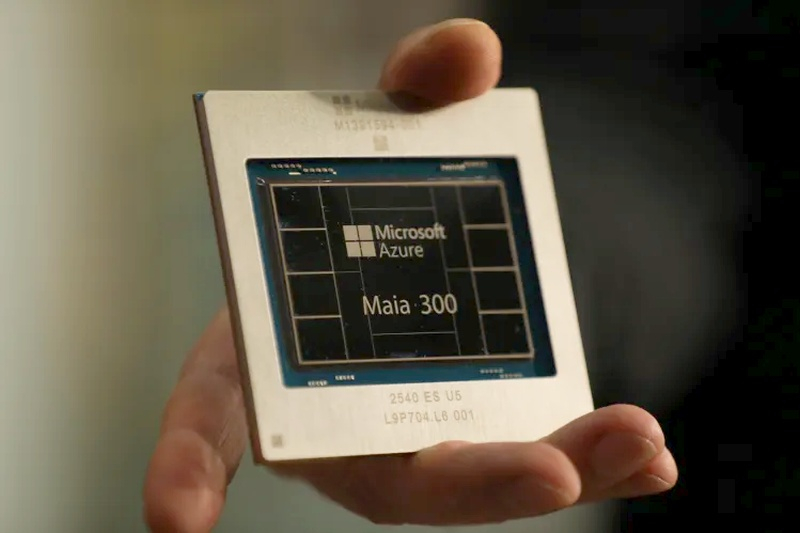
To achieve maximum efficiency, Microsoft uses a new chiplet-based architecture built using TSMC’s N2P process technology, which separates compute, memory management, and I/O functions. According to the Azure team, this approach allows you to increase the chip area allocated for computing power, and makes it possible for each function to use the technology most suitable for a specific task.
Maia 300 also plays a key role in Microsoft’s work on its own AI models and could help the company catch up with competitors such as Google DeepMind, OpenAI and Anthropic. “We need to work at all levels of the technology stack, all the way down to the silicon,” — says head of Microsoft AI division Mustafa Suleyman. — At this scale, we need our own platform, which we develop in close conjunction with our models. That’s why launching Microsoft AI models on Maia chips is a priority for our team.”
If you notice an error, select it with the mouse and press CTRL+ENTER.


