



This month, six satellites developed by the American startup Xona Space Systems will be launched into orbit. This will mark the launch of the first commercial alternative to GPS that provides high positioning accuracy, writes TechCrunch.
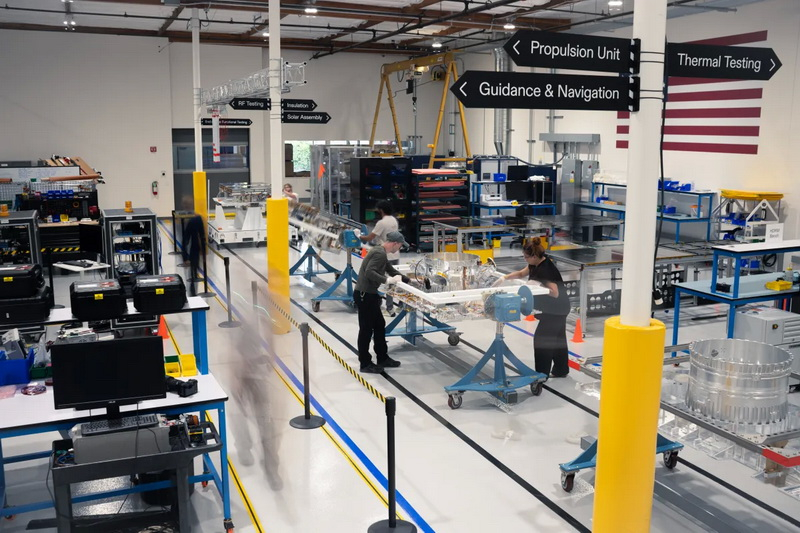
Image source: Xona Space Systems
The idea of creating a service that competes with government navigation systems may seem adventurous. However, Xona hopes to join the list of areas where venture-backed startups are disrupting the existing government monopoly—in this case, in the field of space navigation and time synchronization.
Xona was founded in 2019 by a group of five engineers who met while attending graduate school in aerospace engineering. One of them, Tyler Reid, received his doctorate on the use of low-Earth orbit satellites to improve navigation accuracy.
As TechCrunch writes, GPS systems and similar satellite networks created by Europe, China and Russia are bringing enormous benefits. However, they are vulnerable to jamming and interference, and their accuracy is not sufficient for autonomous use in areas such as agricultural robotics or self-driving cars. The future founders of Xona Space Systems asked themselves: is it possible to turn the solution to these problems into a successful business?
“My first reaction was: ‘This is stupid.’ Why would anyone replace GPS? After all, this is a free service, right? But I began to study the issue deeper. People perceive GPS as a free service, but the market is not the service itself, but the equipment. Billions of devices are sold every year, and no one gives them away for free. There is a huge market that is in dire need of better performance.”said Xona CEO Brian Manning during TechCrunch’s recent visit to the company’s headquarters.
The path to launching such a service was not easy. One of the technical difficulties was the creation of a system that complements GPS with a more powerful signal that provides increased accuracy in determining time and coordinates. The company had to develop a unique architecture that would allow satellites to maintain accurate time without the use of expensive on-board atomic clocks. The decision was based on the proximity of the spacecraft to Earth and constant communication with ground-based reference data sources.
Another technical challenge that the company successfully solved was ensuring compatibility of signals with existing GPS receivers. This required only a relatively simple software modification. This gives Xona direct access to the market and simplifies the approval procedures required to transmit navigation signals.
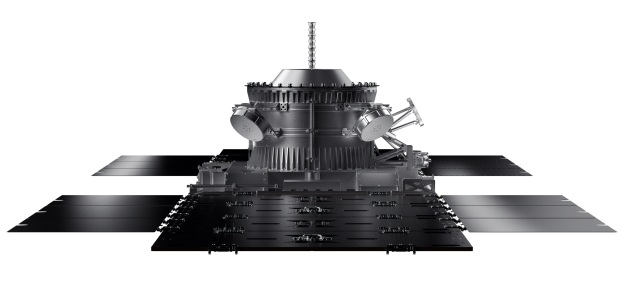
A SpaceX launch vehicle is expected to launch six Xona satellites into orbit later this month. Four of them are similar to a prototype the company launched last year to test the technology. These devices are based on the satellite platform from Aerospace Labs. The other two satellites were manufactured entirely in-house by Xona at its headquarters in Burlingame, California. They should form the basis of the future Pulsar working constellation, which will consist of 258 satellites.
The Pulsar system will provide centimeter-level location accuracy (as opposed to the meter accuracy of GPS), and its signal strength will allow it to be received even inside buildings and in dense urban areas. According to Manning, the signal is also strong enough to resist jamming or spoofing attempts.
Xona will be able to begin beta testing Pulsar with real customers once the satellites enter orbit and begin passing over mid-latitudes approximately eight times a day. According to Ian Gough, CEO of timekeeping company TimeBeat, the first Xona pilot will allow his company’s engineers to test and adjust the timing of their devices around the world. By 2028, Xona expects to provide full satellite coverage for the US, Europe, Japan and South Korea.
While the new service could have billions of potential users, Xona is also looking to a future in which autonomous systems play an increasingly important role. Reed, the author of the scientific paper that inspired the company’s creation and its current chief technology officer, previously worked on self-driving cars at Ford. He concluded that a service like Pulsar is needed to fully realize the potential of autonomous vehicles of all types.
In a conversation with TechCrunch, Manning noted that “of all types of mass transport, civil aviation is the standard of safety. We see that Xona and our developments can play an important role in this – providing cars with a service that will allow you to take your hands off the wheel and feel as safe as in an airline seat.”.
Since its founding, Xona has raised just over $300 million from venture capital investors, including $20 million from the US Space Force. Although the company is focused on providing commercial services, the US government has also shown clear interest in this technology, as cases of jamming and spoofing of satellite navigation signals during military conflicts are becoming increasingly common.
If you notice an error, select it with the mouse and press CTRL+ENTER.


