


U.S. President Donald Trump has imposed huge new tariffs on drones and drone parts in an effort to reduce U.S. companies, law enforcement agencies and state and local governments’ reliance on Chinese technology.
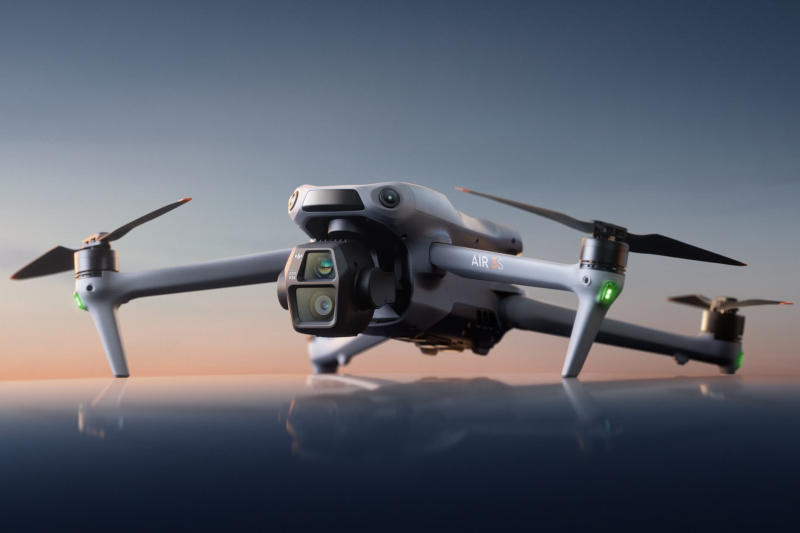
Image source: DJI Innovations
The White House announced that it will impose 100% tariffs on drones with “special impact” in the field of national security, including systems weighing more than 25 kilograms or equipped with thermal imaging systems. Aircraft with a maximum take-off weight of 25 kg will be subject to a 25% tariff. This is another move by the U.S. authorities to suppress Chinese drone technology; in December last year, the U.S. Federal Communications Commission (FCC) banned the import of Chinese drones and stated that it would stop issuing wireless communication equipment licenses to drones from unfriendly countries.
Respondents say this decision will change U.S. business markets financial times Expert: US customers from the private and public sectors will have to buy equipment from local suppliers or allied partners, even if it turns out to be more expensive. The FCC’s ban on Chinese drone imports leaves a loophole: American companies can buy parts and assemble drones in the United States.
The presidential administration has also accused more than 40 countries of helping China circumvent U.S. tariffs as it moves products through other countries. Drones from US-friendly countries such as Japan, Liechtenstein, South Korea, Switzerland, Taiwan and EU countries will be subject to a 15% tariff, while drones from the UK will be subject to a 10% tariff. A U.S. Department of Commerce study shows drones are necessary for U.S. national and economic security. Now, the Trade Ministry has the opportunity to develop a plan to return production to the country to assist companies investing in the drone and its parts industry.
If you find an error, select it with your mouse and press CTRL+ENTER.