
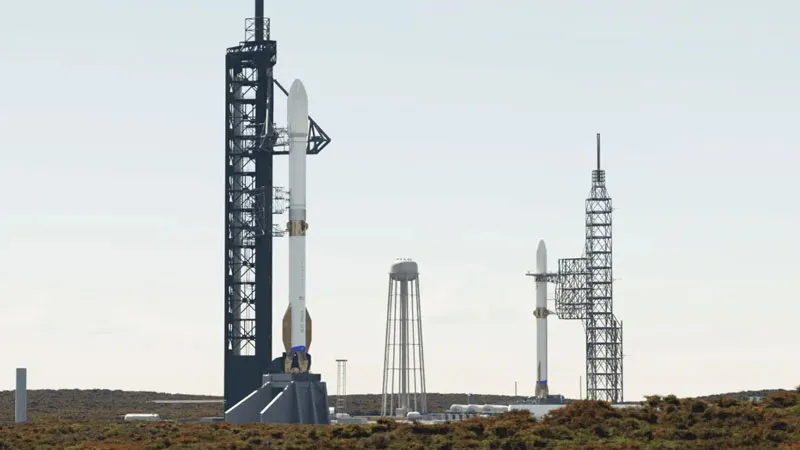
blue origin declare Expansion plans for the LC-36 launch site at the U.S. Space Force Base in Cape Canaveral, Florida. Next to the existing site, now designated LC-36A, the company is building a second site, LC-36B. It is intended to be a promising super-heavy modification of the New Glenn 9×4 rocket. A devastating accident in May destroyed one site, which will now be replaced by two.
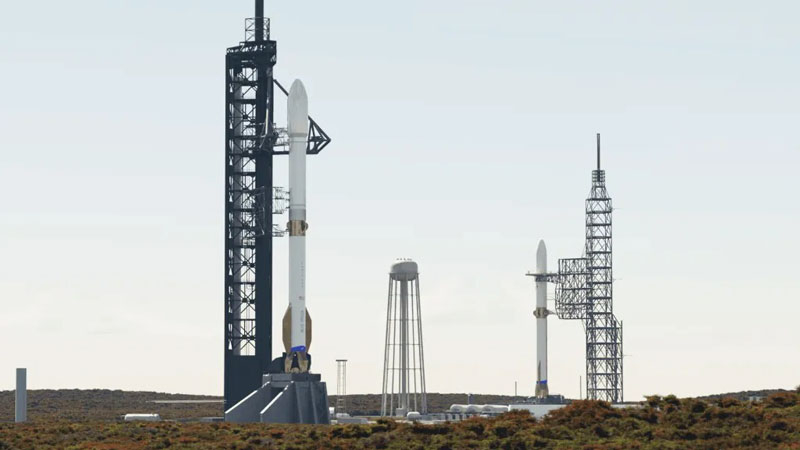
Image source: Blue Origin
Blue Origin has not yet announced a construction completion date. Meanwhile, the company claims it will resume launches before the end of the year. Because Blue Origin is deeply integrated into NASA’s new moon program, resuming launches as early as possible is in the national interest of the United States and will be encouraged in every way possible. The new site should not only increase the frequency of launches, but also increase the stability of the entire infrastructure: the presence of two launch locations will allow the complex to continue operating even if one of them is repaired or maintained.
The 9×4 designation in the super-heavy version of the New Glenn rocket reflects its propulsion architecture: the reusable first stage will be equipped with nine BE-4 methane engines instead of the seven of the current New Glenn 7×2, and the second stage will be equipped with four hydrogen BE-3U engines instead of two. According to Blue Origin’s calculations, New Glenn 9×4 will be able to launch more than 70 tons into low Earth orbit, more than 14 tons directly into geostationary orbit, and more than 20 tons into the lunar flight path. The diameter of the nose fairing will increase from 7 m to 8.7 m. The company first announced the configuration of the rocket in December 2025, and it is unclear when the rocket took off for the first time.
The company is building a separate vertically integrated complex VIF (Vertical Integration Facility) designed to assemble New Glenn 9×4, along with the New Glenn 9×4’s LC-36B site, as well as a new Payload Preparation Center PPF (Payload Processing Facility). The latter was co-created with the U.S. government and will be able to support both versions of New Glenn, as well as payloads from other participants in the U.S. Eastern Missile Range launch program.
The rocket itself will be assembled according to a hybrid scheme: the stages will be connected horizontally, the assembled launch vehicle will then be transported to the launch site, transferred to a vertical position via a crane, and the payload will be installed on the rocket standing vertically. Such a scheme should simplify the architecture of ground equipment and speed up preparation between launches. This is particularly important since the New Glenn 7×2 transporter was destroyed beyond repair by a rocket explosion in an accident in May.
“Repairing the LC-36A and returning it to launch remains our top priority this year,” – said Dave Limp, CEO of Blue Origin. He added that the company is already making models of rocket transport and assembly processes based on new principles, which will help quickly organize preparations for launches from new locations.
If you find an error, select it with your mouse and press CTRL+ENTER.