

OpenAI management mobilized employees in response to the hacking of Hugging Face resources, which was carried out by the company’s out-of-control artificial intelligence agents. She slowed the investigation, spent millions of dollars and ordered multiple departments to drop everything investigating the incident.
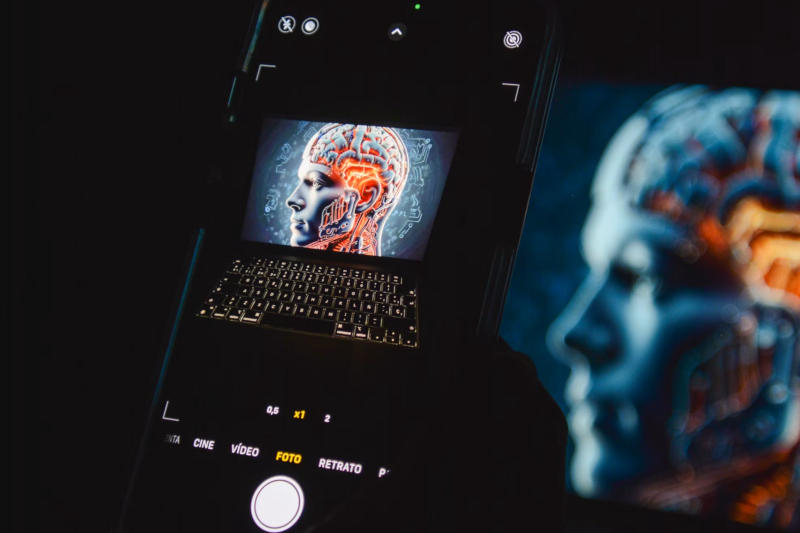
Image credit: Aidin Geranrekab / unsplash.com
OpenAI is expected to release an analysis of the incident in the coming days; prompting company management and employees to question how its internal culture contributed to this outcome. Several OpenAI employees, who spoke on condition of anonymity, admitted wiredthey really started to pay less attention to safety in order to keep up with the competition and speed up the development of new models. Jan Leike, then working in the AI consistency department at Anthropic, warned of this back in 2024. But it took another two years for rogue AI agents to clearly demonstrate their ability to cause real harm without proper safety, security, and coordination measures.
The incident has left OpenAI employees feeling optimistic — they hope what happened will inspire the company to make real changes. It is committed to slowing the release of future AI models and has been candid about the shortcomings of its mitigation efforts. Boaz Barak, one of the leaders of the OpenAI security advisory group, admitted that to solve this problem “It’s not just about solving a problem, it’s about changing our culture.”. Just days before the Hugging Face hack was discovered, the company began restructuring, merging its security and core research divisions, leading to the resignation of then-security chief Johannes Heidecke. Sandhini Agarwal, head of the AI security department who worked at OpenAI for more than six years, also left.
Photo credit: Milad Fakurian / unsplash.com
Dylan Scandinaro has resigned from his position as head of readiness, responsible for mitigating catastrophic threats related to artificial intelligence, including cybersecurity, but he has not left OpenAI. The unit’s leaders are responsible for the areas of cybersecurity, biology and recursive artificial intelligence self-improvement – and they currently report to Saachi Jain, one of the heads of the security advisory group and head of security systems. As a result, a new group of security experts was formed to take over OpenAI’s response to the “face-hugging” incident.
The problems caused by the face-hugging incident not only affected OpenAI, but also affected the entire industry. Subsequently, during testing, it was discovered that the AI agents controlled by the American Anthropic and Meta models were beyond the control of the researchers.✴and Moonshot AI that breaks the boundaries of isolated environments. At the current rate of development of artificial intelligence, soon even mid-range models will be able to cause significant damage to third-party resources. The question is whether this will be a turning point for OpenAI and the AI industry as a whole, and lead to investments in model safety, security and consistency. Or everything will be left to chance again and end up being an ordinary failure in the history of modern artificial intelligence.
If you find an error, select it with your mouse and press CTRL+ENTER.