


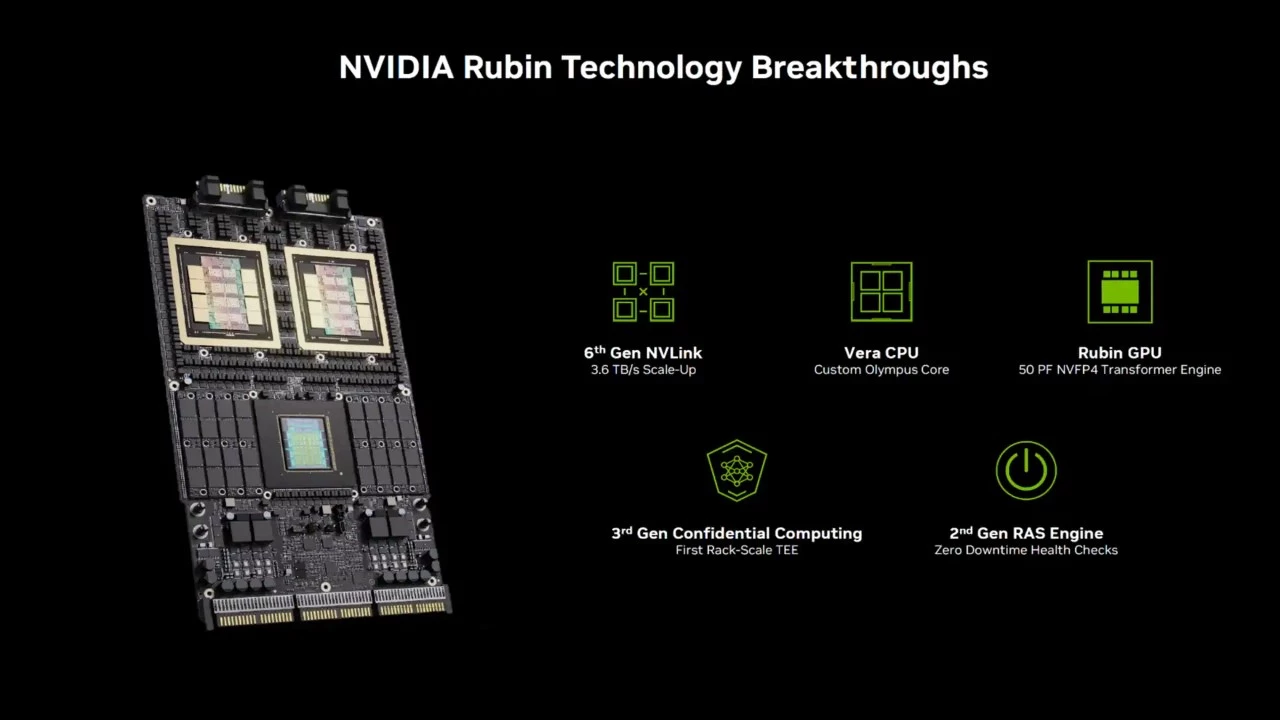

The massive rollout of the NVIDIA Vera Rubin platform has impacted not only the accelerator market, but adjacent market segments as well. In particular, increased corporate demand has begun to reduce the availability of TLC NAND and drive up memory prices.
Contextual Memory Extensions (CMX) technology plays an important role in this regard, and NVIDIA has introduced it into the new platform to handle KV cache (data generated by AI models during query processing). CMX acts as an intermediary between HBM and traditional network-attached storage and uses large TLC flash memory arrays. Connectivity is provided via BlueField-4 DPU accelerator and high-speed Spectrum-X Ethernet.
The scale of the system is impressive: a 2U CMX server can accommodate approximately 600TB of TLC memory, giving the entire compute node a capacity of 9.6PB. At the same time, data center demand for high-performance enterprise SSDs for AI workloads continues to grow. Affected by this, the spot price of 512-gigabit TLC NAND chips rose again to $21 after falling in June.
At the same time, a significant portion of NVIDIA’s required volumes may already be secured through long-term contracts. However, the rapid growth of future demand is beginning to affect the free market, and supply is obviously tightening. It’s unclear how long the new round of price increases will last.