

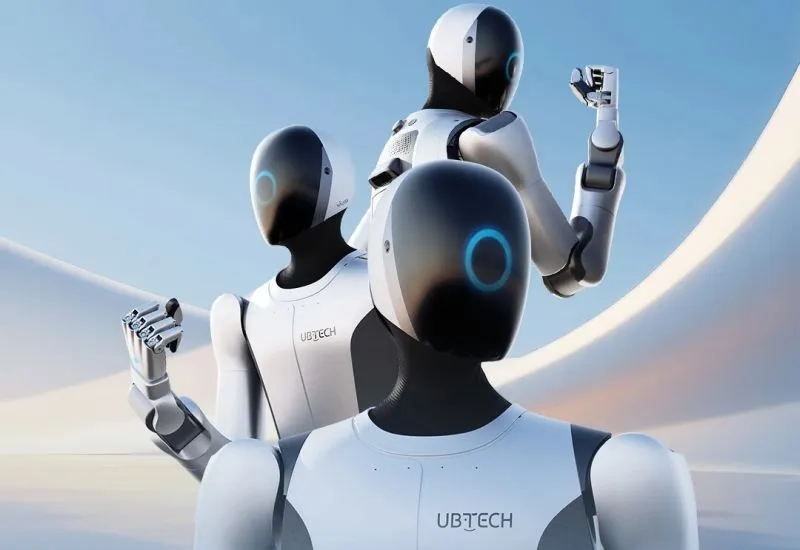
The excitement surrounding humanoid robots is hard to deny. More and more companies are developing them, especially in China, and they are trained to perform amazing stunts, but from a practical application perspective, everything is not so great. Even positive growth in the supply of serial humanoid robots will not be accompanied by their active use in practice in the foreseeable future.
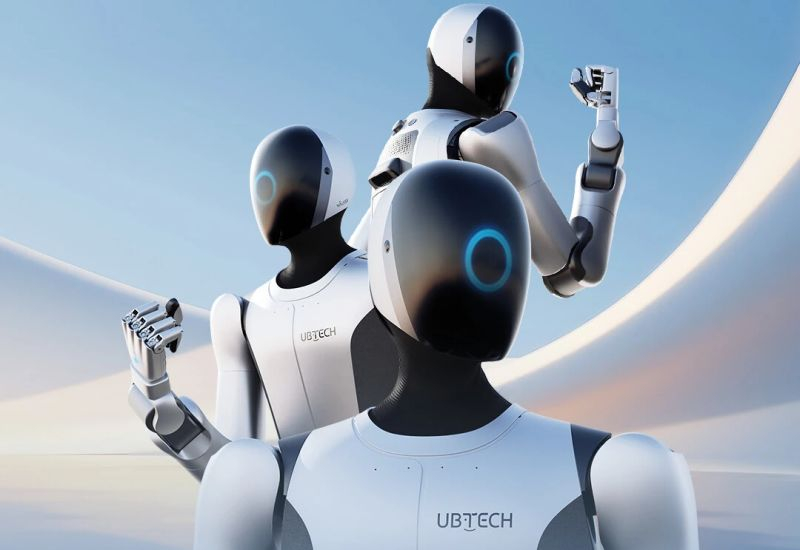
Image source: UBTech Robotics Company
analyst Gasgoo believesReal mass production of such robots won’t begin until the second half of next year, when discussions about scaling up successful pilots of humanoid robots will be possible. According to Smart Analytics Global, global shipments of such robots will reach 60,000 units by the end of this year and will grow to 500,000 units by the end of the century. According to predictions from the Gasgoo Automotive Research Institute, a more optimistic figure we can expect this year is 100,000 humanoid robots.
As experts emphasize, it is important to understand that the final requirements for this type of robot are still far from the ideal structure for future development. First, some humanoid robots are still purchased by market participants themselves for experimentation and training, and sometimes just to maintain a company’s progressive image. Secondly, software developers now purchase some robots to use them in their activities. Finally, some parts of humanoid robots are now used only for demonstration and advertising purposes; they don’t bring much real benefit to their owners.
Gasgoo analysts said that overall, up to 90% of humanoid robots currently shipped have been put into commercial use. Up to 35% of deliveries are for demonstration and entertainment purposes; research and software development account for 20% of deliveries. Currently, only 15% of humanoid robots purchased by customers are actually used in industrial fields. Paradoxically, sociological surveys show that this segment occupies a primacy in describing the needs of robot buyers, although in reality its numbers remain very limited. In the industrial field, including logistics operations, most humanoid robots are still in the learning and adaptation stage.
Teaching robots to operate in specific industrial production environments requires large amounts of data and specialized software, which is still under development. Teaching a robot the simplest of operations takes a lot of time and manpower. The data used for this purpose are often very heterogeneous and non-standard, making it difficult for experts to use them. Companies carry out their core work independently and rarely exchange experiences, forcing them to do the same job from the start.
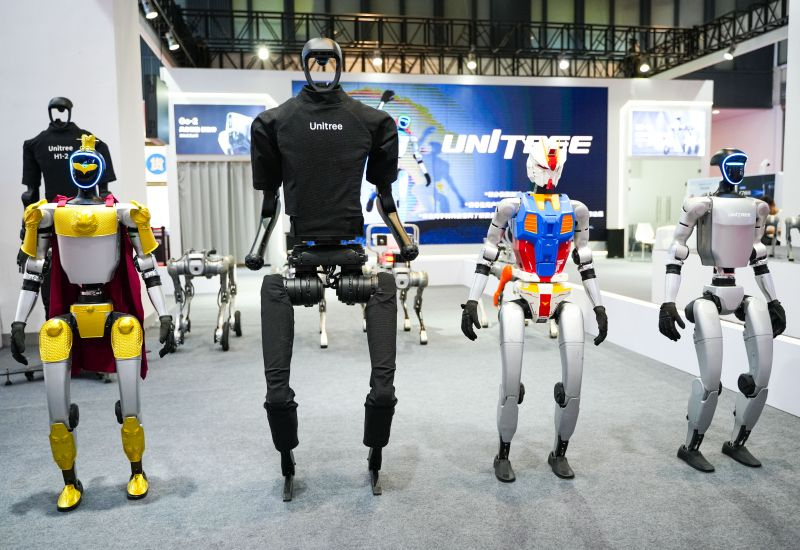
Image source: Unitree Robotics
Furthermore, scaling up the use of robots in production is difficult because many parameters must be stable and predictable. For example, robots’ reaction times often lag behind human workers, making them difficult to use on the same assembly line. Questions about operational accuracy also arise. Additionally, robot developers often lack sufficient understanding of industrial process integration, and customers have little understanding of the technical limitations inherent in modern robots. In this case, adaptation takes a lot of time and remains quite costly. And if the payback period of the robot is unclear, customer interest will be very limited.
Currently, truly effective humanoid robots are still quite expensive, but the price barrier can only be lowered by moving to mass production, which takes time and huge investment. It is predicted that by 2030, the cost of industrial humanoid robots will drop to US$30,000 to US$40,000.
There is another obstacle to the large-scale introduction of humanoid robots into production – industrial safety requirements. While they will coexist with people on the conveyor belts, it is important to protect the latter from the unintended harmful effects of the robots. In an uninhabited environment, this problem may not be as serious, but due to many factors, the process of introducing robots into industry cannot be immediately moved to the appropriate stage. This means extra money and time must be spent to ensure safety. In addition, U.S. authorities have called for a ban on the import of Chinese-made robots due to concerns about information security. This area also requires special attention.
Car assembly plants may be among the leaders in introducing humanoid robots. First, vehicle autonomous driving systems and humanoid robots have much in common in terms of component base and software. Secondly, this industry has accumulated rich experience in the field of automation, and the manufacturing process has long been standardized. This makes the transition to using robots to replace workers easier. Furthermore, the automotive industry has a sufficient number of facilities where robots can learn. It also has enough experience to organize mass production of the robots themselves. Overall, the emergence of a new phase in the robotics industry will not happen without some integration, but currently it shows some gaps between potential and actual capabilities, which will be systematically eliminated. Robots must not only perform well-remembered acrobatic moves on the stage, but also work stably for a long time in production.
If you find an error, select it with your mouse and press CTRL+ENTER.