


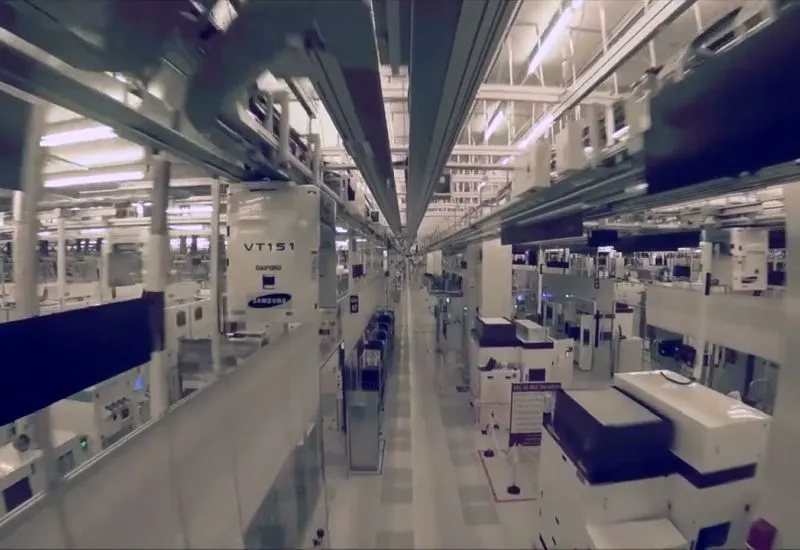
In recent years, Samsung Electronics has been nominally one of the world’s largest contract chip manufacturers, but has had to accept that it will always lag behind TSMC. However, the current market conditions are allowing her to make more and more money from her clients. Prices for Samsung services increased by 15% this month.
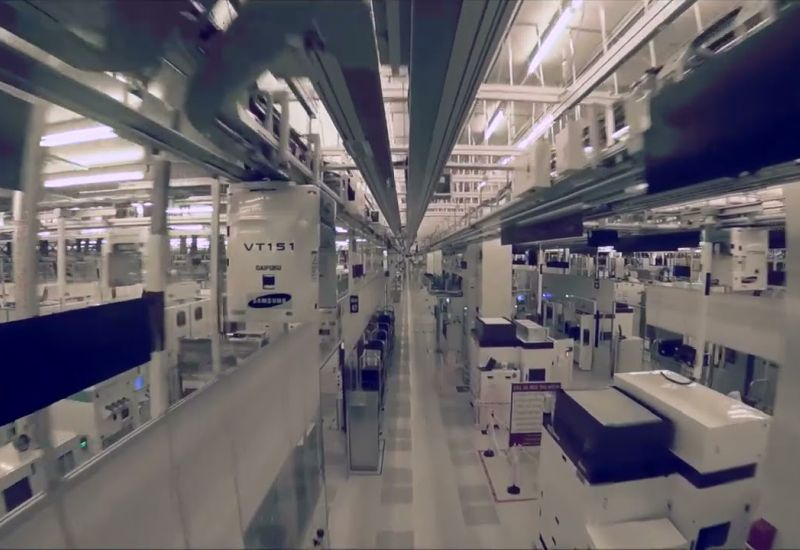
Image source: Samsung Electronics
This is caused by Reuters Citing people familiar with the matter, the price of services for producing 4-nanometer wafers for U.S. customers continues to rise. Compared to the previous month, the growth rate is expected to be 10-15%. In its native South Korea, a large number of Chinese customers wanted to commission Samsung to produce chips, but the company was forced to turn away many of them as it prioritized orders from U.S. developers and reserved some capacity for its own needs. At the same time, it is Chinese customers who are willing to pay anything for Samsung services. In the domestic market, few can meet their demand for advanced technology processes.
Samsung has increased its 4nm chip production services for US and Chinese customers by 10-15%. For Taiwanese customers, local TSMC continues to compete with Samsung and prices have only increased by 5-10%. The production price of 5nm chips has also increased by 10-15%, while the price of the more mature 8nm process technology has only increased by 10%. In the first quarter of this year, Samsung’s foundry unit accounted for about 7% of the global market in value terms, but Taiwan’s TSMC accounted for 70%. In the field of advanced lithography, the latter has greater advantages because it has already provided 2nm process technology to customers.
Based on this year’s performance, Samsung is expected to increase the revenue share of using advanced technology processes to produce chips to 50% of total revenue, while high-performance computing and artificial intelligence should account for 30% of the company’s revenue. Late last year, it could claim up to 20%. Experts say the company’s contract business could be profitable as soon as next year, given a global shortage of contracted capacity and rising prices for Samsung’s services. Samsung’s 4-nanometer wafer production line in Pyeongtaek, South Korea, has been operating at full capacity since the end of last year. It not only produces 4nm Qualcomm wafers, but also the basic crystals used in the new generation of HBM memory stacks sold independently by Samsung. Based on the results for the first half of this year, Samsung expects the revenue of the contract business unit to grow by a double-digit percentage compared with the same period last year. Since last year, Apple and Tesla have joined Samsung Electronics’ large customer circle. This year they were joined by Broadcom and Nvidia. It is rumored that Google intends to order Samsung to produce its own chips using 4nm technology.
If you find an error, select it with your mouse and press CTRL+ENTER.