

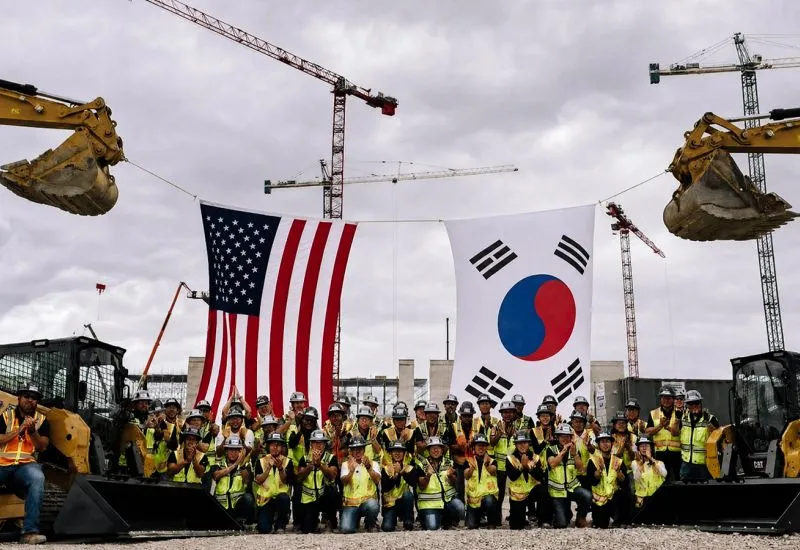
SK Hynix CEO Kwak Noh-jung, who attended the groundbreaking ceremony of the Indiana factory, used the event to share his vision for the future development of the memory market. He said the deficit will continue until the end of 2030 and there is no longer a need to worry about overproduction because the industrial situation has fundamentally changed.
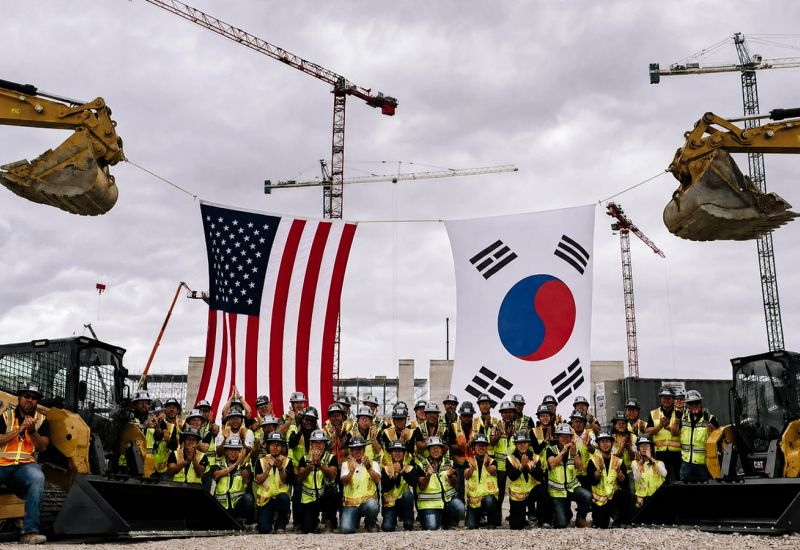
Image source: SK hynix
The head of SK Hynix predicted how long the shortage will last at a press conference after the groundbreaking ceremony of a new factory in Indiana, which will begin testing and packaging of advanced HBM memory in the second half of 2029. CEO of SK Hynix emphasizeBy the end of 2030, the global market memory shortage will persist. SK Hynix is currently not seeing any signals that might indicate a potential collapse in demand. When the Indiana plant comes online, it will supply HBM4E memory chips to U.S. customers including Nvidia, although initial processing will still take place in South Korea.
However, Kwak No-jung admitted that if the AI field passes its peak, the industry may face difficulties, but even the down cycle will be different from what has been observed in the memory market over the past two decades. Modern memory for artificial intelligence systems is a high-tech product that can be significantly adapted to specific customer needs. This allows manufacturers to more reliably predict customer demand and avoid overproduction situations. The person in charge of SK Hynix said that if the demand for memory in the AI field suddenly drops, the drop will not be sharp, and it is more likely that the overall situation will be stable. According to him, the company is ready to establish new ventures “anywhere” but has so far made no decisions in this area.
SK Hynix will also maintain ties with the Japanese memory maker, but mainly by maintaining its stake in Kioxia. At the same time, SK Hynix hopes to directly participate in the development of new NAND with the support of Japanese customers and suppliers. Let’s recall that Kioxia recently announced its intention to establish a large-scale enterprise in northern Japan to produce NAND memory for the server field. As Kioxia’s major shareholder (14.19%), SK hynix will be able to indirectly participate in the financing of such projects. The person in charge of SK Hynix admitted that the Solidigm subsidiary that inherited Intel’s solid-state memory business may be listed by SK Hynix. Solidigm could attract up to $3.6 billion in financing before going public, according to unofficial data. Details about plans for this area are likely to become clearer in the coming weeks.
If you find an error, select it with your mouse and press CTRL+ENTER.