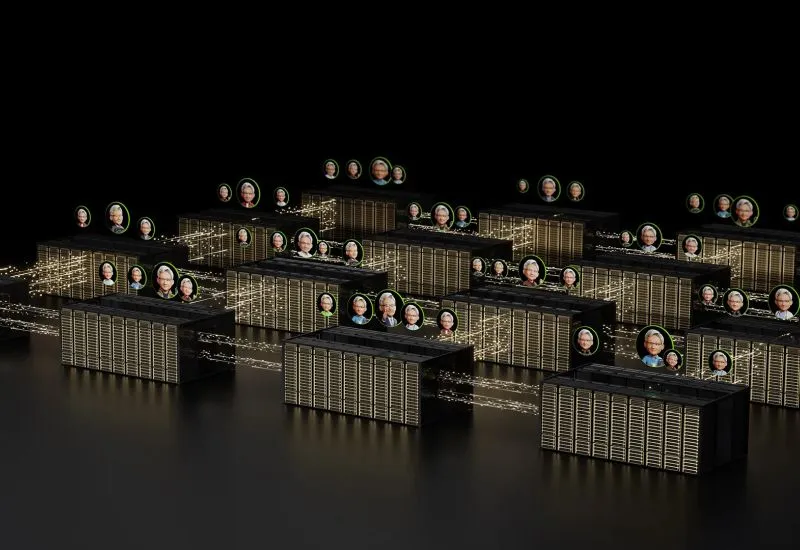
It’s an important week for Nvidia: The quarterly report allows management to convince investors that the artificial intelligence craze will continue and maintain high revenue growth rates. One of the main engines of further growth should be the new Vera Rubin server platform, which will account for about 20% of Nvidia’s total data center revenue this quarter. The company expects this to be the fastest time to market for a new product in its history.
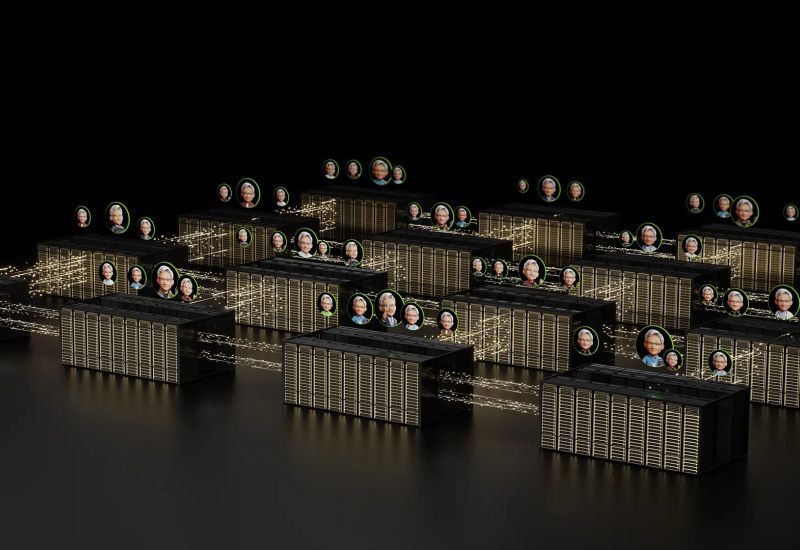
Image source: NVIDIA
About this in Nvidia’s quarterly reporting event point out Chief Financial Officer Colette Kress: “We believe Vera Rubin accounted for approximately 20% of data center revenue in the third quarter. We have received orders from all major hyperscalers, cloud AI service providers and OEMs and expect Vera Rubin’s expansion to be the fastest in Nvidia’s history».
High-volume production of Vera Rubin components only began to ramp up in the spring, with first commercial deliveries of the VR200 NVL72 rack system beginning in August. Microsoft Chief Executive Satya Nadella said it became the first major customer to deploy such a system. So, judging from almost zero revenue last quarter, Vera Rubin will reach about 20% of Nvidia’s server business in just three months.
Last quarter, the data center segment accounted for about 92% of Nvidia’s total revenue, and the company expects total revenue in the third quarter to be about $108 billion. At similar ratios, the Vera Rubin family’s revenue could approach $20 billion in just one quarter. At the same time, Vera Rubin is not a separate accelerator, but a complete computing platform that combines Vera processors, Rubin accelerators, network components and BlueField 4 DPU, as well as off-the-shelf VR200 NVL72 rack systems.
Nvidia head and founder Jensen Huang also showed that with each new generation of products, the cost of Nvidia equipment required to equip an AI data center with a certain capacity is growing. For the Hopper generation system, the company estimates the figure at about $18 billion per 1 GW, Grace Blackwell at $25 billion and the latest Vera Rubin at $40 billion per 1 GW.
At first glance, it seems that the cost of computing equipment has grown extremely rapidly, but at the same time, its performance has also increased significantly. So, according to Nvidia’s logic, for every gigawatt of power customers get, they get more and more computing power. For Nvidia itself, the transition to a new generation has also been extremely profitable: the same data center energy budget allowed it to sell increasingly expensive equipment to customers.
In other words, Vera Rubin must solve two problems at the same time: significantly improve the performance of artificial intelligence infrastructure in an environment where available power is one of the industry’s major constraints, and significantly increase Nvidia’s revenue per gigawatt of data center construction.
If you find an error, select it with your mouse and press CTRL+ENTER.