
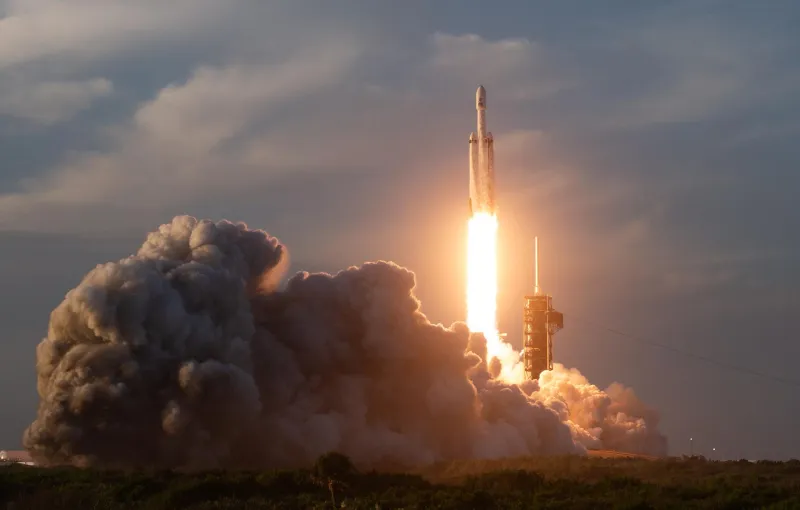
NASA successfully launched the Nancy Grace Rome Space Telescope, a new $4 billion flagship observatory designed to study dark matter, dark energy, and planets beyond our solar system. In terms of coverage, Roman will be many times larger than Hubble and will be able to explore the universe approximately a thousand times faster.
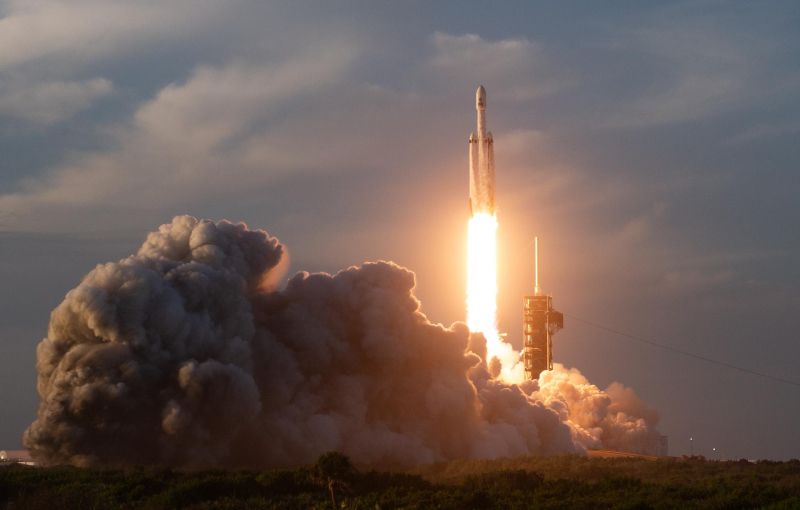
The telescope was launched aboard a SpaceX Falcon Heavy rocket from launch pad 39A at the Kennedy Space Center in Florida at 07:26 US Eastern Time (14:26 Moscow time) on August 30. After 32 minutes, the device separated from the second stage and continued to fly on its own. Experts contacted him and confirmed that the solar panels and lower part of the sunshade had been deployed successfully. Both stages of the Falcon Heavy returned to the landing site; the center stage was not saved.
Roman now faces a three-month journey to the L2 Lagrange point of the Sun-Earth system, about 1.5 million kilometers from our planet. The James Webb Telescope operates in the same region, but each telescope operates in its own wide orbit around L2. During the flight, experts will open the telescope’s antenna and cover, adjust its trajectory, and open and calibrate scientific instruments. NASA expects to release the first images in early 2027.
Roman is often called Hubble’s wide-field cousin. The diameter of the main mirrors of both observatories is 2.4 m, and the image resolution is similar. However, a 300-megapixel Wide Field Instrument (WFI) infrared camera can cover at least 100 times the sky at a time. Each Roman image contains about the same amount of information as a hundred Hubble images. In its first five years, the new observatory will observe more than 50 times the area of sky that Hubble observed in its thirty years.
Roman Reigns and James Webber will play different characters. Webb was able to drill down into small areas of the sky and single distant objects. Roman, on the other hand, will create huge panoramas and discover rare galaxies, supernovae, black holes and other interesting targets for further study. NASA compared this collaboration to using wide-angle and telephoto lenses on the same camera.
One of Roman’s main tasks is to study dark matter and dark energy, which according to current cosmological models account for approximately 95% of the content of the universe. The telescope must observe more than 2 billion galaxies and produce detailed three-dimensional maps of the distribution of matter. By studying galaxies, supernovae and gravitational lensing, scientists will try to find out why the expansion of the universe is accelerating and test how accurately existing gravity theories describe what is happening on cosmic scales.

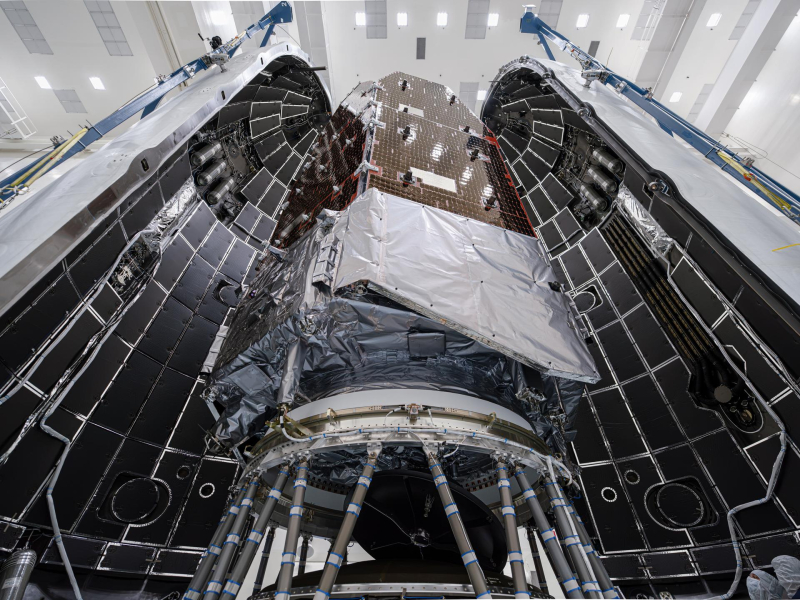
The observatory will also conduct a large-scale census of the Milky Way’s planetary system. Roman will repeatedly image hundreds of millions of stars at the center of the Milky Way and look for changes in brightness caused by gravitational microlensing. This method makes it possible to detect asteroids, worlds in distant orbits, and even free-flying planets not associated with stars. NASA expects the telescope to discover about 2,500 exoplanets this way. Using the transit method, the same observation can reveal tens of thousands of worlds.
Roman’s second instrument is an experimental coronagraph, designed to directly image exoplanets. It blocks the star’s bright light, allowing you to discern the faint reflected light of planets orbiting it. The coronagraph will image ancient and relatively cool gas giants comparable to Jupiter and test technology for the future Habitable Worlds Observatory, which NASA plans to use to search for Earth-like worlds.
Rome has unusual origins. Its optical system is based on one of two unused telescope systems transferred to NASA in 2012. These complexes were created for Earth observation satellites, which is why Roman is sometimes called a former spy satellite, although it is more accurate to talk about the use of its optical base.
The telescope is named after Nancy Grace Roman, the first director of NASA’s astronomy program and one of the main sponsors of the creation of the space observatory. The main mission is designed for a five-year period, with the possibility of being extended for a further five years. Roman will transmit approximately 1.4 terabytes of data to Earth every day, more than any previous NASA astrophysical mission.
If you find an error, select it with your mouse and press CTRL+ENTER.