


Anthropic has launched Claude Fable 5.1 and Claude Mythos 5.1, new versions of its flagship artificial intelligence models focused on programming, processing large amounts of information, and performing long-term, multi-step tasks. According to the developers, the new product is significantly better than its predecessor in multiple tests, and its functionality already allows the use of artificial intelligence in certain areas of scientific research.
Image source: Human
Fable 5.1 and Myth 5.1 are the same model, but have different levels of defense mechanisms. Fable 5.1 is available to all users, while Mythos 5.1 is distributed through a trusted accessor for cybersecurity and life science professionals.
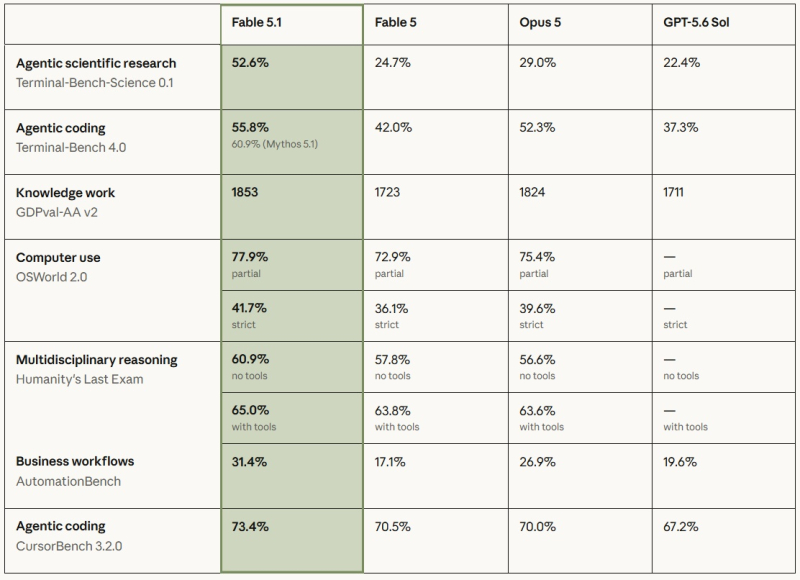
Anthropic provides many examples of how Fable 5.1 is significantly better than its predecessor. Therefore, in the Terminal-Bench 4.0 test, the new Fable 5.1 achieved a score of 55.8%, while Fable 5 scored 42% and Opus 5 scored 52.3%. In GDPval-AA v2, which evaluates performance on professional tasks, the new model scored 1,853 points, while Fable 5 scored 1,723 points and Opus 5 scored 1,824 points. In OSWorld 2.0, the results were 77.9% in partial mode and 41.7% in strict mode, compared to 72.9% and 36.1% respectively in the predecessor mode.
At the same time, Anthropic noted that the tests were conducted with protection mechanisms turned on, which in some cases interfered with task completion, which could lead to lower results.
Anthropic is particularly focused on the scientific capabilities of new models. In one of the experiments, Claude Mythos 5.1 used special tools to create new proteins – molecules that could be used in drug development, for example. The final selection was then tested in the laboratory by two independent groups.
According to Anthropic, for three of the 12 targets studied, Mythos 5.1 created proteins that bound to the desired molecules about ten times more efficiently than the best design presented in the Adaptyv Bio competition. Overall, almost half of the variants created with Mythos 5.1 proved to be viable. In comparison, current computer-aided protein design methods typically result in only 10-15% of designs being successful.
Another experiment is related to planetology. “Fable 5.1” also creates a new elevation map of about one-third of Venus’ surface based on radar images taken by NASA’s Magellan spacecraft more than 30 years ago. The map resolution has been increased from 10-20 kilometers to 2-3 kilometers, and the height setting accuracy has been increased to 25%. The company plans to release the map under a Creative Commons license in advance of future NASA VERITAS and ESA EnVision missions.
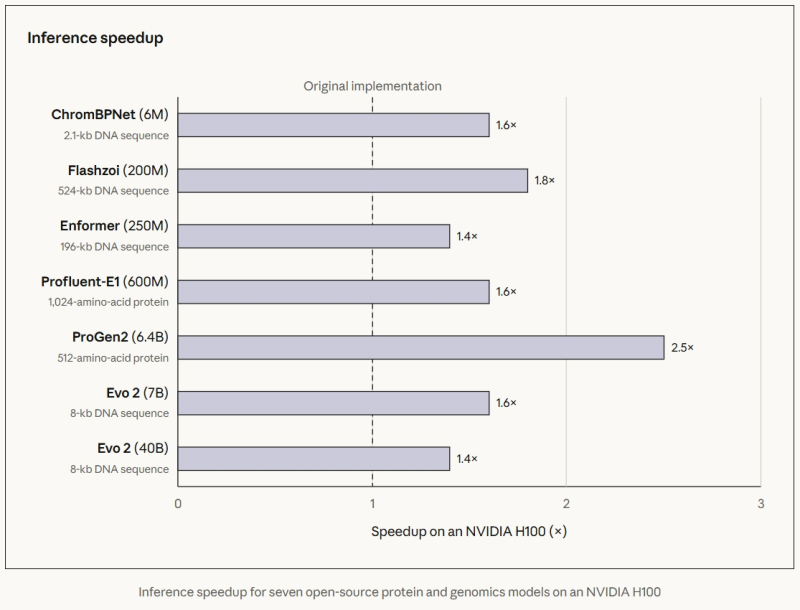
In addition, Mythos 5.1 has proven itself in optimizing bioinformatics computing. The model wrote its own GPU core and implemented caching of intermediate results, which allowed seven open models for processing proteins and genomes to start working 2.5 times faster while maintaining the same results. Anthropic estimates this could reduce GPU costs for large-scale genome research by 30-60%.
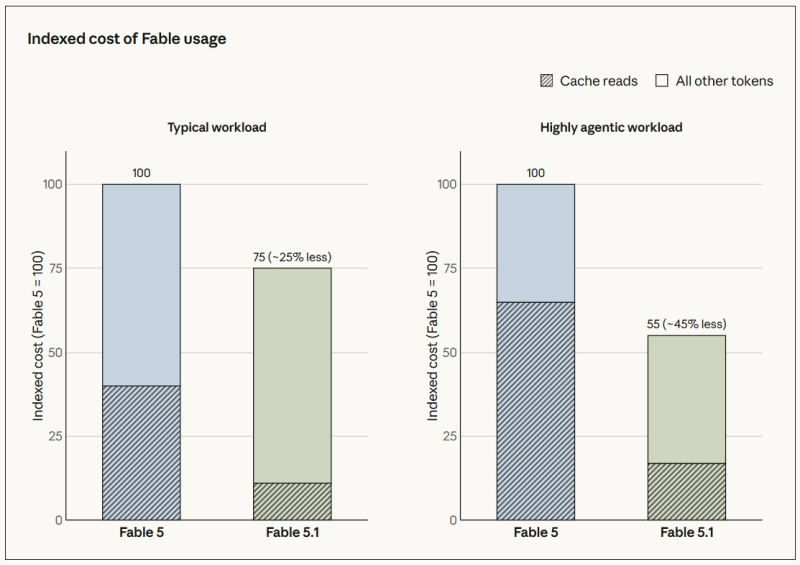
At the same time, Anthropic has also reduced the cost of using Fable 5.1. The price for reading cache data has been reduced by 75% to $0.25 per 1 million tokens. The remaining prices remain at the same level: $10 for 1 million input tokens and $50 for 1 million output tokens. As a result, the company estimates typical cost reductions using Fable 5.1 compared to Fable 5 are approximately 25%, with savings as high as 45% for complex, high-agent tasks.
At the same time, Anthropic has improved its security mechanism: the number of false positives in the field of network security has been reduced by about 60%, and it allows the Fable 5.1 model to search for software vulnerabilities. However, the creation of exploits and many other potentially dangerous tasks is still limited.
Defense mechanisms also become less responsive to biological and medical queries: Anthropic reports that the number of triggers for harmless questions about basic biology and medicine dropped by 85% compared to Fable 5’s original setting.
Claude Fable 5.1 is now available on major platforms such as Amazon Web Services, Google Cloud, and Microsoft Azure, and developers can use this mode through APIs.
In turn, Claude Mythos 5.1 is currently only available to trusted professionals and organizations. Additionally, at the time of release, Mythos 5.1 is only available to certain organizations in the United States. But the company is working with the U.S. government to expand the program to other countries and international partners.