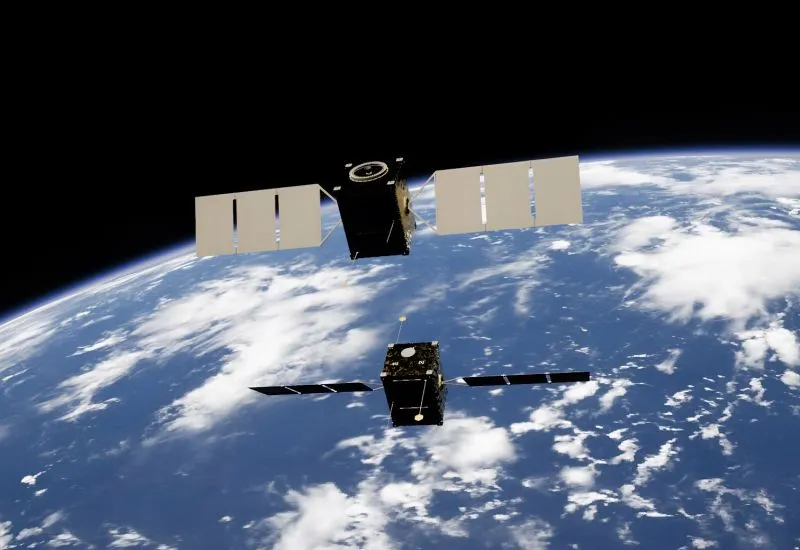
While some market participants are skeptical of Elon Musk’s move to create a space data center, Chinese companies and government agencies are amassing the necessary resources to create their own space computing capabilities. Participants in the initiative in Shanghai passed recently Industry event.
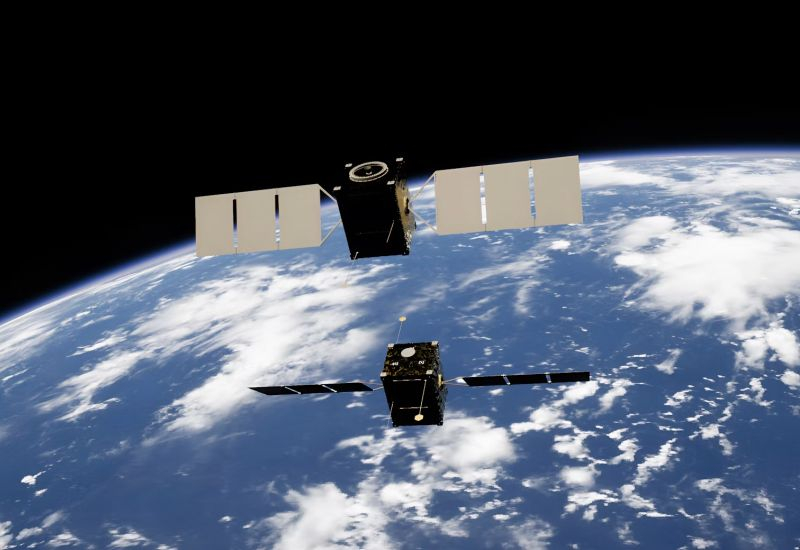
Image source: Unsplash, Kevin Stadnyk
It brings together aerospace companies, semiconductor manufacturers, artificial intelligence experts and cloud service providers, not to mention investors ready to back these ideas with money. If US company SpaceX focuses its space data center primarily on working with artificial intelligence, Chinese rivals are ready to look at its applications more broadly, such as in reconnaissance aerial photography, where data can be processed in space without having to be sent to Earth.
Many companies related to commercial space exploration are already headquartered in Shanghai. The Thousand Sail Project was born with the support of SpaceSail, a company that aims to become a Chinese alternative to Starlink, with its own low-orbit communications satellite system used to organize high-speed network access in areas on Earth where there is no ground infrastructure. SpaceSail has launched more than 200 communications satellites into Earth orbit, with the number expected to increase to 15,000 by the end of the century. Several satellite manufacturers are headquartered in Shanghai and have dedicated research centers.
As of last year, the local satellite economy had an annual turnover of US$3.4 billion, with more than 100 Chinese companies operating in the field. The Chinese metropolis is also home to the county’s only 6G industrial zone, with a total of 81 companies operating here. The latest plans mean that in the field of space data centers, local companies will have an annual turnover of at least US$744 million by the end of this decade. The Chinese government requires local companies to develop satellite network infrastructure in advance and ahead of demand. Priority areas are also considered to be the organization of the production of goods in space, the expansion of launch infrastructure on Earth, the exploration of the moon and the study of more distant celestial bodies. Similar spatial clusters are developing in other parts of China, so the problem is not limited to Shanghai.
If you find an error, select it with your mouse and press CTRL+ENTER.