



Anthropic’s new Fable of Claude 5.1 cracks Scottish author Thomas Urquhart’s 17th-century cipher in 44 minutes, breaking a code that has baffled cryptologists since 1653. The hidden text turned out to be a royalist prayer to King Charles II, compiled using indexing techniques from Urquhart’s own book.

Image source: Human
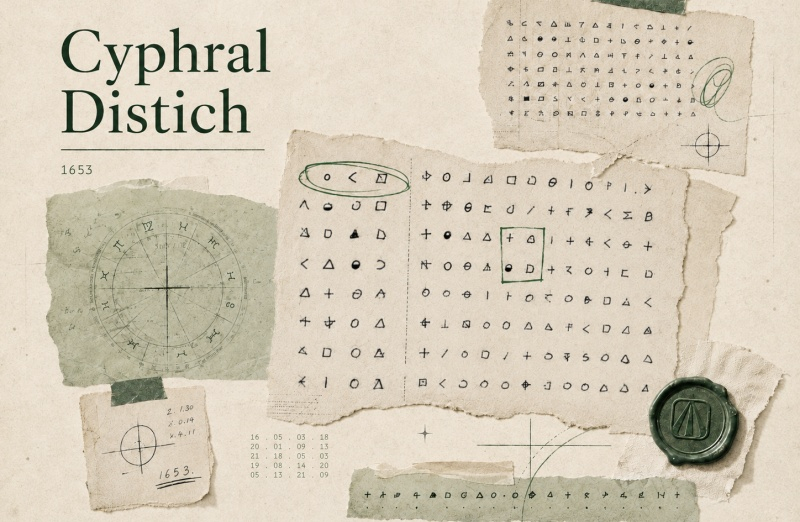
Researchers set out to crack Urquhart’s cipher, the Cyphral Distich, hidden in the final pages of his 1653 treatise Logopandecteision. Cryptozoologists have been searching for a solution to this sequence for more than a century, with the first recorded cracking attempt dating back to 1899. Historical cryptographer Klaus Schmeh ranked this couplet in his list of the 50 most famous encrypted messages that no one knows about. Can be read.
The process was led by Geby Jaff of Vals AI. He reported that the model spent 176,000 tokens but did not receive any tips from him. All input information for the puzzle consists of two lines of 32 numbers.

Image source: Vals.ai
Previous attempts to find a solution to this puzzle relied on frequency analysis and substitution, but neither worked. It turns out that the key is the book itself, not any external letters. Urquhart printed 32 numbered wishes before the cipher, which he called Proquiritations, each number representing only a single word of the corresponding wish.
The first letters of each word form a rhyming couplet, a royalist prayer asking God to support King Charles II and make him supreme ruler of the land. Jaffe warned that one of the coordinates depended on whether the Latin phrase was considered as a whole, and that a physical copy of the original version would be needed to verify Urquhart’s second, longer cipher.
The experiment was conducted on a model Anthropic released on September 1 with the Mythos 5.1 Limited Edition. Both versions have the same weight and differ only in safety features. The launch marks a period in which the company has been aggressively using research to justify pricing for a product line that costs twice as much as the cheaper Opus.
If you find an error, select it with your mouse and press CTRL+ENTER.