

Proposed U.S. tariffs on semiconductor parts will put further pressure on foreign chip manufacturers to expand domestic production. The U.S. Commerce Department is considering linking tariff rates to investment levels. The plan could expand beyond the chips themselves to products that include semiconductors, including laptops, game consoles and data center servers.
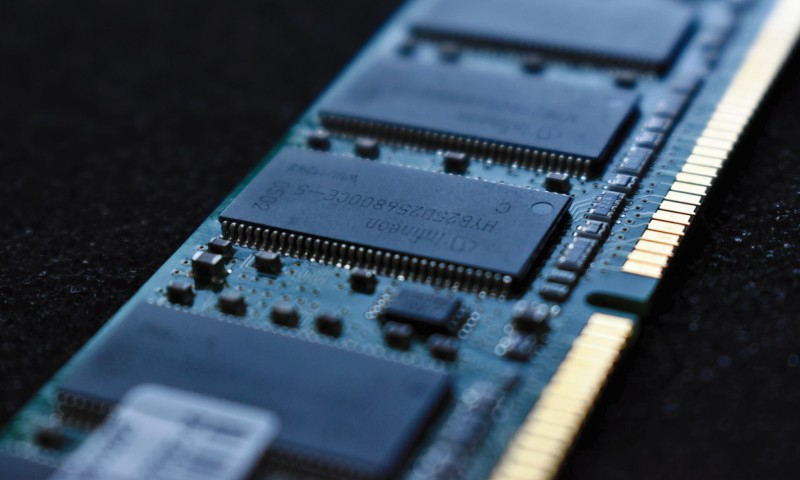
Image source: unsplash.com
Analysts believe that this approach may put TSMC in a relatively strong position given the scale of its manufacturing expansion in the United States. The company has announced a $265 billion investment in the United States, which would help it secure more favorable terms if tariff reductions remain tied to investment levels. The U.S. Department of Commerce expects Taiwan to announce an additional U.S. investment of $20 billion to $30 billion next week.
Although the details of the new tariffs have not been officially announced, the existing memorandum of understanding between Taiwan and the United States already provides tariff exemptions for Taiwanese companies investing in U.S. manufacturing. During the construction period, companies can obtain duty-free import quotas equivalent to 2.5 times the planned U.S. production capacity. Once production is put into operation, this quota will be reduced to 1.5 times.
Experts say that if tariff reductions are determined by comparing U.S. investment levels, Samsung Electronics and SK Hynix may face greater pressure. The U.S. government insists that production of DRAM and NAND wafers be done domestically.
Samsung currently operates two factories in Austin, Texas, and is completing construction of the Tyler plant, which is expected to open in 2026. SK hynix recently began construction of a state-of-the-art HBM packaging plant in Indiana. Both companies have existing investments in the United States that could support their arguments for lower tariffs, but it’s unclear whether those investments would help reduce tariffs on wafers made in South Korea and exported to the United States.
There may be practical difficulties in moving more memory production to the United States. Even Micron Technology, the only major U.S. memory chip maker, now has more factories overseas than at home.
If you find an error, select it with your mouse and press CTRL+ENTER.