

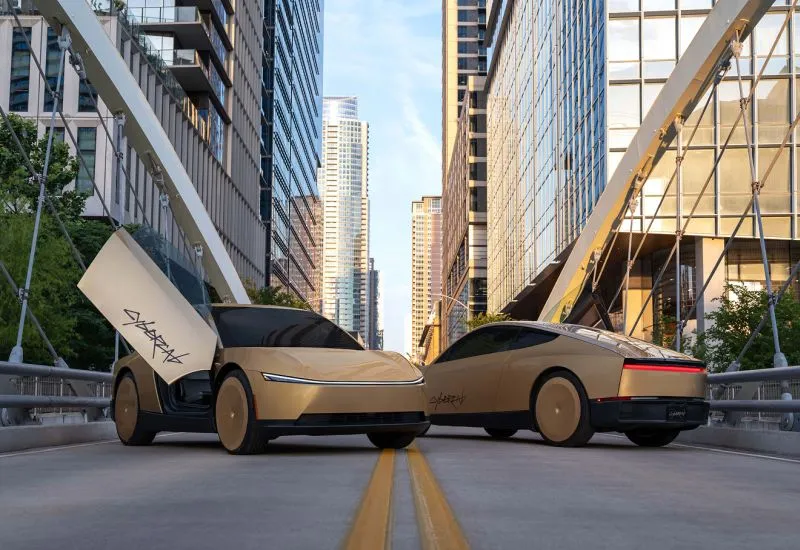
This week was supposed to be Tesla’s official event dedicated to launching a self-driving taxi service using Cybercabs, two-seat electric vehicles without steering wheels or pedals. It didn’t end up getting much publicity, but the company said corresponding driverless taxis are already transporting passengers for a fee, and third-party taxi companies can also purchase similar vehicles.
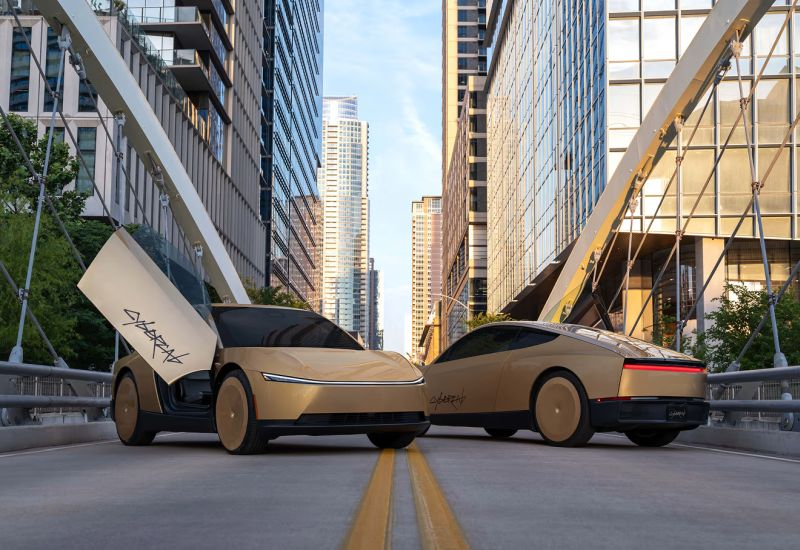
Image source: Tesla
On its website, Tesla invites customers to use the services of its proprietary self-driving taxi, the Cybercab, explaining that in addition to two passengers, it is capable of carrying a sufficient amount of luggage, such as large sports equipment or even a two-wheeled vehicle. Series production of the Cybercab began in July; the vehicles had previously been tested in the Texas capital, where the company’s headquarters and assembly plant are located.
Since the previous generation of robotaxis based on the production version of the Tesla Model Y, with a steering wheel and pedals, is already in use in Austin, Dallas, Houston and Miami, if legal, the Cybercab will join Tesla’s very limited fleet of branded taxis in these US cities. In the company’s home state of Texas, the company has the authority to increase the number of driverless taxis to 314, but some will be used exclusively for testing purposes. Of these, 45 vehicles will be Cybercabs, all of which can be charged to carry passengers in driverless mode.
Tesla lags behind most rivals in terms of scale of operations in the space, as Waymo alone operates more than 700 driverless taxis in Texas, while lesser-known Avride has 344 Hyundai Ioniq 5 electric vehicles of similar capacity. The role of Tesla personnel in supporting Cybercab operations is reduced to remote monitoring of cars on the route, routine maintenance, cleaning interiors and bodies, and charging power batteries.
Tesla also released announcement On its website, Cybercab is sold to corporate customers interested in organizing driverless taxi services. This isn’t the first time vehicles without steering wheels or pedals have entered the U.S. passenger transportation market. Back in July, U.S. regulators allowed Zoox to operate up to 2,500 driverless shuttles on public roads that lack traditional human control. The expansion of the U.S. autonomous taxi fleet will be uneven as states regulate the operation of such vehicles at the regional level.
Tesla is preparing to work with other companies to develop related infrastructure – for example, creating charging stations that can be used by self-driving taxis. If earlier it developed a special snake-like manipulator to connect cables to electric vehicle charging ports at conventional charging stations, then it moved to the concept of wireless charging using circuits built into the underside of the car. Connectors for connecting such devices are provided even in the Cybertruck pickup, and the Cybercab should get them as expected.
If you find an error, select it with your mouse and press CTRL+ENTER.