


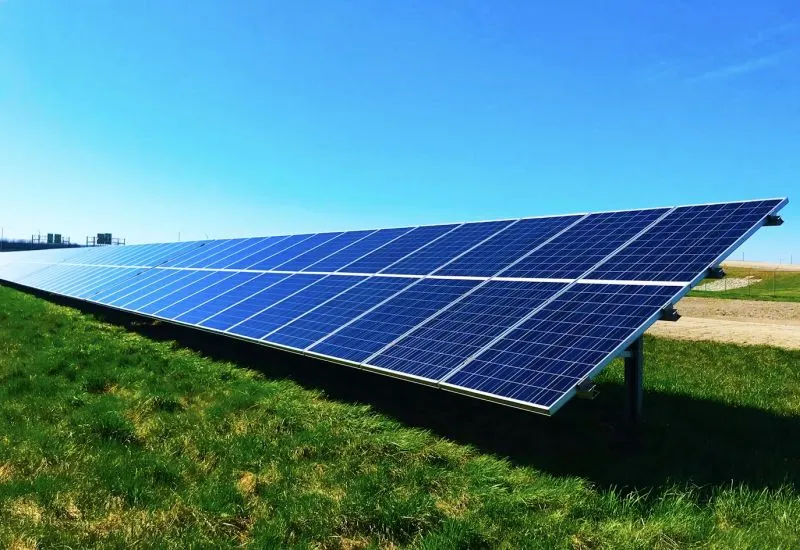
Japanese solar panel developers are trying to stay in the market under pressure from Chinese rivals, offering increasingly advanced solar power technology. A consortium of Japanese developers recently proposed a technology for making perovskite solar panels that last one and a half times longer than their Chinese counterparts.
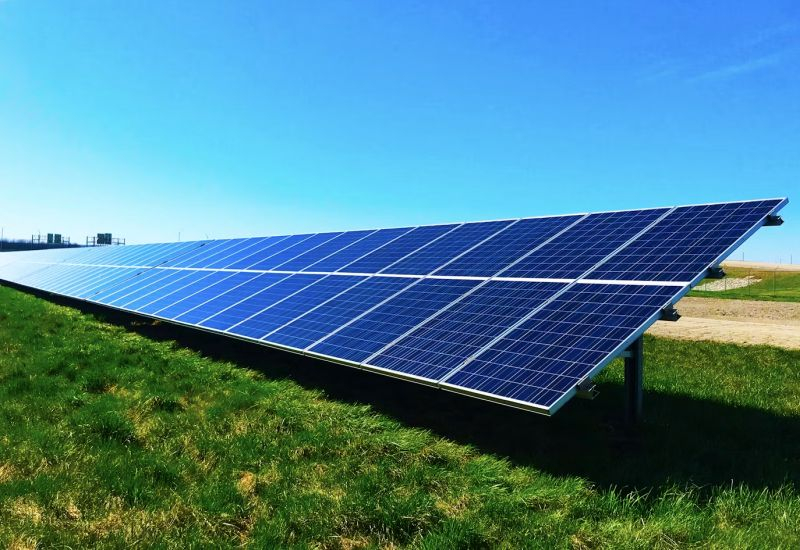
Image source: Unsplash, Chelsea
Production of a new generation of solar panels is planned to start in Japan within the next decade, when the domestic market will experience a wave of renewals of existing panels. Popular interest in solar energy grew in Japan in 2012, when local authorities mandated the long-term purchase of generated energy from solar panel owners at a guaranteed price. The panels purchased that year will be retired in two or thirty years, so the demand for new panels will increase after 2030.
Toshiba, Shin-Etsu and Niigata University common development A new type of tandem solar panel combines perovskite and silicon layers. This series connection should increase power generation efficiency by about 30% while maintaining the small thickness and flexibility of the solar cells. If Toshiba is responsible for the development of the solar cells themselves in this alliance, then Shin-Etsu and Niigata scientists created a battery body that can extend its service life. The last problem is solved by spreading a protective layer of synthetic rubber with ingredients that have properties of absorbing moisture from the air. High temperature and humidity are two major factors that shorten the life of perovskite solar panels.
Developed in Japan, the panels can continuously generate electricity for 3,000 hours in temperatures up to 85 degrees Celsius and humidity up to 85%. Perovskite panels made by Chinese rivals with the support of Singaporean scientists were previously considered the most durable, claiming a lifespan of up to 2,000 hours under similar conditions. It turns out that Japanese panels can last one and a half times longer, which in real terms means they can last 20 years or more. The tandem panel prototypes developed so far by the consortium measure 25mm in area2but by the time mass production begins, the developers hope to achieve retention of the declared characteristics for cells with an area exceeding 250 cm2.
Other Japanese manufacturers are not sitting still. Similarly, Kaneka plans to increase the efficiency of perovskite panels to more than 40% by 2035, and Choshu Industrial also expects to increase the service life of solar panels to more than 20 years by fiscal year 2030. For Japanese manufacturers, leadership in product durability can be an important advantage in competing for market space against Chinese rivals. By 2040, Japanese authorities hope to reach 20 GW of solar power generation based on perovskite panels. This is equivalent to the power of 20 nuclear reactors. Improving the efficiency of series-connected panels is one way to achieve this goal.
If you find an error, select it with your mouse and press CTRL+ENTER.