

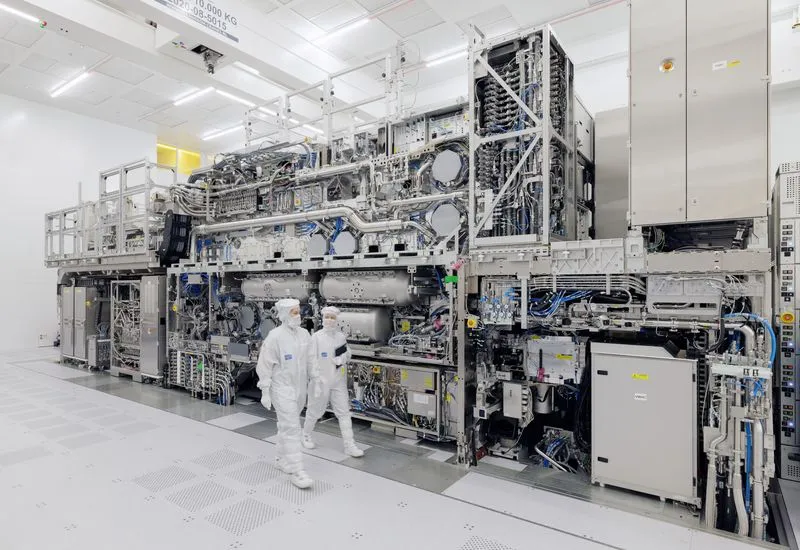
With a market share of about 94% for lithography scanners needed to manufacture semiconductor components, ASML has to admit that AI is struggling to keep up with demand during the boom. The company has allocated a full production quota for EUV systems through the end of 2027, at a cost of $200 million per system, and recently broke ground on a new factory in the Netherlands that will expand production capacity.
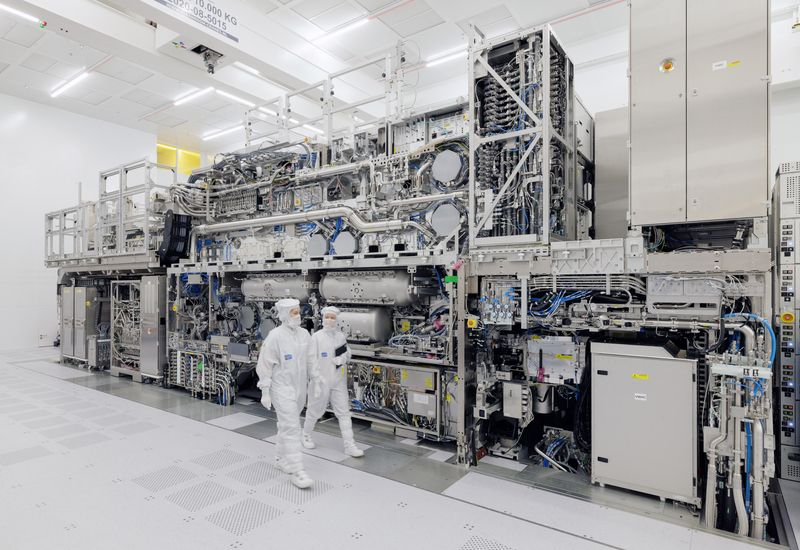
Image source: ASML
ASML Chief Financial Officer Roger Dassen said that large customers are now increasingly interested in not only providing them with more wafer production equipment, but also speeding up production. In comments to the agency Reuters Dassin admitted: “Frankly, I don’t think we’ve reached the end of (the artificial intelligence boom) yet”.
All of ASML’s major customers have indicated plans for next-generation equipment that combines ultrahard ultraviolet (EUV) with high numerical aperture (High-NA) and could cost more than $400 million per installation. TSMC admitted it would start using it in 2030, and Intel last week announced it had processed 1 million 300mm silicon wafers using such equipment. Using such equipment, it is possible to create semiconductor structures that are 40% smaller than using classic EUV scanners. ASML still has no competitors in the field of EUV equipment, as attempts by Japanese and Chinese manufacturers to create similar systems have not yet reached the stage of mass production.
Memory manufacturers represented by Samsung Electronics and SK Hynix have expressed their readiness to use High-NA generation equipment starting in 2028, and although Micron Technology has ordered samples of such lithography systems, it has not yet decided on the time for its mass production implementation. ASML’s chief financial officer said memory manufacturers are willing to adopt High-NA earlier because they have to produce smaller chips than logic manufacturers. Nearly all of these companies are putting such devices into mass production earlier than originally planned, Dassin said.
If you find an error, select it with your mouse and press CTRL+ENTER.