


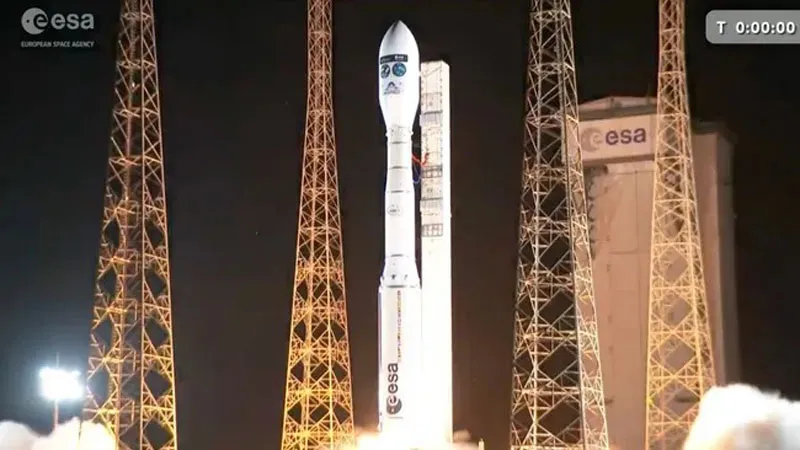
September 15, 2026 04:21 Moscow time Small European rocket Vega-C Successfully launched into orbit Two satellites used to observe the Earth – ESA’s FLEX (Fluorescence Explorer) science instrument and Copernicus Sentinel-3C. The launch took place from the Kourou space launch site in French Guiana. Both devices typically separated from the rocket, which was recorded by the agency’s ground center in Germany.
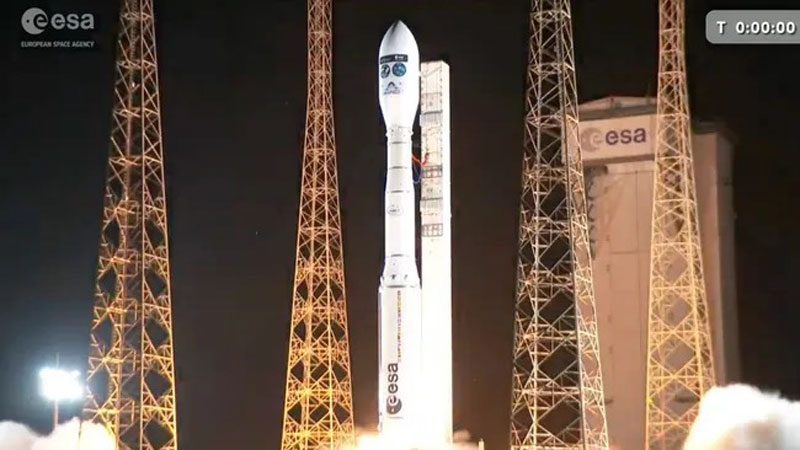
Image source: ESA
The main feature of the mission is the Vega-C rocket’s ability to launch two vehicles into space that need to enter different orbits. For this purpose, a new Vespa adapter was used for the first time: the much heavier Sentinel-3C was placed on top and the FLEX was enclosed within the adapter structure. After placing the Sentinel-3C on the desired track, detach it first and do something similar with FLEX about an hour later.
We remember that the Vega-C rocket is a 35-meter-long structure and weighs about 210 tons. The first three stages use solid fuel, and the fourth stage uses liquid engines to ensure precise orbit insertion. The rocket is capable of launching objects weighing up to 2,300 kilograms into low Earth orbit. This is the sixth of seven successful launches for Vega-C since its debut in July 2022.
Of note are the FLEX probes. It is the first instrument in the history of spaceflight to uniquely observe vegetation — its covering. The device’s spectrometer is tuned to the faint fluorescence emitted by plant leaves during photosynthesis. We are talking about the extremely faint glow produced by plants during the synthesis of chlorophyll, which is invisible to the human eye. The FLORIS spectrometer will record this signal, allowing an assessment of how efficiently plants convert solar energy and carbon dioxide into chemical energy. Using this data, scientists will be able to monitor vegetation health, ecosystem productivity and plant responses to drought, heat and other environmental stressors, ultimately improving food security.
The Sentinel-3C satellite will continue to conduct a multi-year series of measurements as part of the European Copernicus programme. Its equipment is designed to monitor the ocean, land, ice and atmosphere: the satellite will measure sea surface temperature, ocean color, sea surface and ice height, sea ice thickness, vegetation conditions, forest fires and inland reservoir levels. Thus, one mission simultaneously strengthens FLEX’s fundamental photosynthesis research and Sentinel-3C’s European operational environmental monitoring system. Finally, Copernicus data are widely used in weather forecasting and modelling, which is useful on a purely utilitarian level – many people wonder if they need to bring an umbrella today?
If you find an error, select it with your mouse and press CTRL+ENTER.